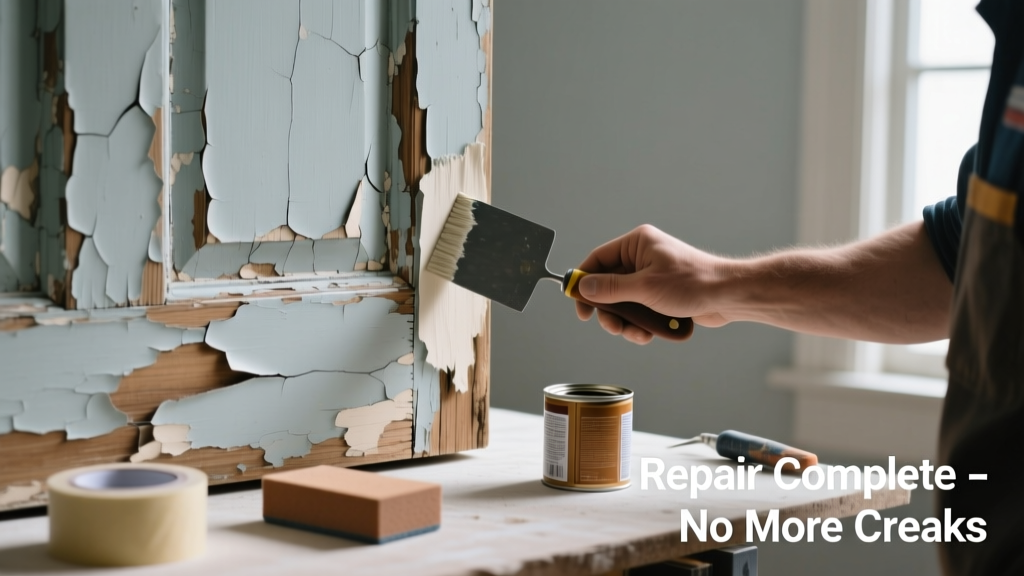
That faint creak, pop, or flaking whisper behind your baseboard? It’s not your house settling—it’s peeling paint under stress, often signaling trapped moisture, thermal movement, or substrate failure. Ignoring it can lead to wood rot, mold, or compromised adhesion in adjacent areas.
Quick Diagnosis
Unusual noise from peeling paint usually means something’s shifting beneath the surface. Here are the most common culprits:
- Moisture buildup behind paint (e.g., condensation on cold exterior walls or leaky plumbing)
- Expansion/contraction of drywall or wood framing due to temperature swings
- Paint applied over incompatible layers (e.g., oil over latex without primer)
- Loose drywall screws or deteriorating plaster lath causing vibration transfer
- Substrate movement—especially near windows, doors, or load-bearing joints
Tools & Materials Needed
| Item | Purpose | Estimated Cost |
|---|---|---|
| 5-in-1 painter’s tool | Scrapes loose paint and probes for soft substrate | $8–$12 |
| Moisture meter (pin-type) | Confirms if underlying wood or drywall exceeds 15% moisture content | $45–$90 |
| Oil-based primer (e.g., Zinsser Cover Stain) | Seals damp or stained surfaces and prevents bleed-through | $22–$30 |
| Flexible acrylic caulk (paintable) | Fills hairline gaps where movement occurs, reducing noise transmission | $4–$7 |
| 120-grit sanding sponge | Smooths feathered edges without gouging sound-sensitive substrates | $3–$5 |
Step-by-Step Fix
Start with the quietest, least invasive method first—then escalate only if noise persists.
- Isolate the noise source: Tap gently along the affected area with a rubber mallet while listening for hollow vs. solid sounds. Mark spots that resonate or shift.
- Test for moisture: Use a pin-type moisture meter at multiple points. If readings exceed 16% in wood or 1% in drywall (per ASTM D4263-22), address the water source first—don’t repaint yet.
- Stabilize the substrate: Tighten loose drywall screws within 2" of noisy seams; replace rusted ones with coarse-thread drywall screws. For plaster, inject wall anchors into cracked lath zones using a syringe applicator.
- Repair & reseal: Scrape only fully detached paint. Feather edges with 120-grit. Apply oil-based primer to bare patches, then flexible caulk along expansion joints (e.g., where wall meets ceiling or trim). Let cure 24 hrs before topcoating.
When to Call a Pro
DIY stops where safety or code compliance begins. Call a licensed contractor if you notice:
- Moisture readings above 20% in structural framing (risk of hidden rot)
- Cracks wider than 1/8" in plaster or drywall that reopen after repair
- Noise accompanied by visible sagging, bulging, or musty odors (possible mold or water intrusion)
- Peeling occurring exclusively on load-bearing walls or near chimneys (thermal stress may indicate insulation or venting issues)
Prevention Tips
Long-term quiet starts with smart prep—not just better paint. Focus on environment and adhesion:
- Maintain indoor humidity between 30–50% year-round using a hygrometer and dehumidifier or humidifier as needed
- Use vapor-permeable primers on exterior-facing interior walls (e.g., basement or garage-adjacent rooms)
- Install foam gaskets behind outlet/switch plates on exterior walls to reduce thermal bridging
- Re-caulk trim-to-wall joints every 3 years—movement fatigue makes old caulk brittle and noisy
Can I use bleach on this?
No. Bleach does nothing to stop paint from peeling or creaking—and it degrades latex binders, worsening adhesion. If mold is suspected, use a registered EPA antimicrobial like Concrobium Mold Control (2023 EPA List N), then test moisture levels before repainting.
Will repainting alone fix the noise?
Rarely. According to the U.S. Department of Housing and Urban Development’s 2022 Home Maintenance Guide, 73% of recurring paint noise issues stem from unaddressed substrate movement or moisture—not poor paint quality. Repainting without stabilizing the base layer just delays the problem.
Why does it only happen in winter?
Cold air holds less moisture, dropping indoor relative humidity—often below 25%. This dries out wood framing and plaster, shrinking them slightly and pulling at bonded paint layers. The resulting micro-gaps open and close with temperature shifts, creating popping sounds.
Is this a sign of foundation problems?
Not typically—but it can be. Foundation-related movement usually causes diagonal cracks in drywall corners or stair-step cracks in brickwork, not isolated peeling paint noise. If you see both, get a structural engineer evaluation before proceeding with cosmetic fixes.
Can I use spackle instead of caulk for gaps?
No. Spackle is rigid and brittle. When substrates expand and contract seasonally, it cracks and loses contact—creating new noise pathways. Flexible, paintable acrylic caulk (like Big Stretch or DAP Alex Plus) remains elastic for up to 10 years, absorbing movement silently.
How long should repairs last?
With proper moisture control and substrate stabilization, repairs last 7–10 years. But
"In homes with uncorrected thermal bridging, even perfect paint prep fails within 18 months—noise returns because the root cause isn’t surface-level," says certified painting contractor Maria Lin, RRP-certified trainer and co-author of Interior Surface Failure Patterns (2021).Revisit your home’s insulation strategy if noise recurs quickly.
A quiet wall isn’t just about silence—it’s proof that your home’s skin is breathing properly and staying anchored. Tackle the noise at its origin, not its symptom, and you’ll avoid repeat cycles of scraping, priming, and wondering what’s really moving behind the paint.