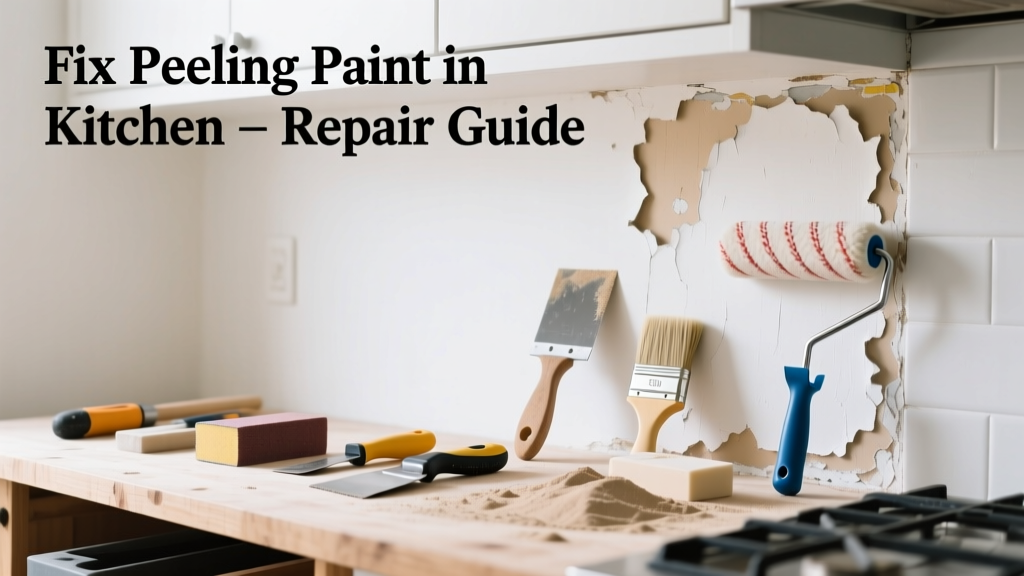
Kitchen paint peels for a reason — usually moisture, poor prep, or incompatible layers — and ignoring it invites mold, wood rot, or spreading damage. Unlike peeling on a bedroom wall, kitchen peeling often signals deeper issues like hidden condensation behind cabinets or failed caulk lines near the sink.
Quick Diagnosis
Before grabbing a scraper, identify the root cause. Most kitchen peeling falls into one of these categories:
- High humidity from unvented range hoods or steam-heavy cooking
- Water intrusion from leaky faucets, cracked grout, or gaps around the backsplash
- Paint applied over grease, soap scum, or old glossy enamel without proper deglossing
- Using interior flat paint instead of scrubbable satin or semi-gloss in high-moisture zones
- Previous paint layers incompatible (e.g., latex over oil without primer)
Tools & Materials Needed
| Item | Purpose | Estimated Cost |
|---|---|---|
| 3M Scotch-Brite Heavy Duty Scrub Sponge | Removes grease film without scratching drywall or tile | $3–5 |
| 100-grit and 220-grit sandpaper (or orbital sander) | Smooths edges and feather-edges bare spots for seamless blending | $6–12 |
| Zinsser Bulls Eye 1-2-3 Primer | Blocks stains, seals moisture-prone surfaces, and adheres to glossy or greasy substrates | $18–24 |
| Benjamin Moore Aura Kitchen & Bath Paint | Mold-resistant, scrubbable, zero-VOC finish designed for humid environments | $45–55/gallon |
| Hygrometer (e.g., ThermoPro TP50) | Measures ambient humidity; sustained levels above 60% RH accelerate peeling | $12–20 |
Step-by-Step Fix
Follow this sequence — skipping steps is the #1 reason DIY repairs fail within 6 months:
- Stop the moisture source first. Check under sinks for slow leaks, inspect caulk around the faucet base and backsplash, and run your range hood for 15 minutes during boiling water — if humidity doesn’t drop, duct cleaning or fan replacement may be needed.
- Remove loose paint completely using a 1.5" flexible putty knife — don’t scrape aggressively into drywall paper. Vacuum dust, then wipe with TSP-free cleaner (like Krud Kutter) diluted 1:4.
- Prime every exposed surface, including sound but chalky paint — Zinsser’s shellac-based formula dries in 45 minutes and locks in grease residue that acrylic primers miss.
- Apply two thin coats of 100% acrylic kitchen/bath paint, waiting 2 hours between coats and 72 hours before heavy use. Use a microfiber roller (3/8" nap) for smooth finishes near cabinets.
When to Call a Pro
Don’t risk health or structural integrity — call a licensed contractor if you see any of these:
- Peeling extends behind upper cabinets or inside wall cavities (indicates chronic moisture intrusion)
- Soft, spongy drywall or warped plywood subfloor beneath painted soffits or toe-kicks
- Mold growth (black, green, or fuzzy patches) visible under lifted paint or along baseboards
- Electrical outlets or switches located in affected areas — moisture + electricity demands licensed assessment
According to the Insurance Institute for Business & Home Safety's 2023 report, 68% of kitchen moisture damage claims involved undetected plumbing leaks behind cabinetry — not surface-level painting errors.
Prevention Tips
Long-term success hinges on controlling what causes the problem — not just covering it up:
- Run your range hood for 10 minutes after cooking — not just during — to clear residual steam
- Re-caulk the sink perimeter and backsplash joints every 18 months with 100% silicone (not acrylic)
- Install a hygrometer on your kitchen wall and keep readings between 30–50% RH year-round
- Wipe down walls weekly near the stove with a vinegar-water solution (1:3) to remove grease buildup before it traps moisture
Can I paint over peeling paint without scraping?
No — doing so guarantees failure. Paint won’t bond to unstable edges, and trapped moisture will lift new layers faster. Even ‘peel-and-stick’ primers require full adhesion to sound substrate. Scrape, sand, prime, then paint.
Is peeling paint in the kitchen dangerous?
It can be. Peeling exposes underlying surfaces to moisture, accelerating rot and mold. The U.S. EPA estimates that 14% of household water usage is from leaks — many hidden behind kitchen walls — and prolonged exposure increases respiratory risks, especially for children and seniors.
What’s the best paint sheen for kitchen walls?
Semi-gloss is ideal for most kitchens: it resists scrubbing, blocks grease penetration, and reflects light well. Satin works near windows or in low-cook zones, but avoid flat or matte — they’re nearly impossible to clean and fail fast near steam sources.
How long does kitchen paint last before peeling?
Properly prepped and maintained, quality kitchen/bath paint lasts 7–10 years. But if humidity regularly exceeds 60% RH or grease isn’t cleaned monthly, expect visible deterioration in 2–3 years — per the National Association of Home Builders’ 2022 Remodeling Impact Report.
Do I need to remove all the old paint?
Only the loose, flaking, or bubbled sections. Sound, well-adhered paint can stay — but it must be thoroughly cleaned and lightly sanded (100-grit) to ensure new primer bonds. Skipping this step causes ‘picture framing,’ where new paint pulls away at the edges of old layers.
Can I use regular bathroom paint in the kitchen?
You can — but shouldn’t. Bathroom paints prioritize mildew resistance, while kitchen formulas add grease-blocking polymers and enhanced scrub resistance. Benjamin Moore’s Aura Kitchen & Bath, for example, contains proprietary resin technology proven to withstand repeated wiping with dish soap (per ASTM D2486 testing).
A properly repaired kitchen wall should look seamless, resist daily wear, and hold up through holiday cooking marathons — not just survive until next spring. Focus on moisture control first, prep second, and paint third. For related help, see our guides on fixing a leaky faucet and re-caulking a kitchen sink.