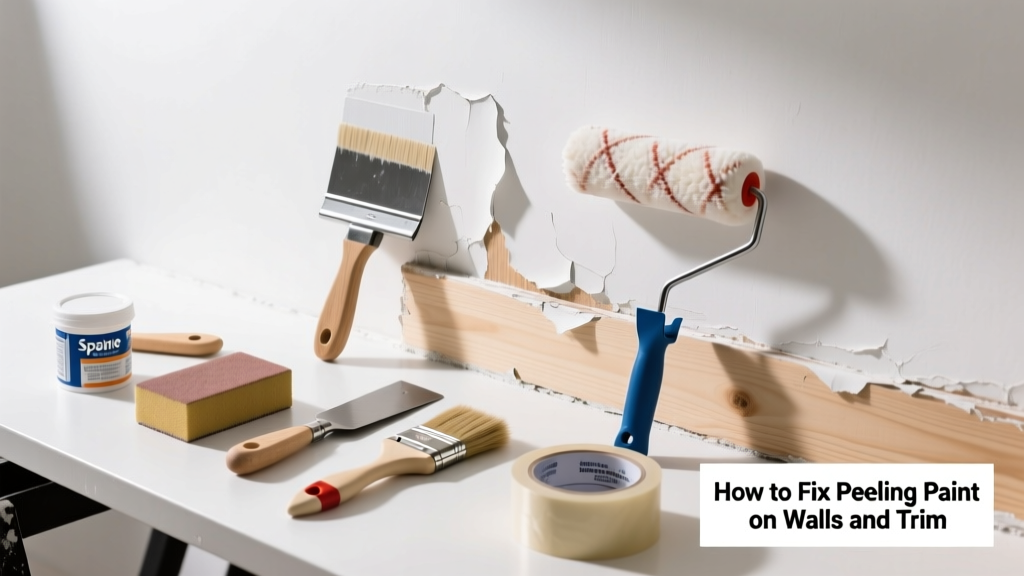
That flaky, curling edge of paint on your bedroom wall or kitchen trim isn’t just ugly—it’s a warning sign. Left unaddressed, peeling paint invites moisture damage, mold growth, and deteriorating substrate. Most cases are fixable in a weekend with the right prep and materials.
Quick Diagnosis
Before grabbing a scraper, identify the root cause—this determines whether your repair lasts or fails within months.
- Moisture behind walls (leaky pipes, poor ventilation, or exterior water intrusion)
- Paint applied over dirty, glossy, or chalky surfaces
- Using interior paint outdoors—or vice versa
- Latex paint applied over uncured oil-based paint
- Surface temperature below 50°F during application (per ASTM D7235-22)
Tools & Materials Needed
| Item | Purpose | Estimated Cost |
|---|---|---|
| 5-in-1 painter’s tool | Scrapes loose paint and scores edges without gouging drywall | $8–$12 |
| 120- and 220-grit sandpaper (or orbital sander) | Smoother feathering and surface profiling for adhesion | $5–$25 |
| Zinsser Peel Stop or Gardz primer | Bonds to chalky, powdery, or marginally adhering surfaces | $18–$24 per quart |
| Oil-based or bonding primer (e.g., BIN shellac) | Blocks stains and seals problematic substrates like nicotine or water marks | $16–$22 per quart |
| 100% acrylic latex topcoat (e.g., Benjamin Moore Aura) | Flexible, breathable, and UV-resistant for long-term durability | $45–$65 per gallon |
Step-by-Step Fix
Choose the method based on severity and location. Always wear N95 masks and safety glasses—especially when sanding older homes built before 1978.
- Remove all loose paint: Use a 5-in-1 tool to lift flakes; avoid aggressive scraping that damages drywall paper or wood grain.
- Feather and smooth: Sand edges of remaining paint with 120-grit, then finish with 220-grit. Wipe with a damp microfiber cloth—not a rag that leaves lint.
- Prime strategically: Apply Zinsser Gardz over chalky areas; use BIN shellac over water stains or smoke-damaged zones. Let dry fully (2 hours minimum).
- Topcoat with quality paint: Use a 100% acrylic latex in eggshell or satin sheen—flat finishes hide flaws but resist cleaning poorly.
When to Call a Pro
Some peeling isn’t cosmetic—it’s structural or hazardous. Don’t risk it if you see any of these:
- Peeling extends beyond surface layer into plaster lath or drywall paper (indicating substrate failure)
- Multiple rooms affected simultaneously—suggests systemic moisture or vapor drive issues
- Chalking or powdering that returns within days after cleaning (often tied to alkalinity or efflorescence)
- Lead-based paint confirmed by EPA-certified test kit (1978 or earlier home) and >10 sq ft of disturbed area
According to the U.S. EPA’s Renovation, Repair, and Painting Rule (2023 update), contractors must be certified to disturb lead paint on pre-1978 housing—and homeowners face liability for improper containment.
Prevention Tips
Fixing peeling paint once is smart. Preventing repeat episodes saves time and money long-term.
- Maintain indoor relative humidity between 30–50% year-round using a hygrometer and dehumidifier or humidifier as needed
- Ventilate bathrooms and kitchens with exhaust fans that vent outdoors—not into attics
- Inspect exterior caulk annually around windows, doors, and siding; reseal gaps before winter
- Always clean walls with TSP-substitute (e.g., Krud Kutter) before priming—not just soap and water
Can I use bleach on this?
No. Bleach does not stop peeling—it only kills surface mold. It breaks down latex binders and weakens underlying paint films. For mold-related peeling, first fix the moisture source, then scrub with a 1:10 vinegar-water solution or EPA-registered fungicide like Concrobium Mold Control (2022 product data sheet).
Do I need to remove all the old paint?
Only the loose, flaking, or poorly adhering portions. Sound, well-bonded paint can stay—but must be thoroughly cleaned and sanded at edges for feathering. Removing every trace of prior paint is unnecessary unless you’re changing sheen drastically or covering dark colors.
Why did my fresh paint peel after two weeks?
Most often, it’s inadequate surface prep: dust, grease, or gloss left behind. Another common culprit is painting over a cold or damp surface—paint film can’t coalesce properly below 50°F or above 85% RH. Check your conditions with a temperature and humidity toolkit.
Is sanding always required?
Yes—if paint edges are raised or uneven. Skipping sanding creates visible ridges under new coats and guarantees early failure at transitions. For large flat areas, rent an orbital sander with vacuum attachment to minimize dust. For corners and trim, hand-sand with a sanding block.
Can I paint over peeling paint with primer only?
No. Primer alone lacks the film-build and scrub resistance of topcoats. Even high-build primers like Drywall Primer Plus aren’t designed for final exposure. You’ll get poor washability, inconsistent sheen, and eventual chalking. Always follow with two coats of quality topcoat.
What’s the best primer for stucco or masonry peeling?
Use a breathable, alkali-resistant acrylic masonry primer like Sherwin-Williams Loxon Concrete & Masonry Primer. Stucco fails when trapped moisture expands beneath non-breathable coatings. Avoid oil-based or vinyl primers—they trap vapor and accelerate spalling. See our full guide on stucco repair techniques for moisture mapping tips.
A solid paint job should last 7–10 years indoors and 5–7 years on sun-exposed exteriors—if prep was thorough and environmental stressors were managed. Peeling isn’t random: it’s feedback from your walls telling you something’s out of balance. Treat the symptom, yes—but always investigate the cause. That’s how you turn a quick patch into lasting protection.