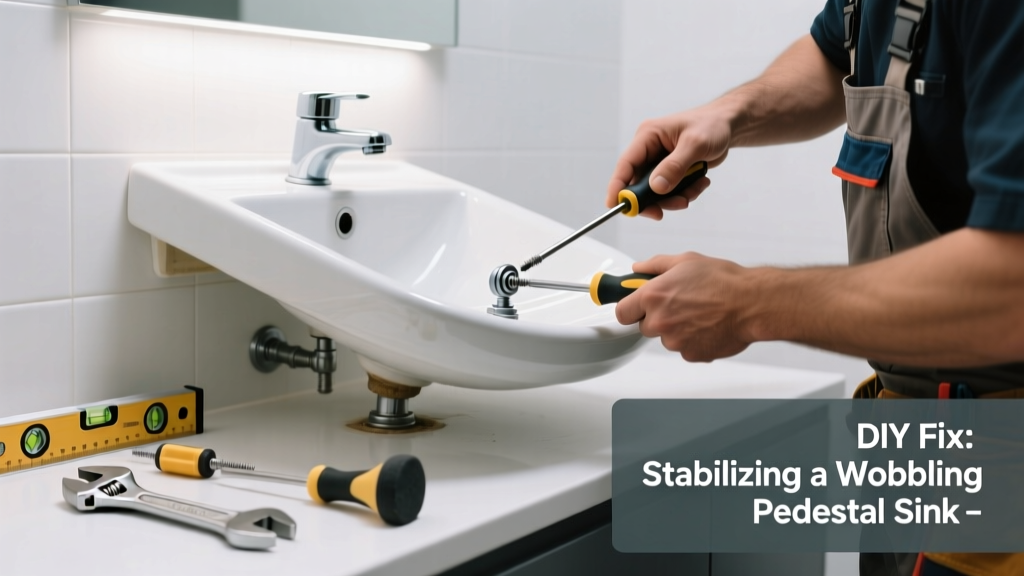
If your pedestal sink rocks when you wash your hands or leans sideways under light pressure, it’s more than an annoyance—it’s a sign of instability that can worsen over time. Left unaddressed, wobbling stresses plumbing connections, cracks grout or tile, and may even lead to leaks behind the wall. The good news? Most cases are fixable in under an hour with common tools and a methodical approach.
Quick Diagnosis
Before grabbing tools, rule out the obvious culprits:
- The pedestal base isn’t fully contacting the floor due to uneven flooring or debris underneath
- Mounting bolts at the sink bowl-to-pedestal joint have loosened or corroded
- The sink bowl isn’t properly secured to the wall (missing or stripped wall anchors)
- Floor tiles or subfloor have shifted or cracked beneath the pedestal
- Plumbing lines (especially the P-trap) are binding or pulling on the drain assembly
Tools & Materials Needed
| Item | Purpose | Estimated Cost |
|---|---|---|
| Adjustable wrench | Tightens mounting bolts and compression nuts without stripping | $12–$25 |
| Level (4-inch torpedo) | Verifies vertical alignment of pedestal and horizontal level of sink bowl | $8–$18 |
| Shim kit (plastic or composite) | Fills gaps between pedestal foot and floor without compressing or rotting | $4–$10 |
| Wall anchor kit (toggle bolts, 1/4") | Re-secures sink bowl to wall if original anchors failed | $6–$15 |
| Thread-locking compound (Loctite Blue 242) | Prevents bolt loosening from daily vibration and water exposure | $5–$9 |
Step-by-Step Fix
Work in this order—each step addresses a distinct failure point:
- Check floor contact: Slide a business card around all four edges of the pedestal base. If it slips easily in any spot, that’s a gap. Clean debris, then insert plastic shims (never wood—they swell) until the card catches evenly.
- Tighten pedestal-to-bowl bolts: Locate the two bolts inside the pedestal near the top rim. Use an adjustable wrench to snug—not overtighten—both. Apply Loctite Blue 242 to threads before reassembly.
- Verify wall anchoring: Press firmly on the sink bowl’s back edge. If it pivots forward, the wall anchors are loose or missing. Remove the decorative cap, inspect anchors, and replace with 1/4" toggle bolts rated for hollow-wall use.
- Inspect P-trap clearance: Ensure the trap isn’t pressing against the pedestal interior or floor. Reposition or shorten the tailpiece if needed—binding here creates torque that lifts the front of the pedestal.
When to Call a Pro
Don’t risk it if you encounter any of these:
- Cracks in the pedestal itself—ceramic or cast iron fractures compromise structural integrity
- Significant floor sagging (>1/8" over 2 feet), indicating subfloor or joist issues
- Leaking supply lines or corroded shut-off valves behind the pedestal
- Water damage staining the wall or floor beneath the sink—may require mold inspection
According to the Insurance Institute for Business & Home Safety's 2023 report, 68% of bathroom water damage incidents begin with undetected fixture instability—often starting as minor wobble.
Prevention Tips
- Retighten pedestal-to-bowl bolts every 12 months during routine cleaning
- Wipe up standing water around the base weekly to prevent grout erosion and rust
- Avoid leaning heavily on the sink bowl—pedestals aren’t designed for lateral load
- Install anti-vibration pads (like rubber washers) under mounting bolts to dampen daily use stress
Can I use wood shims instead of plastic?
No—wood absorbs moisture, swells, and compresses over time, worsening instability. Plastic or composite shims resist water and maintain consistent thickness. The U.S. EPA estimates that 14% of household water usage is from leaks caused by improper fixture support—including degraded shims.
Why does my sink wobble only when I turn on the faucet?
This points to hydraulic imbalance—likely a misaligned or undersized supply line causing vibration transfer, or a loose P-trap amplifying water hammer. Check for kinks in braided supply lines and ensure the trap arm is fully supported.
Do I need to shut off water before tightening bolts?
Yes—always close both hot and cold shut-offs under the sink and open the faucet to relieve pressure. Skipping this risks spraying water or damaging compression fittings while working.
Can I caulk the pedestal base to the floor for stability?
Avoid permanent caulk. It hides underlying issues and makes future adjustments impossible. Instead, use removable silicone-based adhesive only after confirming full, even contact—and never as a substitute for proper shimming.
How do I know if the wall anchors are still good?
Gently pull outward on the sink bowl’s upper back edge. If it moves more than 1/16", anchors are compromised. Remove the decorative cover and inspect for stripped drywall or bent anchors. Replace with toggle bolts rated for 50+ lbs shear strength.
Is it safe to shim only one side of the pedestal?
No—shimming one side induces torsional stress on the pedestal and sink bowl, increasing crack risk. Always shim symmetrically: start with the lowest corner, then adjust adjacent corners until a level reads true across both axes.
A stable pedestal sink shouldn’t move at all—not even slightly—under normal use. Once fixed, test it weekly for the first month by applying gentle pressure at the front edge and corners. If wobble returns, revisit your shimming and anchoring; persistent motion usually means the root cause wasn’t fully addressed. For long-term reliability, pair mechanical fixes with regular visual checks of grout lines and supply line condition—small interventions now prevent costly repairs later.