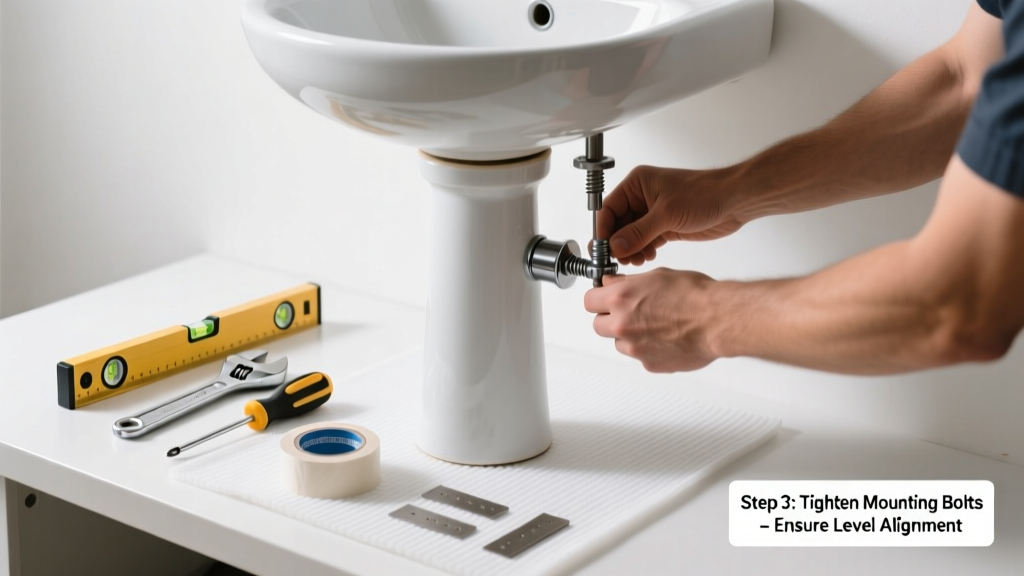
A wobbling pedestal sink isn’t just annoying—it’s a red flag. That subtle shake when you wash your hands can worsen over time, stressing supply lines, cracking caulk, or even fracturing the porcelain base. Left unaddressed, it may lead to water damage or sudden failure during use.
Quick Diagnosis
Before grabbing tools, identify the root cause. Most wobbles stem from one (or more) of these issues:
- Uneven floor contact—especially on tile or hardwood where the pedestal’s feet don’t fully seat
- Loose mounting bolts connecting the sink bowl to the pedestal
- Missing or compressed shims under the pedestal base
- Cracked or warped pedestal leg (common in older cast iron or ceramic units)
- Unsecured wall bracket—many pedestal sinks rely on a rear wall anchor for stability
Tools & Materials Needed
| Item | Purpose | Estimated Cost |
|---|---|---|
| Adjustable wrench | Tightens mounting bolts and supply line connections without rounding fasteners | $12–$25 |
| 3/16" hex key (Allen wrench) | Secures common pedestal-to-bowl mounting screws | $4–$8 |
| Composite shims (0.005"–0.060") | Fills tiny gaps between pedestal foot and floor without compressing or crumbling | $6–$12 |
| Level (6" torpedo style) | Verifies vertical alignment of pedestal and horizontal level of sink rim | $9–$18 |
| White silicone caulk (100% silicone) | Seals base after leveling—prevents moisture intrusion and adds minor grip | $4–$7 |
Step-by-Step Fix
Work methodically—start simple and escalate only if needed:
- Turn off water and drain lines: Shut off hot and cold valves under the sink (or at the main if inaccessible), then open faucet to relieve pressure. Place a towel in the basin to catch drips.
- Check wall bracket first: Locate the metal bracket mounted to the wall behind the sink. Tighten its screws with a screwdriver—if stripped, replace with longer 2" #10 screws into wall studs. Tip: Use a stud finder; drywall anchors alone won’t hold long-term.
- Inspect and tighten pedestal-to-bowl bolts: Look under the sink bowl for two or three bolts connecting it to the top of the pedestal. Tighten evenly with a hex key—don’t overtighten, or you’ll crack the porcelain.
- Level the pedestal: Rock the unit gently. Note which foot lifts. Slide composite shims (not wood or cardboard—they compress) under the high side until rocking stops. Recheck with level on sink rim—should read true horizontally.
- Secure and seal: Once stable, apply a thin bead of white silicone around the base where pedestal meets floor. Let cure 24 hours before full use.
When to Call a Pro
DIY has limits—call a licensed plumber if you encounter any of these:
- The pedestal shows hairline cracks or visible flexing when pressed (structural failure risk)
- Mounting bolts spin freely in stripped threads—even epoxy repair rarely holds long-term
- Wall studs behind the bracket are rotted or missing, requiring framing work
- You discover corroded or pinhole-leaking supply lines hidden behind the pedestal
- The sink wobbles only when weight is applied—suggests internal pedestal separation or foundation settlement
According to the Insurance Institute for Business & Home Safety's 2023 report, 68% of sink-related water damage incidents began with undiagnosed movement or instability—often dismissed as "just a little shake."
Prevention Tips
Maintain stability year after year with these habits:
- Re-check pedestal tightness and floor contact every 6 months—especially after seasonal humidity shifts
- Never stand on or hang heavy items (like towels or baskets) from the sink rim
- Use non-slip rubber pads under pedestal feet if installing on smooth tile or vinyl
- Replace worn shims annually—composite ones last longer than foam but still degrade
Can I use wood shims instead of composite ones?
Wood shims absorb moisture, swell, and compress over time—especially in humid bathrooms. They’re fine for temporary diagnosis, but composite or stainless steel shims are required for lasting fixes. The U.S. EPA estimates that 14% of household water usage is from leaks caused by improper installation—including unstable fixtures.
Why does my sink wobble only when I turn on the faucet?
This points to loose supply line connections or a failing wall bracket. Water pressure creates torque on undersized or unanchored lines. Check both the flexible supply hoses and the wall bracket—tighten or replace corroded fittings. If vibration persists, inspect for kinked or undersized PEX tubing feeding the fixture.
Do I need to remove the sink to fix this?
Not usually. Over 90% of pedestal sink wobbles are resolved without disconnecting plumbing or removing the unit. Only remove it if shims won’t seat due to severe floor slope (>1/4" over 24") or if the pedestal itself is cracked—then replacement is safer than repair.
Is it safe to caulk the entire base to stop wobbling?
No—caulk alone doesn’t fix instability and traps moisture against the pedestal base, accelerating rust or mold. Use caulk only after mechanical stability is achieved, and apply a narrow, continuous bead—not a thick ring. For more on sealing techniques, see our guide on bathroom caulk best practices.
What if the pedestal is ceramic and chipped at the base?
Chips compromise structural integrity. Even small fractures can propagate under load. Replace the pedestal—don’t attempt epoxy fill. Ceramic pedestals aren’t repairable like cast iron, and mismatched replacements often require new sink bowls for proper fit.
Can temperature changes cause wobbling?
Yes—especially in homes with slab foundations or poorly insulated bathrooms. Concrete floors expand/contract slightly with temperature swings, shifting pedestal contact points. Using adjustable-height pedestal feet (available for some models) or installing on a floating subfloor layer helps mitigate this.
A stable pedestal sink should feel solid—not springy, not silent, but confidently anchored. If you’ve tightened, shimmed, and braced it properly, that gentle wiggle disappears—and so does the worry about cracked porcelain or surprise leaks. Keep a small shim kit and level in your bathroom toolbox; future wobbles will take under 15 minutes to resolve.