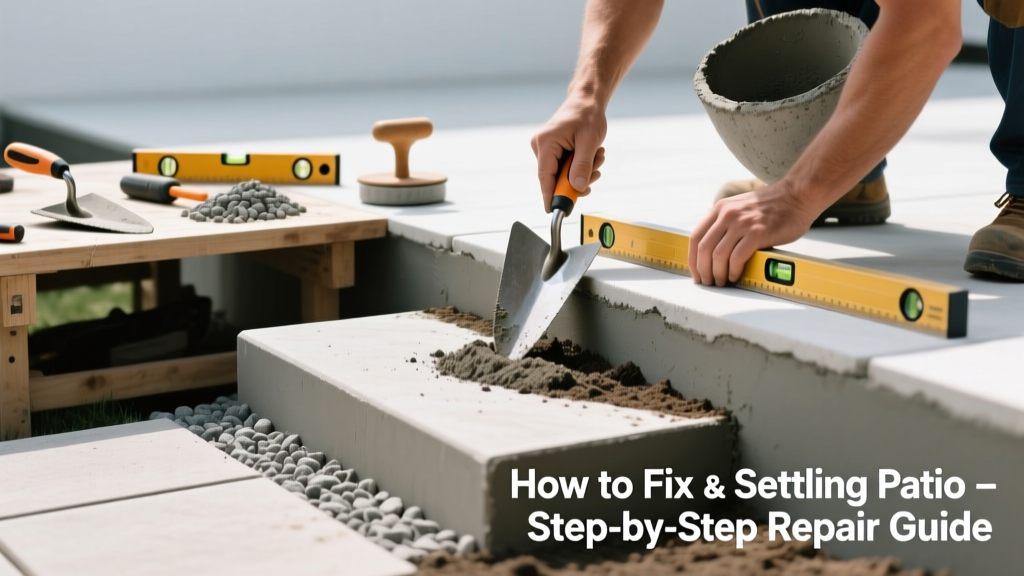
If your patio slants toward the house, has cracked pavers, or wobbles when you step on it, settling is likely the culprit — and it won’t fix itself. Left unaddressed, even minor settlement can worsen rapidly, leading to drainage issues, foundation stress, or tripping hazards. The good news? Many cases are fixable in a weekend with basic tools and careful technique.
Quick Diagnosis
Before grabbing tools, confirm what’s really happening. Settlement isn’t always what it seems — sometimes it’s heaving, erosion, or poor installation. Common causes include:
- Compacted soil beneath the base layer shifting due to rain or freeze-thaw cycles
- Inadequate gravel base (less than 4 inches of 3/4" crushed stone)
- Tree roots undermining the subgrade over time
- Proximity to downspouts or poorly graded yard directing water under the patio
- Use of non-permeable bedding sand instead of polymeric or coarse masonry sand
Tools & Materials Needed
| Item | Purpose | Estimated Cost |
|---|---|---|
| 10-lb sledgehammer | Driving leveling shims or compacting base material | $25–$40 |
| 4-ft level & 2-ft torpedo level | Measuring slope and verifying flatness during repair | $18–$35 |
| Hand tamper or plate compactor | Re-compacting disturbed soil or gravel base | $30–$120 (rental) |
| Crushed limestone (¾") | Replacing washed-out or insufficient base material | $45–$65 per ton |
| Polymeric sand | Filling joints after re-leveling to lock pavers in place | $12–$22 per 50-lb bag |
Step-by-Step Fix
Choose the method based on severity and patio type. For concrete slabs, skip Methods 1–2 — those apply only to paver or flagstone patios.
- Lift-and-Level (for isolated sunken pavers): Carefully pry up affected pavers using a stiff putty knife and rubber mallet. Remove loose sand, add fresh crushed stone base (1–2 inches), tamp, then re-bed in coarse sand. Reset pavers and sweep polymeric sand into joints.
- Mudjacking (for small concrete slab sections): Drill 1–1.5" holes at low points, inject grout mixture (cement, soil, water) via pump until slab lifts. Seal holes with mortar. Only attempt if slab is intact — no cracks wider than 1/8".
- Full Base Rebuild (for widespread settling >1/2"): Remove all pavers, excavate down to firm subsoil, install geotextile fabric, add 6" of compacted ¾" crushed stone, then 1" bedding sand. Reinstall pavers with proper cross-slope (¼" per foot away from structures).
When to Call a Pro
DIY fixes fail — or become unsafe — in these scenarios:
- Settlement exceeds 1.5 inches anywhere on the patio
- Cracks in concrete slabs show vertical displacement (one side higher than the other)
- Adjacent structures (deck posts, foundation walls, or retaining walls) show new cracks or movement
- The patio slopes toward your home’s foundation — this risks basement flooding and requires engineered drainage solutions
- You hit utility lines while probing or digging (call 811 before any excavation)
According to the Insurance Institute for Business & Home Safety's 2023 report, 68% of patio-related water intrusion claims involved improper grading and unchecked settlement near foundations.
Prevention Tips
Long-term stability starts with smart habits and design choices:
- Install French drains or dry wells along the patio’s low edge if your yard holds water
- Redirect downspouts at least 5 feet away from the patio perimeter using splash blocks or corrugated pipe
- Inspect paver joints annually; re-sweep polymeric sand every 2–3 years to prevent washout
- Avoid planting large-root trees within 10 feet of the patio’s edge — oak and maple roots extend 2–3x canopy width
Can I just add sand under sunken pavers?
No — loose sand compresses unevenly and won’t support long-term stability. Always replace compromised base material with compacted crushed stone first. Sand is only for final bedding, not structural support.
How do I know if my patio is settling or heaving?
Settling creates depressions and inward sloping; heaving lifts sections upward, often with visible upward pressure on edges or adjacent walkways. Heaving usually occurs in clay soils during wet winters — and may require soil remediation, not just lifting.
Will sealing my pavers prevent settling?
No. Sealers protect surface color and resist stains, but they don’t stop base erosion or soil movement. A sealer applied over unstable ground will crack and peel within months. Fix the base first — then seal.
Can I use hydraulic jacks to lift a concrete patio slab?
Not safely without engineering oversight. DIY jacking risks slab fracture, misalignment, or damage to embedded utilities. Professional mudjacking or slab replacement uses calibrated pressure and monitoring — something handheld jacks can’t replicate.
How long does a proper base rebuild last?
With 6" of properly compacted ¾" crushed limestone and geotextile separation, a rebuilt base typically lasts 20–30 years — matching or exceeding the lifespan of quality pavers. Poor compaction cuts that life in half, per the Interlocking Concrete Pavement Institute’s 2022 field study.
Do I need a permit to fix my patio?
Most municipalities don’t require permits for cosmetic repairs under 100 sq ft or less than 30" above grade — but check with your local building department before mudjacking or altering drainage. Permits are required if your fix redirects runoff onto a neighbor’s property or alters existing stormwater paths. Visit our permits for outdoor repairs guide for jurisdiction-specific tips.
Fixing a settling patio isn’t about perfection — it’s about restoring safety, function, and value before small problems cascade. Even modest improvements like redirecting a downspout or topping off base material buy years of trouble-free use. And if you’re unsure whether the dip is 3/8" or 7/8", grab that level and measure — knowledge is the cheapest tool in your kit. For deeper issues, don’t hesitate to consult a licensed hardscape contractor — their assessment might save you thousands in future water damage. See also our guides on repairing cracked concrete patios and yard grading for drainage.