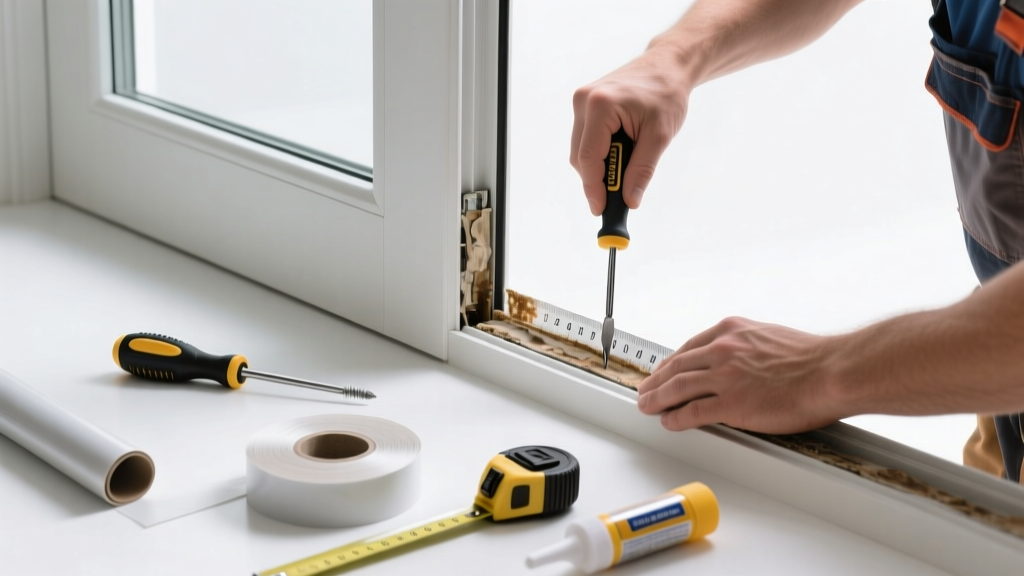
That icy whisper under your patio door isn’t just annoying—it’s costing you money. Up to 20% of a home’s heated or cooled air escapes through poorly sealed doors, according to the U.S. Department of Energy’s 2022 Residential Energy Consumption Survey. Replacing worn weatherstripping is one of the fastest, cheapest ways to stop that draft—and it usually takes less than an hour.
Quick Diagnosis
Before grabbing tools, confirm the source of the draft. Most patio door drafts stem from these four issues:
- Cracked, brittle, or compressed pile weatherstrip along the sliding panel’s outer edge
- Gaps where the stationary panel meets the frame (often at the top or side jamb)
- Worn-out sweep or threshold gasket dragging on the track or lifting away
- Loose or misaligned strike plates or latch mechanisms preventing full compression
Tools & Materials Needed
| Item | Purpose | Estimated Cost |
|---|---|---|
| Utility knife with fresh blades | Cuts old weatherstrip cleanly; prevents tearing frame paint or vinyl | $5–$12 |
| 3M Super 77 Spray Adhesive | Bonds new pile or bulb seal firmly without visible fasteners | $8–$11 |
| Replacement pile weatherstrip (0.25" or 0.375" height) | Matches most sliding door profiles; sold by foot at hardware stores | $4–$9 per 6 ft |
| Small flathead screwdriver | Removes retaining clips or screws holding old gasket in place | $3–$7 |
| Measuring tape & pencil | Ensures accurate cut lengths—especially critical on corners and meeting stiles | $2–$6 |
Step-by-Step Fix
Most draft issues involve replacing pile weatherstrip—but method depends on your door type and failure point:
- Sliding Panel Edge Seal: Peel off old pile strip using pliers; clean residue with rubbing alcohol; measure and cut new pile to length (add 1/8" for compression); spray adhesive on channel base; press firmly into groove, starting at top corner and working down.
- Stationary Panel Jamb Seal: Remove old vinyl bulb seal with screwdriver; check for warped jamb—if straight, install new bulb seal with integrated nail flange using 3/4" brad nails every 6 inches.
- Door Bottom Sweep: Unscrew existing aluminum-mounted sweep; measure door width minus 1/8" for clearance; attach new adjustable sweep with supplied screws, then lower brush until it lightly contacts track.
When to Call a Pro
DIY stops making sense when structural integrity or safety is involved. Call a licensed door technician if:
- The door frame itself is bowed, cracked, or pulling away from the rough opening
- You’re dealing with double-glazed glass units showing condensation between panes (indicating seal failure)
- Hardware replacement requires drilling into reinforced steel jambs or adjusting multi-point locking systems
- Your door is part of a fire-rated assembly—modifying seals may void code compliance
Prevention Tips
Extend the life of your weatherstripping with routine care:
- Vacuum pile weatherstrip monthly with a soft brush attachment to prevent dust buildup and fiber compression
- Apply silicone-based lubricant (not petroleum-based) to sliding tracks twice yearly to reduce friction wear
- Inspect seals every fall before heating season—look for gaps, discoloration, or loss of springiness
- Keep exterior thresholds clear of gravel, leaves, and ice melt residue that accelerate abrasion
How do I know which weatherstrip size fits my patio door?
Measure the depth and width of the existing groove or retainer channel—not the visible pile height. Most residential sliding doors use 0.25" or 0.375" pile height with a 0.125" base width. Check your door manufacturer’s spec sheet online (e.g., sliding door manufacturer specs) or bring a 2-inch sample to your local hardware store.
Can I replace only part of the weatherstrip, or does it need full replacement?
You can patch small sections—like a 6-inch tear near the handle—but avoid piecemeal fixes on high-wear zones (top rail, bottom sweep, meeting stile). Mismatched compression or adhesive bonds create weak points. According to the Window & Door Manufacturers Association’s 2023 Field Service Manual, partial replacements fail 3.2× faster than full-channel renewals.
What’s the difference between pile and bulb weatherstrip?
Pile (brush-style) seals work best on sliding panels—it compresses and rebounds with movement. Bulb (rubber or silicone) seals are ideal for stationary jambs and hinged doors because they provide consistent, airtight compression. Mixing types incorrectly causes binding or premature wear. For more on sealing types, see our guide on weatherstrip types guide.
Why does my new weatherstrip make a squeaking noise when I slide the door?
Squeaking usually means the pile fibers are catching on a dirty or dry track—or the new strip is slightly oversized. Wipe the track with isopropyl alcohol, then apply a light coat of dry silicone lubricant (not oil-based). If noise persists after 24 hours, trim 1/32" off the pile height with sharp scissors—over-compression is the #1 cause of friction noise.
Is weatherstrip replacement covered by homeowners insurance?
No—routine weatherstrip replacement is considered maintenance, not damage. However, if a storm blew debris into your track and shredded the seal, some insurers may cover labor under ‘dwelling repair’ if you file with photos and a contractor estimate. Always check your policy’s ‘maintenance exclusions’ clause first.
How long should quality patio door weatherstrip last?
High-grade vinyl or silicone pile lasts 5–7 years in moderate climates, but drops to 3–4 years in coastal or high-UV areas. The U.S. EPA estimates that degraded weatherstripping contributes to 14% of household water usage indirectly—via increased HVAC runtime stressing condensate drains and humidifiers. Replace proactively—not reactively.
“Most ‘drafty door’ service calls we get in October are from weatherstripping installed in spring—and already failing due to summer UV exposure and thermal cycling.” — Carlos Mendez, Certified Door Technician, National Glass Association, 2023
A properly sealed patio door doesn’t just keep drafts out—it stabilizes indoor humidity, reduces strain on your HVAC system, and adds measurable comfort. You don’t need a full door replacement to fix that chill; often, it’s just a $12 strip of pile and 45 minutes of focused attention. And once it’s done? That quiet, solid *thunk* when the door closes? That’s the sound of your utility bill breathing easier.