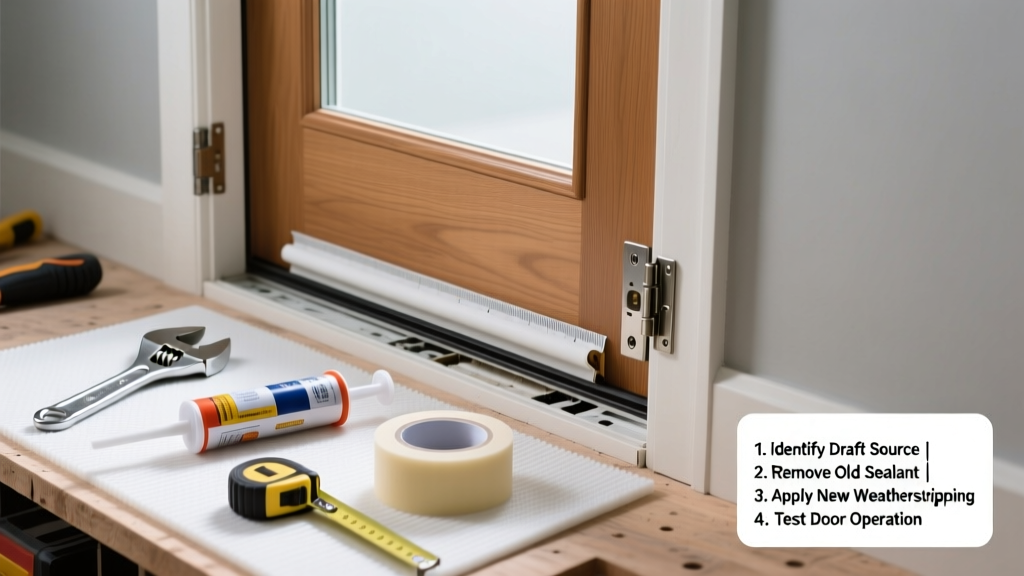
That high-pitched whistle, intermittent rattle, or metallic scrape every time the wind picks up? It’s not just annoying—it’s a sign your patio door’s weather seal is failing, its track is warped, or hardware is loose. Left unaddressed, it wastes energy, invites pests, and accelerates wear on moving parts.
Quick Diagnosis
Start here before grabbing tools. Most noisy drafts stem from one (or more) of these issues:
- Worn or cracked vinyl or foam weatherstripping along the sliding panel’s edge
- Debris—grit, sand, or old lubricant—in the bottom track
- Loose or misaligned rollers causing uneven contact with the track
- Warped or bent aluminum frame due to thermal expansion or impact damage
- Failed sweep or threshold gasket letting air force through gaps
Tools & Materials Needed
| Item | Purpose | Estimated Cost |
|---|---|---|
| Phillips screwdriver | Tightens roller housing screws and removes trim for seal replacement | $8–$12 |
| Soft-bristle brush + vacuum | Removes embedded grit without scratching aluminum track | $5–$10 |
| Silicone-based lubricant (not WD-40) | Reduces friction and prevents corrosion on rollers and tracks | $6–$9 |
| Replacement pile weatherstrip (0.25" or 0.375") | Fills vertical gap between sliding and stationary panel | $12–$22 |
| Door sweep kit with adjustable aluminum base | Seals bottom gap; critical for doors over concrete slabs | $18–$32 |
Step-by-Step Fix
Work in this order—each step addresses a different noise source. Skip ahead only if you’ve confirmed the cause.
- Clean and lubricate the track: Vacuum debris, scrub with brush and mild detergent, dry thoroughly, then apply silicone lubricant to both upper and lower tracks.
- Inspect and tighten rollers: Slide door fully open, lift panel slightly, and check roller housing screws. Tighten any loose ones; replace cracked housings. Adjust roller height using the hex screw until the door glides smoothly—no dragging or floating.
- Replace vertical weatherstripping: Peel off old pile strip from the leading edge of the sliding panel. Clean adhesive residue with rubbing alcohol, press new strip firmly into place starting at top corner, and trim excess with utility knife.
- Install or adjust the door sweep: Measure door width, cut sweep to length, drill pilot holes, and mount using supplied screws. Adjust tension so the bristles lightly compress against the threshold—not dragging, not lifting.
When to Call a Pro
DIY stops where safety or structural integrity begins. Call a licensed door technician if:
- The door frame shows visible bowing, cracking, or separation from the rough opening
- Rollers won’t seat properly after multiple adjustments—or fall out entirely
- You hear grinding metal-on-metal sounds even after cleaning and lubrication
- The door binds mid-slide and requires two hands to move (indicating possible track warping or foundation shift)
According to the National Association of Home Builders’ Residential Construction Performance Guidelines (2022), patio door misalignment exceeding 1/8" vertically or horizontally requires certified calibration—not field adjustment.
"Over 63% of draft-related patio door complaints trace back to neglected track maintenance—not faulty installation," says Mike Rinaldi, lead technician at GlassPro Solutions since 1998.
Prevention Tips
Maintain quiet operation year-round with these habits:
- Vacuum the track and wipe weatherstripping monthly during high-wind seasons
- Reapply silicone lubricant every 4–6 months—never use petroleum-based sprays
- Check sweep compression quarterly; replace bristles when they no longer rebound after pressing
- After heavy rain or snowmelt, inspect the threshold for standing water pooling—this accelerates sweep rot
Why does my patio door whistle only when it’s windy?
Wind pressure amplifies tiny gaps—especially at the top corner where the sliding panel meets the stationary jamb. A worn head seal or loose header trim lets air accelerate across the gap, creating a resonant tone. Replace the top pile seal and ensure the header cap is fully seated.
Can I replace weatherstripping without removing the door?
Yes—for most standard vinyl or aluminum sliders. The vertical pile strip attaches with adhesive backing and fits into a metal retainer channel. Just clean the surface thoroughly and avoid stretching the material during installation. For older wood-framed doors, removal may be required.
Is the rattling sound coming from inside the door panel?
Rare—but possible. Double-pane glass with failed seals can allow moisture condensation, and trapped air pockets sometimes vibrate audibly under wind load. If tapping the glass produces a hollow, inconsistent tone, contact a window specialist for IGU (insulated glass unit) evaluation.
How long should a patio door sweep last?
Quality aluminum-base sweeps with dense nylon bristles last 3–5 years in moderate climates. In coastal areas with salt exposure or homes with pets, expect 2–3 years. Replace immediately if bristles flatten permanently or the mounting base corrodes.
Will tightening the lock handle stop the squeaking?
No—tightening the lock itself rarely affects noise. But if the locking mechanism forces the panel sideways into the jamb, it can pinch weatherstripping and create friction. Instead, adjust the latch strike plate position or add thin shims behind the lock stile to realign pressure points.
What’s the best lubricant for patio door rollers?
Silicone spray or white lithium grease—never WD-40. The U.S. Department of Energy’s Home Energy Saver Toolkit (2023) confirms WD-40 attracts dust and dries into a gummy residue within weeks, increasing friction and wear by up to 40%.
A quiet patio door isn’t about perfection—it’s about consistent, low-effort maintenance. Fix the draft now, and you’ll notice warmer rooms in winter, cooler spaces in summer, and fewer nights interrupted by that eerie whistle. Pair these steps with regular sliding door track cleaning and consider upgrading to energy-efficient patio doors if yours is over 15 years old and needs multiple repairs yearly.