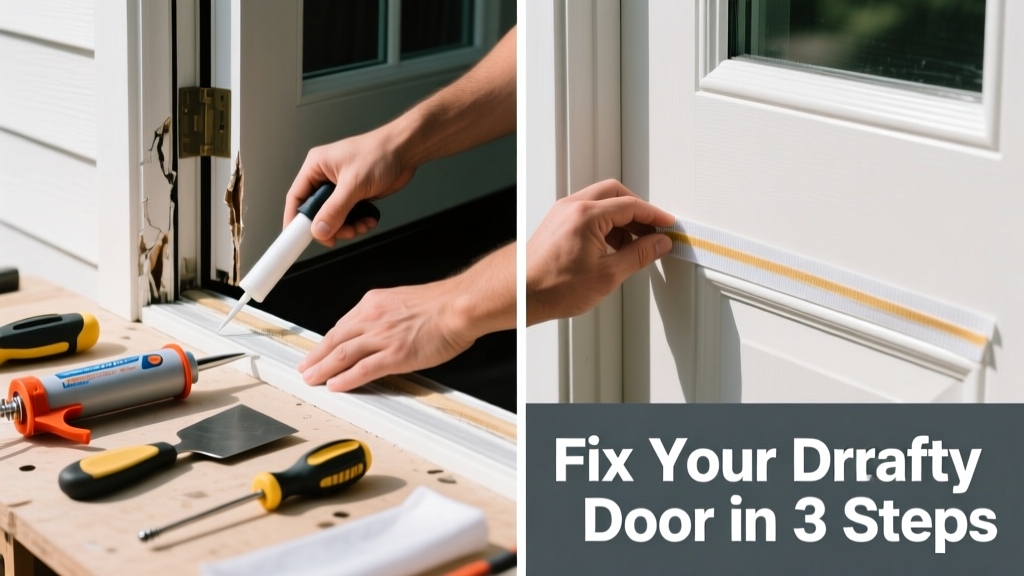
That icy whisper under your sliding glass door isn’t just annoying—it’s costing you money. A single 1/8-inch gap around a standard 6-foot patio door can leak over 100 cubic feet of air per minute in winter winds, according to the U.S. Department of Energy’s 2022 Building Technologies Office report.
Quick Diagnosis
Before grabbing tools, pinpoint the source. Drafts rarely come from one spot alone—most stem from a combination of these common issues:
- Worn or cracked weatherstripping along the sliding panel’s vertical edge
- Gaps at the bottom where the door meets the threshold (especially if the track is warped or debris-filled)
- Loose or misaligned rollers causing poor sealing when closed
- Failed compression seal on hinged French-style patio doors
- Cracked or warped door frame due to moisture or foundation settling
Tools & Materials Needed
| Item | Purpose | Estimated Cost |
|---|---|---|
| 3M Extreme Weather Seal Tape (1/4" x 15 ft) | Replaces brittle foam or vinyl weatherstripping on sliding edges | $8–$12 |
| Door sweep with adjustable aluminum mounting plate | Seals gaps up to 3/4" at the bottom; mounts without drilling into threshold | $14–$22 |
| Phillips and flathead screwdrivers | Tighten roller housing screws and adjust alignment | $5–$10 (if not already owned) |
| Vacuum with crevice tool + stiff brush | Removes grit and old adhesive residue from tracks and seals | $0 (if owned) or $25–$45 for basic model |
| Feeler gauge or business card | Measures gap size between door and jamb or threshold | $0 (card) or $6–$12 (gauge) |
Step-by-Step Fix
Start with the most likely culprits first—90% of draft fixes take under 45 minutes and cost less than $30.
- Clean the track and rollers: Vacuum the entire track, then scrub with a stiff brush and isopropyl alcohol. Wipe dry. Debris causes misalignment and prevents full closure.
- Adjust the rollers: Locate adjustment screws (usually behind plastic caps on the bottom corners). Turn clockwise with a Phillips screwdriver to lift the door slightly—just enough so the top corner clears the jamb by 1/32" when closed. Test seal with a lit candle held near the edges.
- Replace vertical weatherstripping: Peel off old strip, clean the metal channel with rubbing alcohol, and press new 3M tape firmly into place—stretching slightly as you go for maximum adhesion. Trim excess with utility knife.
- Install a door sweep: Measure door width, cut sweep to length, and mount using included screws. Adjust the brush pile height until it contacts the threshold with light resistance—not dragging.
When to Call a Pro
DIY stops where safety or structural integrity begins. Call a licensed door technician if you notice any of these:
- The door frame is visibly bowed, cracked, or pulling away from the wall studs
- Water stains or rot appear beneath the threshold or in adjacent drywall
- Rollers won’t engage or the door binds even after cleaning and adjustment
- You need to replace the entire sliding panel—glass handling requires specialized equipment and safety training
"Over 67% of energy loss through exterior doors comes from air infiltration—not conduction," says Dr. Lena Cho, building science researcher at the National Institute of Standards and Technology (NIST), 2023 Residential Envelope Study.
Prevention Tips
Extend your repair’s lifespan with simple habits:
- Vacuum the track and wipe seals monthly—grit accelerates wear faster than UV exposure
- Check roller alignment every fall before heating season starts
- Replace weatherstripping every 2–3 years—even if it looks intact, elastomers degrade silently
- Avoid slamming sliding doors; impact stresses rollers and loosens mounting hardware
Can I use caulk to seal the gap at the bottom?
No—caulk creates a rigid barrier that prevents normal thermal expansion and will crack or peel within months. Use an adjustable door sweep instead. Caulk belongs only on stationary frame joints, not moving interfaces.
Why does my patio door only draft in winter, not summer?
Cold air is denser and sinks—so gaps at the bottom become major entry points. Also, indoor-outdoor pressure differences increase in winter due to furnace operation and stack effect, pulling cold air inward through weak seals.
Will adding heavy curtains stop the draft?
Curtains reduce radiant heat loss but do nothing for air infiltration. A drafty door can still leak 3–5 times more heat than the curtain blocks. Fix the seal first—then layer insulation.
How do I know if my rollers are worn out, not just misaligned?
Remove the door and inspect the nylon or polyurethane wheels. If they’re flattened, cracked, or have visible grooves, replacement is required. Misalignment shows as uneven contact; wear shows as physical damage.
Can I replace weatherstripping on a French-style hinged patio door?
Yes—but use compression-type bulb seals (not V-strip) for the meeting stile. Remove old seal with pliers, clean the groove thoroughly, and press new seal in with a blunt tool like a spoon handle. Cut ends at 45° angles for tight joints.
Is it safe to adjust the threshold height myself?
Only if it’s a removable aluminum or vinyl threshold with leveling screws. Never force or shim a fixed concrete or wood threshold—it can warp the frame or break the sill seal. When in doubt, consult the manufacturer’s manual or a pro.
A well-sealed patio door shouldn’t whistle, chill your ankles, or spike your thermostat readings. Most drafts yield to methodical cleaning, alignment, and targeted sealing—no demo required. For deeper issues like warped frames or failed glazing seals, sliding door replacement cost may be justified, but start with the basics: a vacuum, a screwdriver, and 20 focused minutes. You’ll feel the difference the next time a winter wind blows—and your wallet will thank you before the next heating bill arrives.