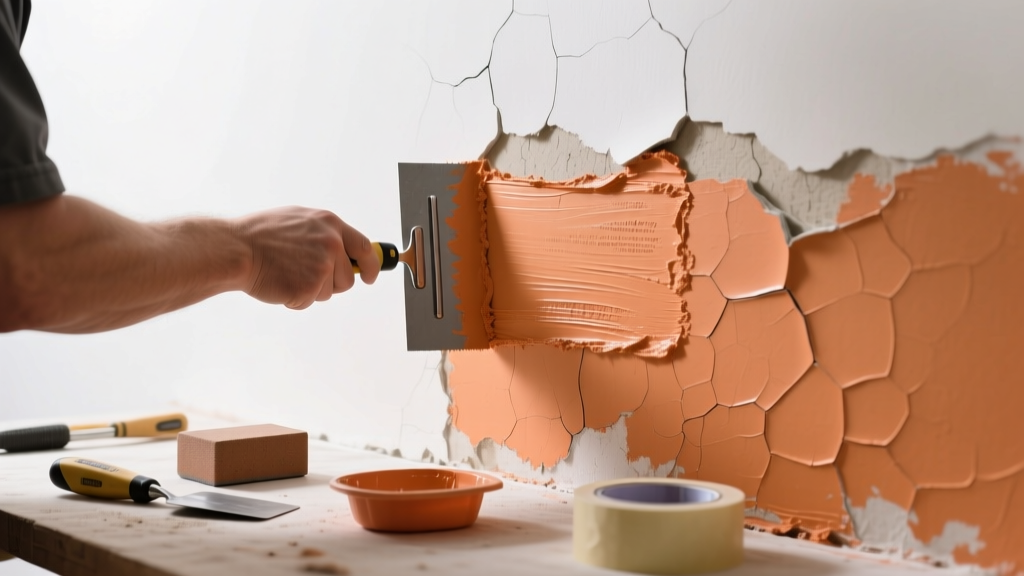
Orange peel texture isn’t supposed to flake, bubble, or crumble—but when it does, patching the whole wall is overkill. The fix is surgical: isolate the failing section, strip it cleanly, and respray only what’s needed. Most homeowners can do this in a single afternoon with basic tools and under $50 in materials.
Quick Diagnosis
Before grabbing tools, confirm the issue isn’t surface-level dirt or moisture damage. True orange peel texture failure shows these signs:
- Localized peeling or powdering that worsens with light pressure
- Bubbling or blistering only in one spot—often near ceiling corners or HVAC vents
- Discoloration paired with texture softening (a sign of water infiltration behind the drywall)
- Cracking radiating from nail or screw heads (indicating substrate movement)
Tools & Materials Needed
| Item | Purpose | Estimated Cost |
|---|---|---|
| 120-grit sanding sponge | Smooths edges without damaging adjacent texture | $4–$8 |
| Texture spray can (orange peel formula) | Matches existing pattern; look for Sherwin-Williams Drywall Texture Spray or Homax Easy Touch | $12–$18 |
| Painter’s tape (3M Blue 2090) | Creates clean borders; prevents overspray on trim or adjacent walls | $6–$10 |
| Drop cloth + plastic sheeting | Catches overspray dust and texture debris; essential for cleanup | $8–$15 |
| Utility knife with fresh blades | Cuts away loose texture cleanly; avoids tearing into drywall paper | $3–$7 |
Step-by-Step Fix
Work in a well-ventilated room with windows open and fans running. Wear an N95 mask—texture dust is respirable and irritating.
- Isolate and cut: Use a utility knife to score a square or rectangle around the damaged area, extending 1/2 inch beyond visible failure. Cut just deep enough to sever texture—not into drywall paper.
- Remove texture: Gently scrape inward with a 4-inch putty knife. If texture lifts easily, it’s fully detached. If resistant, mist lightly with water and wait 90 seconds before scraping again.
- Feather and prime: Sand edges with 120-grit sponge until smooth and tapered. Wipe with damp rag, then apply one coat of drywall primer (e.g., Zinsser Bulls Eye 1-2-3) to seal and ensure even absorption.
- Spray match: Shake can for 60 seconds. Hold 12–16 inches from wall. Use overlapping passes—start off-board, move across, then lift off-board. Let dry 2 hours before light sanding.
When to Call a Pro
Don’t risk DIY if you see any of these red flags:
- Texture failure covers more than 3 sq ft—or appears in multiple non-adjacent spots
- Underlying drywall feels spongy, discolored, or emits a musty odor (sign of mold or chronic moisture)
- The wall is load-bearing or contains electrical boxes or plumbing access panels within the repair zone
- You’re working on a cathedral ceiling higher than 10 feet without scaffolding
According to the National Association of Home Builders’ 2023 Drywall Installation Standards, texture adhesion failure across >5% of a wall surface usually indicates improper priming or substrate prep—and requires full retexturing by a certified finisher.
Prevention Tips
Orange peel texture fails most often where environmental stress concentrates. Stop recurrence with these targeted fixes:
- Install exhaust fans in bathrooms and kitchens that vent outdoors—not into attics—to reduce humidity-driven delamination
- Use foam backer rod and silicone caulk at ceiling-wall joints to prevent thermal expansion cracks from telegraphing through texture
- Recoat high-touch zones (e.g., hallway walls near light switches) every 5 years with acrylic eggshell paint—it flexes better than flat latex
Can I use regular wall paint instead of texture spray?
No. Standard paint won’t replicate the 3D topography of orange peel. It’ll look flat, glossy, and visually jarring next to surrounding texture—even if color-matched perfectly. Texture spray contains fine particulates and binders designed to mimic the spray-gun application used during original installation.
How long does the repair take to fully cure?
Texture spray dries to the touch in 30–45 minutes but needs 24 hours to fully cross-link and resist abrasion. Wait 48 hours before washing or applying additional coats. Skipping this step risks smearing or lifting during cleaning.
Will the new texture match my existing wall exactly?
Close—but rarely perfect. Orange peel varies by air pressure, nozzle distance, and ambient humidity during original application. For best results, test your spray can on cardboard first, adjusting distance and speed until the pattern density matches a scrap sample scraped from an inconspicuous corner.
Do I need to repaint the entire wall after repair?
Not necessarily. If your wall was painted within the last 2 years with quality interior acrylic, spot-priming and texturing usually blends well. But if the wall has yellowed or been touched up with mismatched sheens, plan for a full cut-in-and-roll of that wall section using the original paint batch—if you still have it. Otherwise, learn how to match old wall paint.
Can I texture over wallpaper or textured vinyl?
No—never. Orange peel spray won’t adhere reliably to non-porous surfaces. You must fully remove wallpaper (use a scoring tool and wallpaper remover gel), then prime with a PVA-based drywall primer like Gardz before texturing. Skipping removal causes bubbling and eventual peeling.
What’s the shelf life of unopened texture spray cans?
Most manufacturers (including Homax and Rust-Oleum) list 2 years from manufacture date stamped on the bottom. After that, propellant degrades and particles settle, causing clogs and uneven spray. Store upright in temperatures between 50°F–80°F—avoid garages or sheds where freezing or summer heat occurs.
A precise orange peel texture repair doesn’t require a contractor’s license—just patience, the right spray can, and attention to edge blending. Done correctly, the fix disappears into the wall, buying you another 7–10 years before the next refresh. For larger texture issues, see our guide on drywall texture repair options or how to fix bubbling paint on drywall.