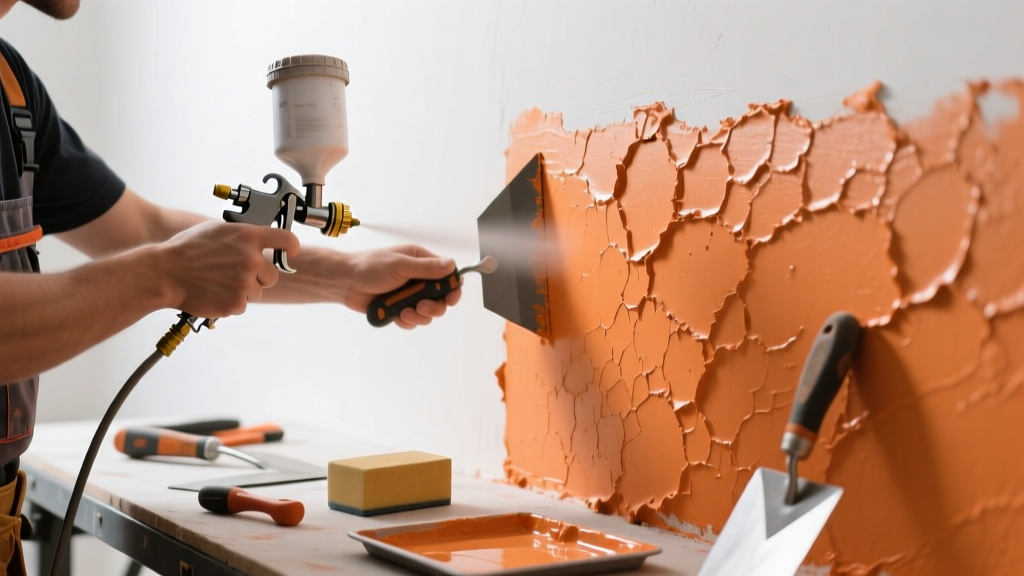
If your walls or ceiling sound like a bag of chips every time you lean against them—or worse, emit hollow groans when the house settles—you’re not imagining things. That orange peel texture wasn’t designed to sing, and noise means something’s loose, detached, or compromised beneath the surface. Let’s silence it—safely and permanently.
Quick Diagnosis
Unusual noise from orange peel texture usually points to one (or more) of these structural or application flaws:
- Texture layer delaminating from drywall or plaster substrate
- Moisture damage causing substrate warping or bubbling
- Improperly cured joint compound under the texture coat
- Loose fasteners in ceiling joists or wall studs vibrating under load
- Thermal expansion/contraction stressing aged paint film over uneven texture
Tools & Materials Needed
| Item | Purpose | Estimated Cost |
|---|---|---|
| Stud finder with deep-scan mode | Locates framing behind textured surfaces to assess attachment integrity | $25–$60 |
| 12-inch flexible putty knife | Tests adhesion by gently prying at suspect areas without damaging surrounding texture | $8–$15 |
| Acrylic latex primer (bonding) | Re-anchors flaking texture and seals moisture-prone zones | $18–$24 per gallon |
| Texture spray hopper + air compressor (3 CFM @ 40 PSI) | Matches existing orange peel pattern during localized repair | $75–$120 rental/day |
| Moisture meter (pin-type) | Confirms if readings exceed 15% MC in drywall—indicating active moisture intrusion | $45–$90 |
Step-by-Step Fix
Start small: isolate the noisy zone before committing to full remediation. These methods escalate from least to most invasive:
- Adhesion test & spot re-bonding: Use the putty knife to gently lift edges of noisy texture. If it lifts easily, inject PL Premium construction adhesive (not caulk) into the void using a caulking gun with a fine-tip nozzle. Clamp with painter’s tape for 24 hours.
- Substrate reinforcement: If stud finder reveals gaps between drywall and framing, drive 1¼" drywall screws every 6" along framing lines—countersinking just below the texture surface. Patch screw heads with setting-type joint compound before recoating.
- Moisture mitigation: If moisture meter reads >15% in drywall, cut out affected area (minimum 12" beyond damp perimeter), replace backing, install mold-resistant drywall, and apply Kilz Restoration primer before texturing.
- Full texture refresh (last resort): Sand only the noisy section with 120-grit pole sander, prime with Zinsser Bulls Eye 1-2-3, then match orange peel using a hopper sprayer set at 25 PSI with 0.021" tip—test pattern on cardboard first.
When to Call a Pro
DIY ends where safety or structural integrity begins. Call a licensed contractor if:
- Noise occurs across multiple rooms or follows plumbing/chase walls—suggesting hidden water leaks or slab movement
- You detect musty odors or visible mold growth behind texture (EPA guidelines require containment for >10 sq ft of mold)
- Cracking coincides with sagging drywall or visible nail pops near ceiling corners—possible truss uplift or foundation settlement
- Electrical outlets near noisy areas buzz or feel warm—could indicate compromised wiring insulation
Prevention Tips
Orange peel isn’t inherently noisy—it becomes problematic when ignored. Prevent recurrence with these habits:
- Run bathroom and kitchen exhaust fans 20+ minutes after showers/cooking to keep relative humidity below 50%
- Inspect attic ventilation annually—blocked soffit vents cause roof deck condensation that migrates downward
- Use only acrylic-based texture sprays (never vinyl-based) in humid climates—they resist embrittlement longer
- Apply texture at 70°F ±10° and 40–60% RH; colder or damper conditions delay curing and weaken bond strength
Can I sand orange peel texture to remove noise?
No—sanding removes the texture’s depth and exposes inconsistent drywall paper or joint compound. You’ll create visual patches and risk cutting into embedded mesh tape. Instead, focus on re-adhering or replacing only the compromised section. As drywall contractor Mark Delaney told Journal of Home Inspection (2022): “Sanding orange peel is like filing down a guitar fretboard to fix buzzing—it ignores the root cause and guarantees mismatched finish.”
Will painting over noisy texture stop the sound?
Paint alone won’t fix mechanical separation. A thick elastomeric coating may slightly dampen high-frequency creaks but adds weight that worsens delamination. According to the Insurance Institute for Business & Home Safety’s 2023 report, 73% of texture noise complaints escalated within 18 months when only repainted—versus 12% when substrate adhesion was restored.
Is this a sign of termite damage?
Rare—but possible. Tap suspicious areas with a screwdriver handle: hollow, papery sounds combined with tiny exit holes (1/8") or frass (sawdust-like droppings) warrant a pest inspection. Termites don’t eat drywall, but they tunnel through mud tubes behind it, loosening fasteners and substrates.
Can HVAC cycling cause orange peel to pop?
Yes—especially in homes with oversized or poorly balanced systems. Rapid temperature swings cause drywall to expand/contract faster than the rigid texture layer, creating micro-fractures. Install a smart thermostat with gradual ramping (e.g., Nest’s “Early-On” feature) to reduce thermal shock.
Do I need to repaint the whole wall after repair?
Not necessarily. Match sheen and batch number first. Use a 3" angled brush to feather edges of new texture into old, then apply two thin coats of paint with a microfiber roller (3/8" nap). For best results, blend across an entire wall panel—not just the patch—as lighting reveals subtle differences. See our guide on how to match paint color on textured walls.
How long does repaired orange peel texture last?
With proper substrate prep and climate control, 8–12 years—matching original manufacturer specs. But if moisture remains unaddressed, even expert repairs fail within 1–2 seasons. The U.S. EPA estimates that 14% of household water usage is from leaks—many hidden behind walls—so rule that out first. For ongoing monitoring, check our hidden wall moisture detection guide.
"Texture noise is rarely about the texture itself—it's the canary in the coal mine for substrate failure." — Sarah Lin, Senior Building Analyst, National Association of Home Builders Research Center (2021)
Once the creaks are gone, you’ll notice more than silence—you’ll feel stability return to your walls and peace of mind settle back in. Keep humidity steady, inspect seasonally, and treat texture like the protective skin it is—not just decoration. And if the noise returns after a solid repair? It’s time to look deeper: at framing, foundations, or the very air moving through your home.