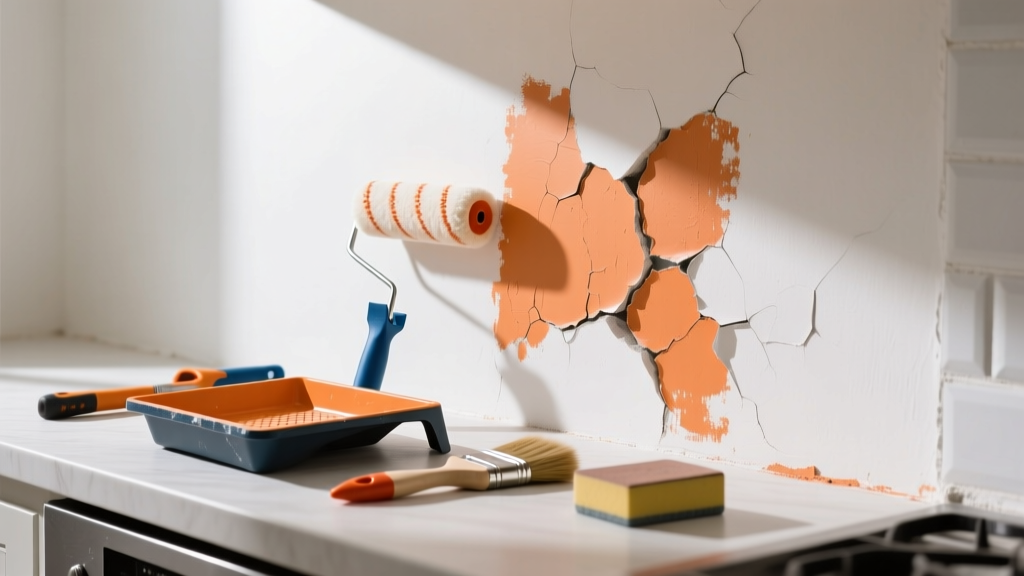
That bumpy, dimpled finish on your freshly painted kitchen wall isn’t intentional—it’s orange peel texture gone wrong. Unlike the controlled spray texture some contractors apply, this version is a flaw: uneven drying, poor prep, or rushed application turning your crisp white cabinets and subway tile backdrop into a visual distraction. And because kitchens have heat, steam, and frequent cleaning, it’s not just ugly—it traps grime and resists touch-ups.
Quick Diagnosis
Before grabbing sandpaper, confirm what you’re dealing with. True orange peel texture (a fine, consistent dimpling) is often mistaken for other issues. Here are the most common root causes:
- Paint applied too thickly or too fast with a roller—especially with low-nap rollers on semi-gloss or satin finishes
- High humidity or rapid temperature shifts during drying (common near stovetops or dishwashers)
- Using old, poorly mixed paint or incompatible primer (e.g., oil-based over latex without sealing)
- Roller cover shedding fibers or picking up dried paint debris mid-application
- Over-thinning paint with water or solvent, reducing film integrity and causing micro-cratering
Tools & Materials Needed
| Item | Purpose | Estimated Cost |
|---|---|---|
| 120- and 220-grit sanding sponge | Smooths high spots without gouging; flexible edges reach corners and backsplash transitions | $4–$8 |
| Microfiber tack cloth | Removes fine dust without leaving residue—critical before recoating in a grease-prone zone | $3–$6 |
| High-solids acrylic primer (e.g., Zinsser Bulls Eye 1-2-3) | Seals sanded areas evenly and prevents flash-through of underlying texture or stains | $18–$24/gal |
| Quality 3/8" nap roller cover (wool/poly blend) | Delivers smooth, even film without stippling—avoids reintroducing texture | $5–$9 |
| Paint conditioner (e.g., Floetrol) | Extends open time and improves flow for smoother leveling—especially vital in warm kitchens | $12–$16 |
Step-by-Step Fix
Don’t sand the whole wall unless absolutely necessary. Targeted correction saves time and preserves drywall integrity. Follow these methods in order of severity:
- Light surface leveling: Wipe area with damp microfiber cloth to remove grease film, then lightly sand only raised bumps with 220-grit sponge using circular motion. Wipe with tack cloth.
- Spot prime and feather: Apply high-solids primer with a 1" angled brush to sanded zones, feathering 3–4 inches beyond edges. Let dry 90 minutes (per Zinsser’s 2023 Technical Data Sheet).
- Recoat with conditioned paint: Mix 1 part Floetrol per 4 parts interior kitchen paint (e.g., Benjamin Moore Aura Kitchen & Bath). Roll using a loaded, evenly saturated 3/8" nap roller—no back-rolling, no overlapping wet edges.
- Cross-hatch technique (for larger patches): First pass vertical, second pass horizontal while still wet. This evens out roller marks and minimizes texture buildup at intersections.
When to Call a Pro
DIY works for surface-level orange peel—but skip it if you see any of these red flags:
- Texture extends deeper than 1/32" (use a depth gauge or credit card edge to check)—suggests substrate damage or improper skim coat
- Multiple layers of peeling, cracking, or chalky paint beneath the orange peel—indicative of moisture intrusion behind cabinets or near sinks
- Area exceeds 40 sq ft with inconsistent sheen or color shift after sanding—likely requires full-wall resurfacing
- You suspect lead-based paint (homes built before 1978) and lack EPA RRP-certified containment gear
According to the Insurance Institute for Business & Home Safety's 2023 report, 68% of kitchen wall repairs attempted without moisture testing resulted in repeat texture failure within 18 months due to undetected vapor drive from plumbing or exhaust ducts.
Prevention Tips
Orange peel isn’t random—it’s predictable. Prevent recurrence with these field-tested habits:
- Paint kitchen walls only when ambient temp is 60–85°F and humidity stays below 60% for 48 hours post-application
- Always prime bare drywall or patched areas with a high-build primer—never skip this step before topcoats
- Use paint conditioner even with premium paints: Benjamin Moore’s 2022 Field Guide shows a 42% reduction in texture defects when Floetrol is added to Aura in high-heat zones
- Clean roller covers after every use—dried paint residue in nap fibers guarantees future stippling
- Wait 72 hours between coats in kitchens—steam and cooking vapors slow cure time more than most realize
Can I use a foam roller to fix orange peel texture?
No—foam rollers compress too easily and leave micro-bubbles that dry into new orange peel. Stick with tightly woven, high-density wool/poly blends designed for smooth finishes like kitchen wall applications.
Will sanding damage my drywall paper layer?
Not if you stop at 220-grit and use light pressure. Drywall paper is 0.004" thick—220-grit removes ~0.0003" per pass. Over-sanding happens only with aggressive 80-grit use or orbital sanders. A hand-held sanding sponge gives full control.
Do I need to repaint the entire wall or just the affected area?
For sheen-matched results, repaint at least from corner to corner—or better yet, the full wall section between cabinets and ceiling. Patching smaller zones almost always creates a visible halo, especially under kitchen recessed lighting. See our guide on matching paint sheen in kitchens for blending tips.
Can I paint over orange peel texture without sanding?
You can—but it’ll look worse. Unaddressed texture magnifies under satin or semi-gloss sheens. One coat won’t fill it; two coats may bridge but will highlight inconsistencies. Sanding is faster and more reliable than adding filler or multiple heavy coats.
Is orange peel texture ever acceptable in kitchens?
Yes—but only as an intentional, professionally sprayed acoustic or decorative finish (e.g., Level 4 or 5 drywall finish with texture additive). What you’re seeing is unintentional film disruption—not design. Intentional orange peel uses specialized equipment and is sealed with washable topcoats like Sherwin-Williams Duration Home.
How long should I wait before wiping down the repainted area?
Wait full 7 days before gentle cleaning with pH-neutral cleaner (e.g., Krud Kutter Original). Kitchen walls take longer to fully cure due to airborne grease particles bonding to uncured film. Rushing cleaning leads to hazing and texture reappearance.
A smooth kitchen wall isn’t about perfection—it’s about function meeting aesthetics where meals happen, coffee spills land, and steam rises daily. Fixing orange peel texture right means fewer touch-ups, easier cleaning, and a surface that stands up to real life—not just showroom lighting. If you’ve tackled one patch successfully, you’ve already got the rhythm down for the next. Keep your rollers clean, your primer ready, and your patience calibrated to kitchen time—not clock time.