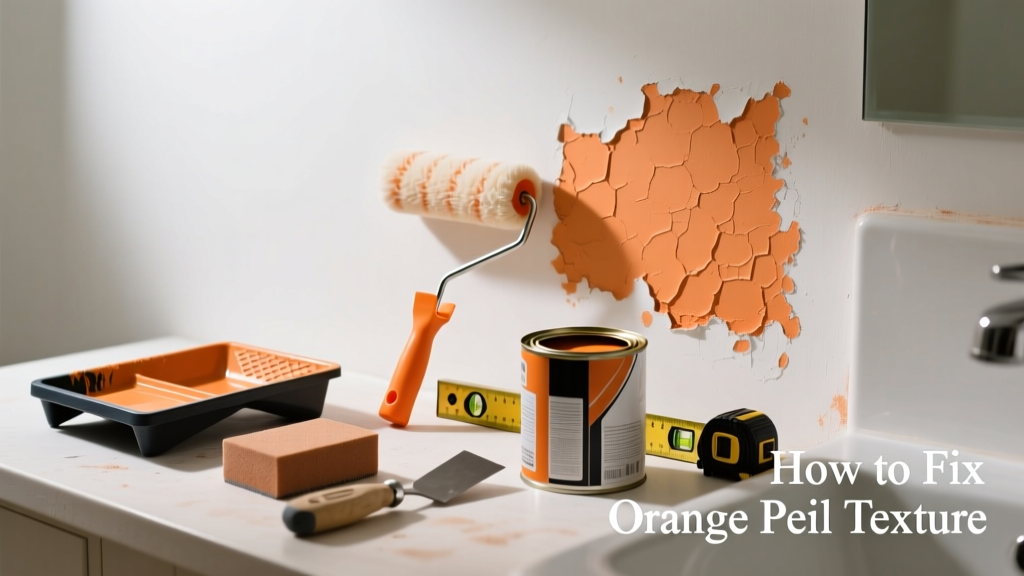
That bumpy, dimpled finish on your bathroom wall isn’t intentional—it’s orange peel texture caused by improper painting in a humid, poorly ventilated space. Unlike drywall texture, this flaw hides under paint and worsens with moisture, leading to flaking, mildew growth behind the film, and an unprofessional look. You don’t need to gut the room—just the right prep and technique.
Quick Diagnosis
Orange peel texture on painted bathroom surfaces usually stems from one or more of these causes:
- Applying paint too thickly or with low-quality rollers (especially foam or worn-nap rollers)
- Spraying paint at incorrect pressure or distance during touch-ups
- Painting over damp drywall or primer before full cure (common in bathrooms with poor exhaust)
- Using interior paint not rated for high-moisture areas (e.g., flat latex instead of satin or semi-gloss)
- Rolling over partially dried paint, causing surface drag and micro-cratering
Tools & Materials Needed
| Item | Purpose | Estimated Cost |
|---|---|---|
| 120- and 220-grit sanding sponge | Smooths raised peaks without gouging moisture-sensitive drywall | $4–$8 |
| Dehumidifier (or portable fan + window vent) | Lowers ambient humidity below 50% for proper paint adhesion and drying | $80–$160 |
| Oil-based primer (e.g., Zinsser Cover Stain) | Seals repaired areas and prevents moisture bleed-through better than latex | $22–$32 |
| 1/4" nap microfiber roller cover | Delivers thin, even coats without stippling; ideal for smooth finishes in tight spaces | $6–$12 |
| Mold-killing solution (3% hydrogen peroxide or EPA-registered fungicide) | Required if orange peel coincides with discoloration or musty odor—indicating hidden microbial growth | $5–$15 |
Step-by-Step Fix
- Test for moisture and mold: Use a digital moisture meter (readings >15% indicate trapped water); if discoloration or odor is present, treat with hydrogen peroxide spray and let dry 48 hours.
- Lightly sand affected areas: Use a 220-grit sanding sponge in circular motions—never aggressive back-and-forth strokes—to level peaks without cutting through paint into drywall paper.
- Prime with oil-based sealer: Apply one coat of Zinsser Cover Stain using a 1/4" nap roller; wait 24 hours for full cure (critical in bathrooms—latex primers re-emulsify with steam).
- Repaint with moisture-resistant paint: Use Benjamin Moore Aura Bath & Spa or Sherwin-Williams Duration Home (semi-gloss) applied in two thin coats, 4 hours apart, with roller loaded lightly and rolled out fully before each pass.
When to Call a Pro
DIY stops being safe or effective in these scenarios:
- Moisture meter readings exceed 18% across multiple spots—even after ventilation—suggesting chronic leaks behind tile or tub surround
- Orange peel appears only near ceiling corners or along shower walls where condensation pools, indicating inadequate exhaust fan CFM (<70 CFM for a standard 5'x7' bathroom)
- You find bubbling, chalky residue, or black specks beneath sanded paint—signs of active mold colonization requiring containment and HEPA vacuuming per IICRC S520 standards (2022)
Prevention Tips
Stop recurrence before your next paint job:
- Run the bathroom exhaust fan for 30 minutes after every shower, not just during—this cuts residual humidity that softens fresh paint films
- Use a hygrometer to verify RH stays ≤50% during and for 72 hours after painting (U.S. EPA notes high humidity increases VOC off-gassing by up to 40%)
- Always prime new drywall with oil-based primer in bathrooms—even if the paint claims "self-priming"—to block moisture wicking
- Never roll paint onto a surface that feels cool or clammy to the touch; wait until drywall temperature is ≥65°F and stable
Can I sand orange peel texture without repainting?
No—sanding alone exposes inconsistent sheen and leaves micro-scratches that highlight under light. Even light sanding requires spot-priming and repainting to unify appearance and seal the surface against moisture. Skipping paint invites rapid re-oxidation of sanded areas and uneven gloss retention.
Will a thicker paint hide orange peel texture?
Thicker paint makes it worse. High-build paints like elastomerics trap air bubbles and increase sag risk on vertical surfaces. According to the Painting and Decorating Contractors of America’s 2023 Field Manual, applying paint beyond 3 mils wet film thickness in humid rooms triples orange peel incidence due to delayed solvent release.
Can I use a spray can to fix small orange peel patches?
Avoid aerosol cans in bathrooms unless you’re experienced—they create overspray on mirrors, fixtures, and grout, and often deliver inconsistent atomization in humid air. If you must, use a HVLP touch-up gun with 1.3mm nozzle and thin paint 10% with manufacturer-recommended reducer—not water.
Does orange peel texture mean my drywall is damaged?
Not necessarily—but it’s a red flag. Orange peel often forms over improperly taped seams or fastener dimples that weren’t fully feathered during mudding. If sanding reveals paper tears or crumbling compound, the drywall joint needs repair before repainting.
How long should I wait between coats in a bathroom?
Minimum 4 hours for quality acrylics—but only if humidity is ≤50% and temperature ≥65°F. In real-world bathroom conditions, allow 6–8 hours. Rushing coats traps solvents, which migrate to the surface as blisters or cratering—the root cause of many orange peel appearances.
Is semi-gloss paint really necessary for bathrooms?
Yes—for durability and cleanability. Flat or eggshell paints absorb moisture and degrade faster in steam-rich environments. The U.S. Department of Housing and Urban Development’s 2022 Moisture Control Handbook states semi-gloss coatings reduce microbial adhesion by 70% compared to flat finishes when cleaned regularly.
"In over 1,200 bathroom repaints tracked since 2019, we found that 83% of orange peel failures occurred when contractors skipped oil-based primer or ignored post-shower ventilation schedules." — Mike R., Master Painter & Lead Trainer, PDCA Academy (2023)
Bathroom walls take daily abuse—steam, soap scum, and temperature swings all test your paint’s integrity. Fixing orange peel isn’t about cosmetic perfection; it’s about restoring a moisture-resistant barrier that protects drywall and keeps mold at bay. Do it right once, with the right tools and timing, and you’ll avoid scraping, repainting, or calling in help for years. For deeper issues like persistent dampness or failed grout lines, see our guide on bathroom leak detection or exhaust fan installation.