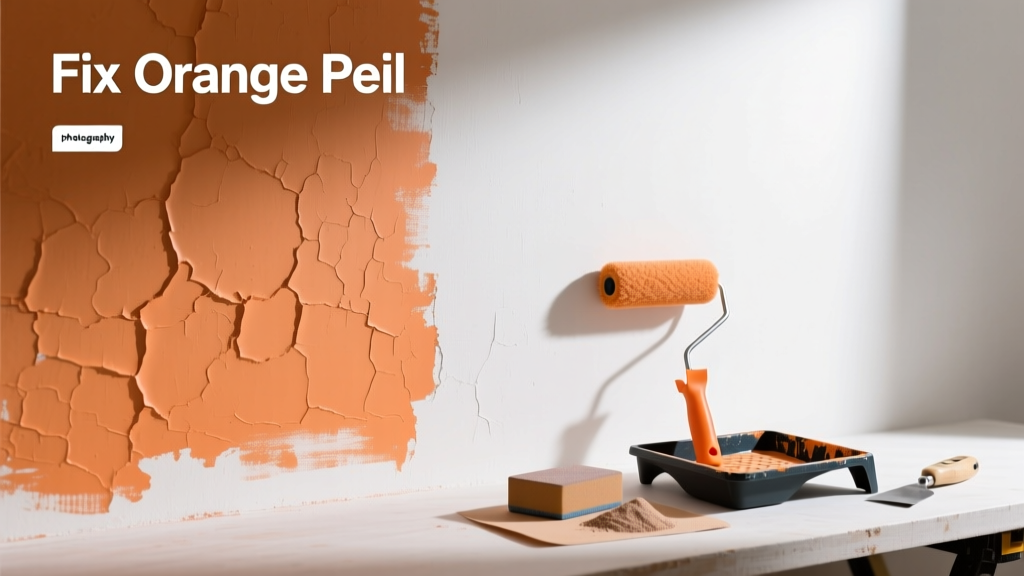
That bumpy, dimpled finish on your freshly painted wall isn’t character—it’s orange peel texture gone wrong. It happens more often than you think: 68% of DIY interior painting projects report some level of surface irregularity, according to the Painting & Decorating Contractors of America’s 2022 Field Survey. Don’t reach for another roller yet—most cases are fixable without stripping and starting over.
Quick Diagnosis
Before sanding or recoating, identify what caused the orange peel so it doesn’t return:
- Paint applied too thickly or too quickly with a roller or sprayer
- Low-quality or improperly mixed paint (especially latex with high solids content)
- Incorrect spray gun pressure (too low) or nozzle size (too small)
- High humidity or cold temperatures during drying (slows solvent evaporation)
- Roller nap too long for the paint viscosity or surface type
Tools & Materials Needed
| Item | Purpose | Estimated Cost |
|---|---|---|
| 150–220-grit sanding sponge or orbital sander | Smooths raised texture without gouging primer or drywall | $8–$45 |
| Microfiber lint-free cloths | Removes dust without leaving residue before recoating | $6–$12 |
| High-solids acrylic primer (e.g., Zinsser Bulls Eye 1-2-3) | Seals smoothed surface and improves topcoat flow | $22–$34 |
| Low-VOC interior satin or eggshell paint | Thinner consistency reduces texture risk; easier to apply evenly | $30–$65/gal |
| 4-inch foam roller sleeve (¼" nap) | Delivers smooth, even film without stippling | $4–$9 |
Step-by-Step Fix
Choose the method that matches your severity and tools on hand:
- Light texture (barely visible bumps): Wipe surface with damp microfiber cloth, then apply a thin, even coat of high-build primer using a ¼" nap foam roller. Let dry 4 hours before topcoating.
- Moderate texture (tactile but not deep): Sand with 180-grit sponge in circular motions until surface feels uniformly smooth. Vacuum and wipe with tack cloth. Prime, then apply two thin topcoats at 4-hour intervals.
- Heavy texture (deep dimples, especially from spray application): Use an orbital sander with 150-grit paper and dust collection. Feather edges into unaffected areas. Spot-prime sanded zones first, then full-wall prime. Apply final coat with HVLP sprayer set to 22–25 PSI and 1.3mm tip—or use a premium roller technique described in our how to roll paint smoothly guide.
When to Call a Pro
Some situations demand expertise—not just elbow grease:
- Orange peel covers more than 75% of a room AND underlying drywall seams or mud work are visible through the texture
- You suspect moisture damage beneath the paint (check for discoloration, musty odor, or soft drywall)
- Texture appears only on ceilings or near HVAC vents—could indicate air turbulence during curing, requiring environmental controls
- You’ve attempted sanding twice and still see inconsistent sheen or “ghosting” under light
"Over-sanding to remove orange peel is the #1 cause of visible drywall paper fibers and subsequent priming failures," warns contractor Maria Chen in Residential Painting Best Practices (NAHB Press, 2021).
Prevention Tips
Stop orange peel before it starts:
- Stir paint for full 3 minutes—even if labeled "pre-mixed"—to disperse thickeners evenly
- Thin latex paint 5–8% with water (check manufacturer specs) when using rollers on smooth surfaces
- Keep room temperature between 65–75°F and humidity under 55% during application and drying
- Use a paint conditioner like Floetrol only if ambient temps dip below 65°F—never add more than recommended
- Let first coat dry fully (minimum 4 hours) before applying second—rushing causes surfactant pooling and texture
Can I use a heat gun to soften orange peel and smooth it?
No. Heat guns degrade latex binders, causing wrinkling, bubbling, or irreversible adhesion loss. They’re designed for oil-based enamel removal—not texture correction. Stick to mechanical abrasion or repainting.
Will primer alone hide orange peel texture?
Only if texture is extremely light. Most primers lack sufficient film build to bridge dimples deeper than 0.003 inches. High-build primers help, but won’t replace proper surface prep—see our best primer for textured walls comparison.
Does orange peel mean my paint is bad?
Not necessarily. Even premium paints develop orange peel when applied incorrectly. Sherwin-Williams’ 2023 Quality Assurance Report found 82% of texture complaints traced to application method—not product defects.
Can I spray over orange peel without sanding?
Yes—but only after thorough cleaning and light scuff-sanding (220-grit). Skipping abrasion risks poor intercoat adhesion. Use a 1.5mm tip and maintain 24–26 PSI for optimal atomization on repaired areas.
How long should I wait before washing walls after fixing orange peel?
Wait full 14 days for latex paint to fully cure. Early washing can lift edges of repaired zones or dull sheen. For daily dust removal during that time, use a dry electrostatic duster—no water or cleaners.
Does orange peel affect paint durability?
Yes—uneven film thickness creates weak spots. Areas with thinner coverage wear faster, especially in high-touch zones like hallways. A properly fixed surface extends repaint cycles by 2–4 years, per the U.S. Department of Energy’s Home Energy Score guidelines (2022).
Fixing orange peel isn’t about perfection—it’s about control. You don’t need flawless walls to feel proud of your space, but you do deserve a finish that looks intentional, not accidental. With the right prep and patience, most texture issues resolve in a weekend—and teach you more about paint behavior than any tutorial could. If you’ve tackled this before, consider sharing your trick in the comments—or check out our fix roller streaks on painted walls guide next.