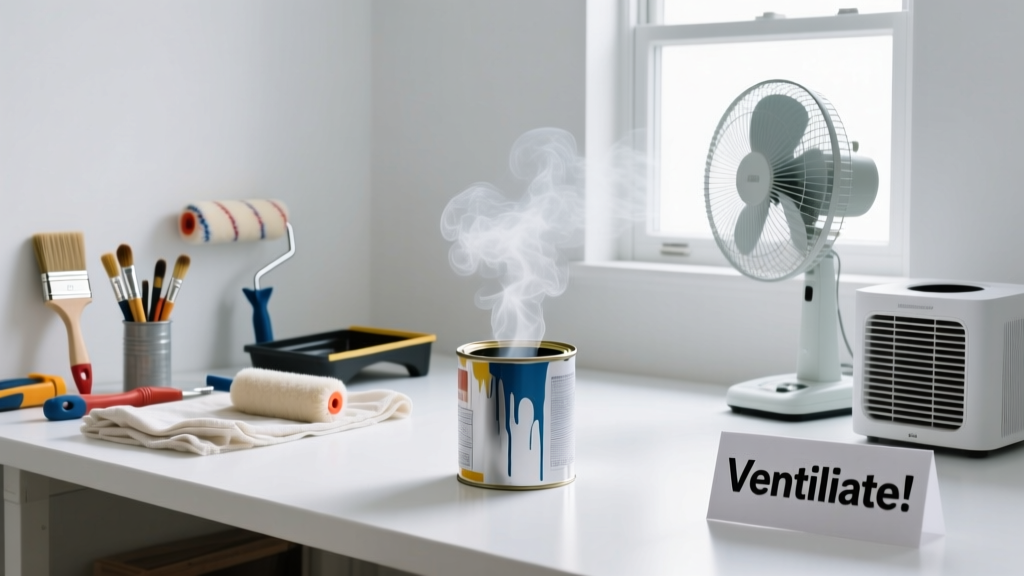
That sharp, chemical smell clinging to your walls, curtains, and even your coffee mug two weeks after painting? It’s not normal—and it’s not harmless. Lingering paint fumes often signal poor ventilation, the wrong paint type, or an underlying issue like trapped vapors in insulation or HVAC ducts.
Quick Diagnosis
Before you start scrubbing or buying air purifiers, identify the root cause. Most persistent fume problems stem from one (or more) of these:
- Using oil-based or high-VOC latex paints indoors without adequate airflow
- Painting over damp or unsealed surfaces (e.g., concrete basement floors, plaster with residual moisture)
- Insufficient drying time between coats—especially in cool, humid conditions
- Paint trapped behind baseboards, inside wall cavities, or under flooring transitions
- Contaminated HVAC system circulating off-gassing paint particles
Tools & Materials Needed
| Item | Purpose | Estimated Cost |
|---|---|---|
| Box fan (20-inch, variable speed) | Creates cross-ventilation to flush out volatile compounds | $35–$65 |
| Activated charcoal air purifier (HEPA + carbon filter) | Adsorbs VOCs—not just particles—that standard filters miss | $189–$349 |
| Hygrometer/thermometer combo | Measures humidity and temp to confirm if conditions are delaying off-gassing | $12–$28 |
| Shellac-based primer (e.g., Zinsser BIN) | Seals porous surfaces and locks in residual VOCs before repainting | $22–$34 per quart |
| N95 respirator (with organic vapor cartridges) | Protects lungs during cleanup or resealing—essential for sensitive individuals | $18–$42 |
Step-by-Step Fix
Try these methods in order—start with the least invasive and escalate only if needed:
- Maximize ventilation for 72+ hours: Open windows on opposite sides of the room, place box fans blowing outward, and run a dehumidifier if indoor humidity exceeds 50%. According to the U.S. EPA, proper ventilation cuts VOC concentrations by up to 70% within 48 hours.
- Deploy activated carbon filtration: Run a certified VOC-rated air purifier (like Coway Airmega 400S or Austin Air HealthMate) 24/7 in the affected area for at least 5 days. Replace carbon filters every 3–6 months—don’t wait until they’re saturated.
- Reseal problem surfaces: If fumes concentrate near trim, drywall seams, or floors, lightly sand and apply one coat of shellac-based primer. Shellac dries in under 45 minutes and forms an impermeable barrier against off-gassing.
- Clean soft goods: Wash curtains, pillow covers, and rugs with baking soda + vinegar soak (1 cup baking soda + ½ cup white vinegar in warm water), then launder normally. Upholstery should be steam-cleaned with low-moisture extraction to avoid mold risk.
When to Call a Pro
Don’t risk your health—or your home’s integrity—with DIY fixes in these scenarios:
- You detect fumes near electrical outlets, light switches, or ceiling fixtures (possible vapor migration into junction boxes—fire hazard)
- Odor persists >10 days despite aggressive ventilation and carbon filtration
- Family members develop headaches, nausea, or respiratory irritation that worsens indoors
- You suspect paint was applied over asbestos-containing material (pre-1980 popcorn ceilings, vinyl floor tiles) or lead-based paint (pre-1978 homes)
"Persistent paint odor beyond 72 hours in a well-ventilated space is a red flag—not just for comfort, but for potential VOC exposure exceeding WHO indoor air guidelines." — Dr. Lena Cho, Indoor Air Quality Specialist, ASHRAE Journal, 2022
Prevention Tips
Next time you paint, dodge the fume trap entirely:
- Choose zero-VOC or low-VOC paints labeled GreenGuard Gold certified
- Paint only when outdoor temps are 50–85°F and indoor humidity stays below 60%
- Wait at least 4 hours between coats—and never skip primer on bare drywall or patched areas
- Turn off HVAC during painting, then run it on “fan-only” mode for 24 hours post-paint to circulate air without recirculating fumes
- Store leftover paint in sealed metal cans—not plastic buckets—in a detached garage or shed
Can I use ozone generators to eliminate paint smell?
No. Ozone generators don’t remove VOCs—they react with them to form formaldehyde and other harmful secondary pollutants. The California Air Resources Board banned residential ozone generators in 2022 due to documented respiratory injuries.
Will baking soda alone absorb paint fumes?
Baking soda neutralizes acidic odors (like spoiled food), but it does little against solvent-based VOCs from paint. It’s useful for surface cleaning, but not air purification—rely on activated carbon instead.
How long should paint fumes last after using zero-VOC paint?
Most certified zero-VOC paints (e.g., Benjamin Moore Natura, Sherwin-Williams Harmony) off-gas minimally—noticeable odor rarely lasts beyond 24–48 hours with basic ventilation. If it lingers longer, check for hidden sources like caulk, adhesives, or subfloor sealers used alongside the paint.
Can lingering paint fumes damage electronics or furniture finishes?
Yes. Acrylic and alkyd solvents can cloud acrylic display cases, etch piano lacquer, and degrade rubber gaskets in appliances. Keep sensitive items covered or removed during painting—and delay reintroducing them until air quality tests confirm VOC levels below 50 µg/m³.
Do air fresheners or candles help mask paint fumes?
They only add more VOCs to the air. Scented candles release benzene and toluene; synthetic air fresheners emit formaldehyde. Instead, open windows and run fans—use an indoor air quality monitor to verify improvement objectively.
Is it safe to sleep in a room with lingering paint fumes?
No—especially for children, pregnant people, or those with asthma. The American Lung Association reports that prolonged exposure to paint VOCs increases risk of chronic bronchitis and reduced lung function. Wait until you can no longer smell anything—and confirm with a VOC meter—before resuming regular use.
Lingering paint fumes aren’t just annoying—they’re a signal your indoor air isn’t safe. With targeted ventilation, the right filtration, and smart sealing, most cases resolve in under a week. But if symptoms persist or you’re unsure about materials in older homes, pause and consult a certified industrial hygienist. Your air shouldn’t carry a warning label.