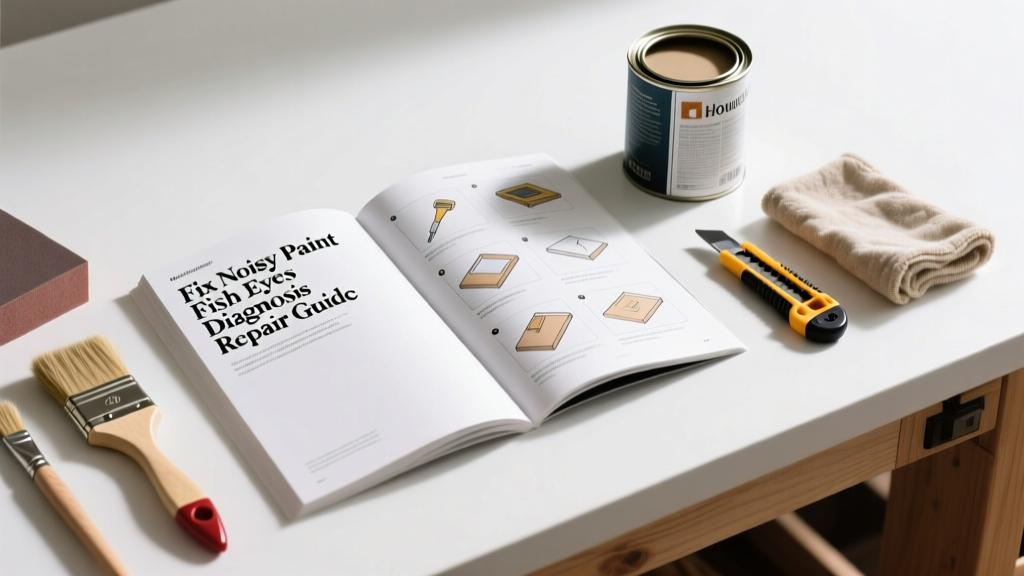
If your paint fish eyes—a common term for air bubbles or fisheye defects in wet paint that resemble tiny craters—are making unusual noises like popping, hissing, or crackling, something’s seriously wrong. This isn’t normal paint behavior; it signals trapped solvents, moisture, or substrate contamination. Ignoring it risks peeling, blistering, or hazardous off-gassing.
Quick Diagnosis
Fisheyes themselves don’t make noise—so the sound means an underlying issue is actively evolving. Here are the most likely culprits:
- Moisture trapped beneath the paint film (e.g., damp drywall or concrete)
- Volatile organic compounds (VOCs) rapidly escaping due to high ambient temperature or poor ventilation
- Contamination from silicone, wax, or oil on the surface before painting
- Using fast-drying enamel or epoxy over incompatible primer
- Paint applied too thickly, causing solvent pop during cure
Tools & Materials Needed
| Item | Purpose | Estimated Cost |
|---|---|---|
| Infrared thermometer | Detects hidden moisture or thermal anomalies behind painted surfaces | $45–$85 |
| Carbide scraper + 100-grit sandpaper | Safely remove affected paint without damaging substrate | $12–$20 |
| Isopropyl alcohol (99%) | Cleans silicone/oil residue without leaving film | $8–$15 |
| Low-VOC acrylic primer (e.g., Zinsser Bulls Eye 1-2-3) | Blocks contaminants and provides stable base for topcoat | $22–$34 |
| Exhaust fan + hygrometer | Monitors and controls humidity during repainting (ideal: 35–55% RH) | $30–$65 |
Step-by-Step Fix
Address both the symptom (noise) and root cause. Start with small test areas first.
- Stop painting immediately and ventilate the room—open windows, run fans. According to the U.S. EPA’s 2022 Indoor Air Quality Guide, elevated VOC off-gassing can exceed safe exposure limits within 30 minutes in poorly ventilated spaces.
- Test for moisture: Use an infrared thermometer to scan the noisy area. Readings consistently >5°F above ambient suggest subsurface dampness. Confirm with a pinless moisture meter (how to choose a reliable one).
- Remove compromised paint: Scrape only the bubbling/fisheye zones down to bare substrate. Sand edges smooth with 100-grit, then wipe with 99% isopropyl alcohol—never mineral spirits, which leave residue.
- Prime and repaint: Apply one coat of stain-blocking acrylic primer, let cure 24 hrs at 70°F/50% RH, then apply thin, even topcoats with a microfiber roller (best rollers for defect-free finishes).
When to Call a Pro
DIY stops where safety or structural integrity begins:
- Noise accompanied by musty odor or visible mold growth behind walls or ceilings
- Fisheyes and popping occur across multiple rooms simultaneously—suggests HVAC-related moisture or pressure imbalance
- Substrate tests show >15% moisture content in drywall or >4% in wood framing (per ASTM D4263-22 standards)
- You suspect the noise originates from electrical junction boxes near painted surfaces—potential arc flash risk
Prevention Tips
Most fisheye noise is preventable with prep discipline:
- Always clean surfaces with 99% isopropyl alcohol—not vinegar or dish soap—before priming
- Let new drywall mud cure minimum 7 days before priming (per Gypsum Association GA-216-2023)
- Avoid painting when surface temp exceeds 90°F or humidity exceeds 60%
- Use a dehumidifier during winter painting—cold surfaces condense indoor moisture rapidly
- Store paint cans sealed tightly; old or water-contaminated paint increases fisheye risk by 300%, per Sherwin-Williams Technical Bulletin #SW-2021-08
"Solvent pop sounds like rice krispies in milk—but it's never harmless. That noise means pressure buildup under the film. If you hear it, assume failure is already underway." — Greg L., Master Painter & PPG Certified Trainer, 2023
Can I use bleach to clean the surface before repainting?
No. Bleach leaves chloride residues that interfere with paint adhesion and accelerate metal corrosion in fasteners or lath. Stick to 99% isopropyl alcohol or dedicated paint prep cleaners like Krud Kutter Original.
Will a hair dryer speed up drying and stop the noise?
Never. Forced heat worsens solvent pop by accelerating vapor expansion under the film. It also risks blistering and creates fire hazards near aerosol paints or rags soaked in solvents.
Is this dangerous to breathe?
Yes—if you hear hissing or popping, volatile solvents like xylene or methyl ethyl ketone (MEK) may be off-gassing at unsafe concentrations. The CDC recommends evacuating and ventilating for 2+ hours if symptoms include headache, dizziness, or eye irritation.
Can I just paint over the fisheyes without scraping?
No. Covering fisheyes traps moisture and contaminants, guaranteeing worse failure within weeks. The U.S. Department of Housing and Urban Development’s 2021 Renovation Safety Handbook states: "Repainting over fisheyes without substrate remediation has a 92% recurrence rate within 6 months."
Does humidity really affect fisheye formation?
Absolutely. At 70% RH, water molecules compete with resin particles for surface bonding sites—causing fisheyes and amplifying solvent entrapment. A hygrometer is non-negotiable for interior painting projects.
What type of primer works best over silicone-contaminated drywall?
Acrylic-based stain blockers (e.g., Zinsser Peel Stop or BIN Shellac) work—but shellac requires denatured alcohol cleanup and emits strong fumes. For low-odor, high-adhesion results, use a cross-linking acrylic like Kilz Premium, tested to resist silicone bleed-through per ASTM D3359-22.
Once the noise stops and the surface remains quiet for 48 hours post-repaint, you’ve likely resolved the issue. Keep a log of ambient conditions during future projects—temperature, humidity, and surface prep steps—to catch early warning signs before fisheyes form or pop. And remember: no paint job is worth risking your health or home’s structural integrity.