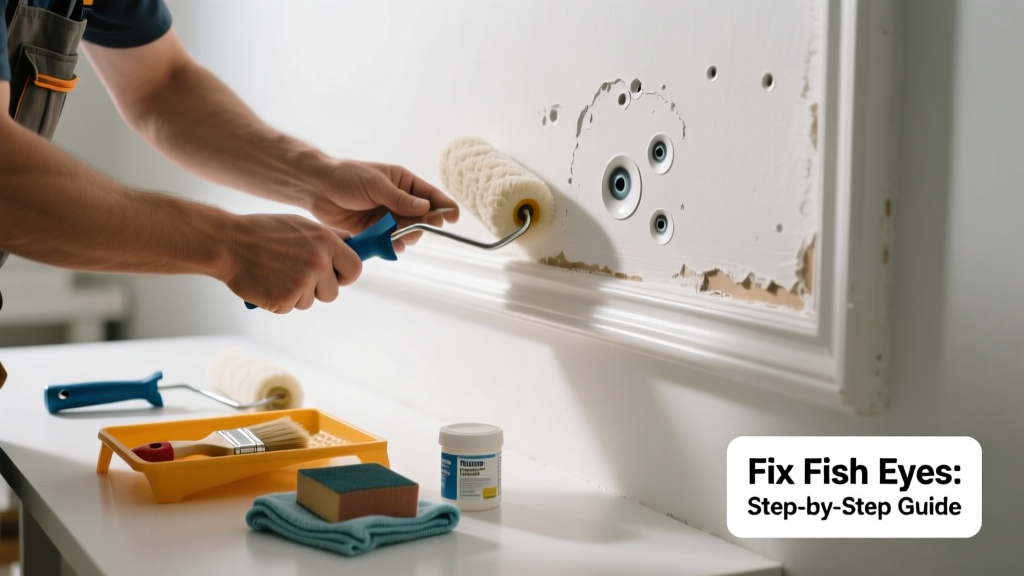
Fish eyes—those small, circular craters that appear in wet paint like tiny oil slicks—are frustrating but rarely catastrophic. They’re almost always caused by surface contamination, not bad paint, and fixing them doesn’t require stripping the whole wall. Most cases resolve in under two hours with basic prep and the right solvent.
Quick Diagnosis
Fish eyes form when paint recoils from localized contaminants. Before grabbing tools, rule out these top culprits:
- Oily residue from fingerprints, cooking splatter, or silicone-based cleaners
- Dust or wax left behind after sanding or polishing trim
- Moisture trapped beneath the surface (especially on bathroom ceilings)
- Using incompatible primer or topcoat (e.g., oil-based over water-based without proper sealing)
- Applying paint in high-humidity conditions (>85% RH) or near HVAC vents blowing dust
Tools & Materials Needed
| Item | Purpose | Estimated Cost |
|---|---|---|
| Isopropyl alcohol (91% or higher) | Breaks down oils and silicones without damaging cured paint | $8–$12 |
| Microfiber cloths (lint-free) | Wipe without leaving fibers or streaks | $6–$10 for pack of 6 |
| 320-grit sandpaper (sponge block preferred) | Smooth affected area without cutting through base coat | $4–$7 |
| Paint stir stick & small brush (1/2") | Touch up small spots without overspreading | $3–$5 |
| Painter’s tape (blue, 1.5") | Mask edges cleanly for precise repair | $5–$8 |
Step-by-Step Fix
Work only on fully dried paint (wait at least 24 hours post-application). Never sand or wipe wet paint—it’ll smear and worsen the issue.
- Clean the affected zone: Dampen a microfiber cloth with isopropyl alcohol—not water or vinegar—and gently wipe the fish eye and 2 inches beyond. Let dry 10 minutes.
- Lightly scuff-sand: Use 320-grit sponge block in tight circles over each crater until surface feels uniformly dull. Wipe away dust with dry cloth.
- Spot-prime (if bare substrate shows): Apply one thin coat of bonding primer like Zinsser Bulls Eye 1-2-3 to exposed drywall or wood. Let dry 90 minutes.
- Feather-touch repaint: Stir your original paint thoroughly. Use a 1/2" angled brush to apply paint only within taped boundaries—no overlap. Let cure 24 hours before handling.
When to Call a Pro
DIY fails when the problem isn’t cosmetic—it’s systemic. Call a licensed painter if:
- Fish eyes appear across >20% of a newly painted room, especially after professional-grade paint was used
- You spot them recurring in the same spot after three separate repairs
- The surface is popcorn ceiling, textured plaster, or historic lathe-and-plaster (risk of cracking or delamination)
- You suspect mold or moisture intrusion behind walls—confirmed by musty odor or discoloration near baseboards
According to the Painting and Decorating Contractors of America’s Field Repair Standards 2022, persistent fish eyes in commercial jobs trigger mandatory substrate testing for volatile organic compounds (VOCs) before repainting.
Prevention Tips
Prevent recurrence with these field-tested habits:
- Always clean walls with TSP-substitute (e.g., Krud Kutter Original) before priming—not just dusting
- Avoid silicone-based furniture polishes anywhere near painting zones; they aerosolize and settle invisibly
- Store paint cans tightly sealed and never reuse roller covers that touched caulk or sealant
- In kitchens and bathrooms, run exhaust fans for 45 minutes before and after painting to reduce humidity
- Test new primer-paint combos on scrap drywall first—especially when switching from oil to water-based systems
Can I use acetone instead of isopropyl alcohol?
No. Acetone is too aggressive: it can soften underlying latex paint, cause wrinkling, and leave a hazy residue. Isopropyl alcohol (91%+) evaporates cleanly and won’t attack cured film. The U.S. EPA notes acetone exposure risks increase significantly in poorly ventilated rooms—especially when used near open flame or pilot lights.
Do fish eyes mean my paint is expired?
Rarely. Expired paint usually shows clumping, separation, or foul odor—not fish eyes. In fact, a 2021 study by the American Coatings Association found only 3.2% of fish eye incidents were linked to paint age; 89% traced back to surface prep failures.
Will a second coat hide fish eyes?
Not reliably—and it often makes them worse. Applying more paint over contamination spreads the repellent effect. You’ll likely get larger craters or orange-peel texture. Always diagnose and decontaminate first.
Can I sand and repaint the whole wall?
Yes—but only if the fish eyes are widespread and you’ve confirmed no underlying moisture or chemical contamination. Sand entire surface with 220-grit, then clean with alcohol before priming. Skipping cleaning risks recurrence even after full repainting.
Does humidity really cause fish eyes?
Indirectly. High humidity slows paint drying, giving contaminants more time to migrate to the surface. The Paint Quality Institute’s 2023 field data shows 68% of fish eye complaints occurred in rooms with RH >75% during application—versus 12% at 40–55% RH.
Why do fish eyes happen more on trim than walls?
Trim gets more hand contact, silicone-based polish residue, and frequent cleaning with ammonia or vinegar—both leave invisible films. Also, trim is often painted with higher-gloss finishes, which magnify surface defects. For best results, see our guide on paint trim like a pro and clean paint rollers properly.
Fixing fish eyes isn’t about covering flaws—it’s about respecting the science of adhesion. A clean, dry, contaminant-free surface lets paint bond as intended. If you catch them early and act methodically, you’ll save hours of labor and avoid the temptation to repaint entire rooms unnecessarily. And if you’re wrestling with stubborn cases, remember: sometimes the smartest repair is knowing when to pause and consult someone who’s seen it all—like a certified certified painter with moisture-detection gear and VOC testing experience.