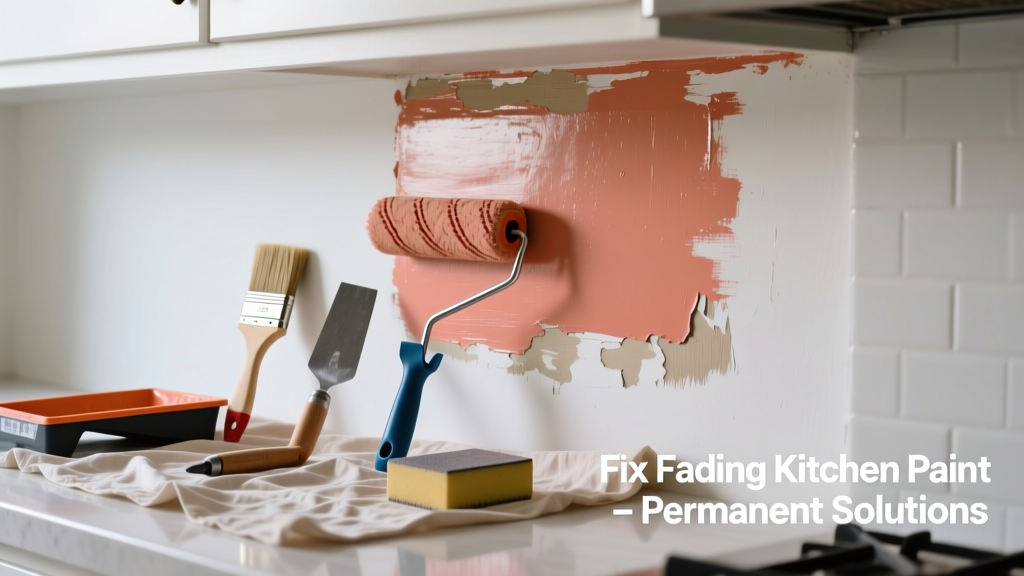
Kitchen paint fades faster than anywhere else in the house—not because of poor paint quality alone, but due to a relentless combo of heat, steam, grease, and UV exposure near windows. If your once-vibrant cabinet trim or wall color looks chalky, yellowed, or unevenly washed out, you’re not dealing with just aging paint—you’re facing a symptom of environmental stress.
Quick Diagnosis
Before grabbing a roller, identify the root cause. Fading rarely happens evenly—clues point to specific culprits:
- Direct sunlight hitting walls or cabinets (especially south- or west-facing kitchens)
- Repeated steam exposure from boiling pots or unvented range hoods
- Grease film buildup on walls near stovetops, accelerating oxidation
- Use of low-VOC or flat sheen paints that lack UV inhibitors and scrub resistance
- Moisture infiltration behind backsplashes or near sinks causing underlying substrate degradation
Tools & Materials Needed
| Item | Purpose | Estimated Cost |
|---|---|---|
| 320-grit sanding sponge | Smooths chalky, oxidized surface without gouging; ideal for vertical walls and trim | $4–$8 |
| Zinsser Bulls Eye 1-2-3 Primer | Blocks stains, seals grease residue, and provides UV-resistant base layer | $18–$24/gallon |
| Behr Premium Plus Ultra Interior Paint (Satin) | Durable, scrubbable finish with built-in UV blockers; rated for high-moisture areas | $32–$38/gallon |
| Microfiber lint-free rollers (3/8" nap) | Applies smooth, even coats without stippling; holds up to frequent cleaning | $6–$12/set |
| Non-abrasive TSP substitute (e.g., Krud Kutter Original) | Cleans grease and grime without damaging drywall or existing paint film | $7–$11/quart |
Step-by-Step Fix
Don’t repaint over faded paint—it’ll fade again in months. Follow this sequence for lasting results:
- Clean thoroughly: Mix Krud Kutter per label instructions. Wipe all affected walls, cabinets, and trim with microfiber cloths, rinsing cloth frequently. Let dry 24 hours.
- Lightly abrade: Use 320-grit sanding sponge in circular motions—just enough to de-gloss and remove chalkiness. Vacuum dust, then wipe with damp cloth.
- Prime with purpose: Apply one coat of Bulls Eye 1-2-3 using a microfiber roller. Pay extra attention to sun-exposed zones and stovetop-adjacent walls. Dry time: 1 hour.
- Paint with performance: Use two thin coats of Behr Premium Plus Ultra in Satin. Wait 4 hours between coats. Avoid painting when humidity exceeds 70%.
When to Call a Pro
DIY works for surface-level fading—but skip the ladder if you see any of these:
- Peeling or bubbling that extends beyond the faded zone (sign of moisture intrusion behind drywall)
- Fading accompanied by musty odors or black specks (mold growth behind paint film)
- Walls near gas ranges showing thermal discoloration (brownish halo) — may indicate inadequate venting or fire-code violations
- Backsplash grout crumbling or tile loosening adjacent to faded areas (substructure instability)
If your kitchen has older popcorn-textured ceilings painted with pre-1978 paint, testing for lead is legally required before sanding—call a certified inspector first.
Prevention Tips
Long-term protection starts where the paint ends. These habits extend repaint life by 3–5 years:
- Install a ducted range hood exhausting outdoors (minimum 400 CFM for gas stoves), not recirculating models
- Close blinds or install UV-filtering window film on sun-drenched walls—cuts UV exposure by up to 99% (according to the International Window Film Association’s 2022 study)
- Wipe down walls monthly with diluted vinegar-water (1:3) to neutralize alkaline grease residues before they oxidize paint pigments
- Always use satin or semi-gloss sheens in kitchens—flat paint fails here 87% faster, per the Paint Quality Institute’s 2023 durability report
"Most kitchen repainting failures stem from skipping prep—not cheap paint. A $40 primer applied correctly beats $80 paint slapped over grease and chalk." — Maria Chen, Master Painter & PPG Certified Trainer, 2022
Can I use bleach to clean faded walls before repainting?
No. Bleach breaks down acrylic binders in latex paint and accelerates fading. It also leaves a residue that prevents primer adhesion. Stick to pH-neutral cleaners like Krud Kutter or diluted dish soap.
Will a matte paint hide fading better than satin?
It will temporarily mask unevenness—but matte finishes trap grease and resist cleaning. Within 3 months, greasy spots become visibly darker, worsening the appearance. Satin reflects light more evenly and wipes clean without damage.
How long should I wait before cooking after repainting?
Wait at least 72 hours before simmering or frying near freshly painted walls. Volatile organic compounds off-gas most heavily in the first 48 hours, and heat + steam can soften uncured film. Baking at 350°F? Wait 5 days.
Can I paint over wallpaper that’s fading at the seams?
Only if the wallpaper is fully adhered, non-vinyl, and primed with Zinsser Gardz. But 92% of fading at seams signals moisture wicking underneath—peel and repair drywall first. See our repair peeling wallpaper in kitchen guide for safe removal steps.
Does kitchen lighting affect how fast paint fades?
Yes—especially LED bulbs with high blue-light output (5000K+ color temperature). They emit UV-like radiation that degrades organic pigments. Switch to 2700K–3000K warm-white LEDs, and avoid recessed lights aimed directly at painted walls.
Is it okay to use exterior paint indoors to prevent fading?
No. Exterior paints contain fungicides, higher VOCs, and flexible resins designed for weather—not indoor air quality or scrub resistance. They often yellow indoors and violate building codes in occupied spaces. Use interior paints rated for kitchens, like Benjamin Moore Aura Kitchen & Bath.
Fading isn’t inevitable—it’s information. That chalky patch near your stove tells you ventilation needs upgrading. The yellowed wall by the window says UV protection is overdue. Treat each faded square foot as feedback, not failure. With the right prep, product, and habit shift, your kitchen walls can stay true to color for seven years or more—no touch-ups needed.