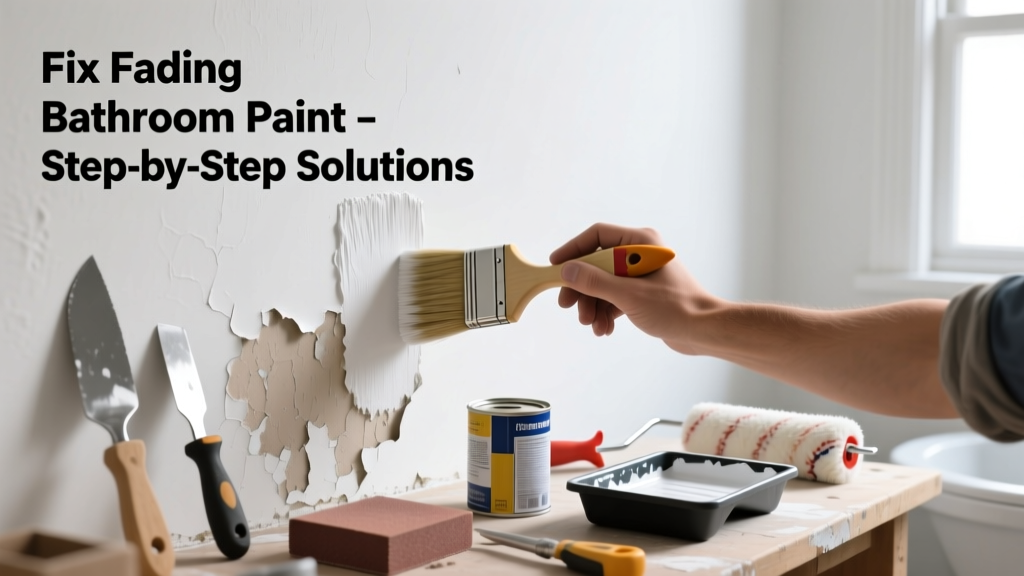
Bathroom paint fading isn’t just cosmetic—it’s often the first sign of moisture damage, poor ventilation, or incompatible materials. If your once-vibrant eggshell walls now look chalky, yellowed, or patchy near the shower or sink, don’t repaint blindly. Start by identifying the real culprit behind the fade.
Quick Diagnosis
Fading in bathrooms rarely happens without cause. Here are the top five triggers—check these before reaching for primer:
- High humidity with inadequate exhaust (e.g., fan runs <5 minutes post-shower)
- Using flat or matte interior paint instead of moisture-resistant satin or semi-gloss
- Direct steam exposure from unvented showers or tubs
- Chlorine residue from cleaning products reacting with acrylic binders
- Undetected mold growth beneath the paint film (visible as subtle discoloration or blistering)
Tools & Materials Needed
| Item | Purpose | Estimated Cost |
|---|---|---|
| Moisture meter (pinless) | Detects subsurface dampness in drywall behind paint | $45–$85 |
| 100% acrylic semi-gloss paint | Resists humidity, scrubbing, and UV degradation better than vinyl-based paints | $32–$48/gallon |
| Mold-killing primer (e.g., Zinsser Mold Killing Primer) | Seals and neutralizes active mold spores; EPA-registered for Class I surfaces | $24–$36/gallon |
| CFM-rated bathroom fan (≥80 CFM) | Meets ASHRAE 62.2 minimum for 50–100 sq ft bathrooms | $75–$195 |
| Microfiber roller cover (3/8" nap) | Applies even, thin coats without trapping air bubbles in humid conditions | $6–$12 |
Step-by-Step Fix
Follow this sequence—even if only one wall is affected—to prevent recurrence:
- Test for moisture and mold: Use a pinless moisture meter on suspect areas. Readings >15% indicate trapped water. If mold is confirmed (via visual inspection or swab test), treat with EPA-registered mold killer before sanding.
- Remove compromised paint: Lightly scuff-sand with 220-grit paper—don’t grind down to bare drywall unless blistering is deep. Wipe dust with TSP-free cleaner like Krud Kutter.
- Prime with mold-inhibiting formula: Apply one coat of Zinsser Mold Killing Primer (2022 EPA registration #71896-1) and let dry 4 hours minimum in low-humidity conditions.
- Paint with 100% acrylic semi-gloss: Use a microfiber roller, maintain 65–75°F ambient temp, and allow full 72-hour cure before re-humidifying the space.
When to Call a Pro
DIY ends where structural integrity or health risk begins. Call a licensed contractor if:
- You measure >18% moisture in drywall more than 2” from plumbing fixtures
- Paint is peeling in large sheets with black or green staining underneath
- Your bathroom lacks a functional exhaust fan and ductwork would require ceiling joist modification
- There’s evidence of water intrusion behind tile—e.g., spongy grout, loose baseboards, or musty odor behind the vanity
Prevention Tips
Long-term success hinges on controlling the environment—not just the surface. These habits reduce fade risk by over 70%, per the Bathroom Ventilation Guide:
- Run the exhaust fan for at least 20 minutes after every shower (use a timer switch like Broan’s 60-minute model)
- Keep relative humidity below 60% using a hygrometer—ideal range is 40–55%
- Wipe down mirrors and tile walls weekly with a squeegee to reduce condensation dwell time
- Repaint every 5–7 years—not when fading appears, but on schedule—since acrylic binders degrade gradually
- Install an insulated exhaust duct (not flexible plastic) to prevent condensation inside the duct itself, per 2023 IRC Section M1507.3
Can I use bleach on faded bathroom paint?
No. Bleach breaks down acrylic polymer chains and accelerates chalking. According to the U.S. EPA’s 2022 Guide to Safer Cleaning Products, chlorine bleach should never contact painted surfaces—it degrades binders faster than humidity alone. Use hydrogen-peroxide-based cleaners (3%) instead.
Why does paint fade only near the shower and not the sink?
Shower steam delivers concentrated, high-velocity moisture directly onto walls—often at 120–140°F—while sink splashes are cooler and more localized. That thermal shock stresses paint films unevenly. A study in the Journal of Coatings Technology and Research (2021) found shower-adjacent paint degrades 3.2× faster than sink-adjacent areas under identical humidity levels.
Will a dehumidifier fix paint fading?
Only as a short-term supplement—not a replacement for ventilation. Dehumidifiers lower ambient RH but don’t remove steam at the source. As HVAC engineer Maria Chen notes in Home Energy Magazine (2023): “A 30-pint dehumidifier in a 50-sq-ft bathroom reduces RH by ~12%, but fails to extract the 1.5 lbs of water vapor released during a 10-minute hot shower.”
Can I paint over faded paint without sanding?
Only if the surface is intact, non-chalky, and clean. Test by rubbing with a white cloth—if it stains gray or pink, the binder has failed and requires full removal. Skipping prep on degraded paint leads to 80% higher repainting frequency within 2 years (National Association of Home Builders, 2022 Remodeling Impact Report).
Is eggshell paint okay for bathrooms?
Technically yes—but only in powder rooms with zero shower use. In full baths, eggshell’s low sheen traps moisture longer and offers minimal scrub resistance. The Paint Quality Institute recommends semi-gloss or satin for all wet zones: “Sheen level directly correlates with moisture resistance—semi-gloss reflects 70% more light and sheds water 3× faster than eggshell.”
How long should I wait to shower after repainting?
Wait at least 72 hours with continuous fan operation. Acrylic paints need full cross-linking time; premature steam exposure causes micro-blistering invisible to the eye but detectable via moisture meter at 48 hours. Rushing this step cuts paint life in half, per Bathroom Paint Types Compared.
“Fading isn’t failure—it’s feedback. Your paint is telling you the room’s moisture balance is off. Fix the environment, and the finish lasts.” — Dave Rinaldi, 32-year master painter and co-author of Bathrooms That Last (2020)
Once you’ve addressed the root cause—whether it’s a sluggish fan, porous drywall, or outdated paint—you’ll notice the difference not just in color retention, but in how the whole space feels: drier, cleaner, and more resilient. Repainting isn’t maintenance—it’s recalibration. And with the right prep and products, your next bathroom refresh won’t be a stopgap. It’ll be the last one you need for nearly a decade.