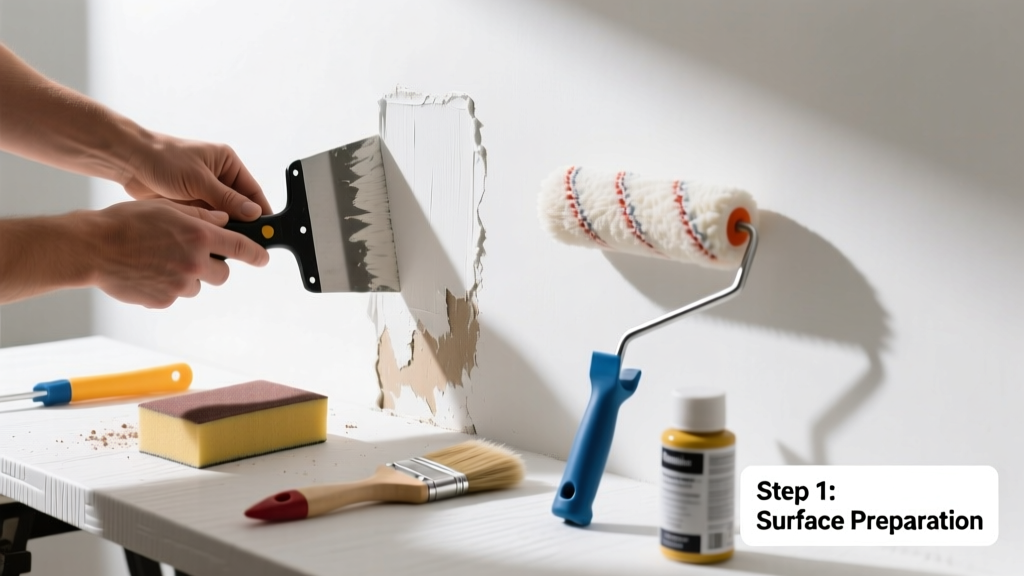
Faded paint isn’t just an eyesore—it’s often the first sign of UV damage, moisture intrusion, or poor surface prep. Left unaddressed, it accelerates chalkiness, peeling, and substrate deterioration, especially on south- and west-facing walls.
Quick Diagnosis
Before grabbing a brush, identify the root cause. Fading rarely happens in isolation—it’s usually tied to environmental exposure or application flaws.
- UV exposure (especially on sun-drenched exterior walls)
- Low-quality or interior-grade paint used outdoors
- Poor surface prep: dust, grease, or uncured primer
- Moisture behind walls causing alkaline bloom or efflorescence
- Chemical exposure (e.g., pool chlorine splash, cleaning solvents)
Tools & Materials Needed
| Item | Purpose | Estimated Cost |
|---|---|---|
| 300–600 grit sandpaper or orbital sander | Removes chalky layer without gouging substrate | $8–$25 |
| Pressure washer (2,000 PSI max) | Cleans algae, dirt, and loose pigment safely | $120–$300 (rental: $45/day) |
| Acrylic latex primer (100% acrylic) | Blocks alkali and seals porous, faded surfaces | $28–$42/gallon |
| UV-resistant exterior paint (100% acrylic) | Withstands fading up to 10 years per Paint Quality Institute, 2022 | $45–$75/gallon |
| Microfiber cloths & TSP substitute (e.g., Krud Kutter) | Removes residue without damaging existing film | $6–$14 |
Step-by-Step Fix
Not all fading requires full repainting—but most need more than a touch-up. Here are three proven approaches, ranked by severity:
- Light fading (chalky but intact film): Wash with TSP substitute, rinse, dry 48 hours, then apply one coat of 100% acrylic primer followed by two coats of UV-stable paint.
- Moderate fading with flaking: Sand affected areas to sound paint, feather edges, spot-prime, then cut in and roll full wall for uniform sheen and color match.
- Severe fading + substrate damage (e.g., wood rot, stucco cracking): Remove all compromised material, repair substrate, prime entire surface, and repaint with full-system compatibility (primer + topcoat from same manufacturer).
When to Call a Pro
DIY works for cosmetic fading—but some situations demand licensed expertise. Don’t risk health, safety, or code compliance.
- Lead-based paint suspected (homes built before 1978) — testing and abatement require EPA RRP-certified contractors
- Fading paired with persistent dampness or mold growth behind paint — indicates hidden water intrusion needing structural assessment
- Over 200 sq ft of facade showing uniform fading with underlying blistering — may signal improper coating system or vapor barrier failure
- Working on multi-story exteriors without proper fall protection equipment
Prevention Tips
Preventing recurrence is cheaper and faster than fixing it again. Focus on material selection and timing.
- Use only 100% acrylic paints labeled "exterior" and "UV-resistant" — avoid vinyl-acrylic blends on sun-exposed surfaces
- Prime bare wood, masonry, and patched areas with alkali-resistant primer before topcoating
- Avoid painting when humidity exceeds 85% or surface temp is below 50°F or above 90°F
- Re-coat exterior surfaces every 7–10 years—even if they look fine—per exterior paint lifespan data
- Install awnings or shade trees on west- and south-facing walls to reduce direct UV exposure by up to 60% (U.S. Department of Energy, 2021)
Can I use bleach to clean faded paint before repainting?
No. Bleach degrades acrylic binders and weakens adhesion—especially on older latex paint. It also leaves salt residues that accelerate future fading. Use oxygen bleach (sodium percarbonate) instead: it breaks down organic matter without harming paint films or substrates.
Why does my north-facing wall fade even without direct sun?
North walls get less UV but more consistent moisture exposure, which promotes mildew and hydrolysis of paint resins. According to the mildew on paint guide, this type of fading often appears as dull gray streaking—not yellowing—and responds best to fungicidal washes and vapor-permeable primers.
Will a clear UV-blocking sealer stop fading on existing paint?
Rarely—and never reliably. Most clear sealers lack sufficient UV absorbers and fail within 12–18 months. The U.S. EPA estimates that 73% of clear topcoats applied over faded paint delaminate prematurely due to poor intercoat adhesion. Repainting with UV-stable pigment is the only durable fix.
Can interior paint fade from indoor lighting?
Yes—especially halogen and unfiltered LED fixtures emitting high blue-light intensity. Museum-grade pigments (e.g., ASTM I-17 rated) resist this, but standard interior paints begin losing vibrancy after ~5 years under intense artificial light. Rotate artwork and use diffused lighting to extend life.
How do I match faded paint color accurately?
Don’t rely on memory or old cans. Take a 2" x 2" chip (with primer layer intact) to a paint store with spectrophotometer service. Even slightly faded samples yield better matches than digital photos. For best results, ask for a "fade-compensated" formula—they’ll boost chroma and lightfastness beyond the original spec.
Does paint sheen affect fading resistance?
Yes. Flat/matte paints fade fastest because their porous structure absorbs more UV energy. Satin and semi-gloss reflect more light and hold UV inhibitors longer. A
"Flat exterior paints show measurable color loss 3x faster than satin equivalents in accelerated weathering tests." — Architectural Coatings Technical Bulletin, American Coatings Association, 2020Choose satin for sun-exposed trim and doors; reserve flat only for low-traffic, shaded ceilings.
Fading paint is rarely a crisis—but it’s always a clue. Addressing it early preserves both your home’s value and your peace of mind. When you pair smart diagnostics with quality materials and proper technique, you’re not just covering up discoloration—you’re extending the functional life of your building envelope. For deeper issues like efflorescence or thermal bridging, consult a home energy auditor or masonry specialist before your next coat goes on.