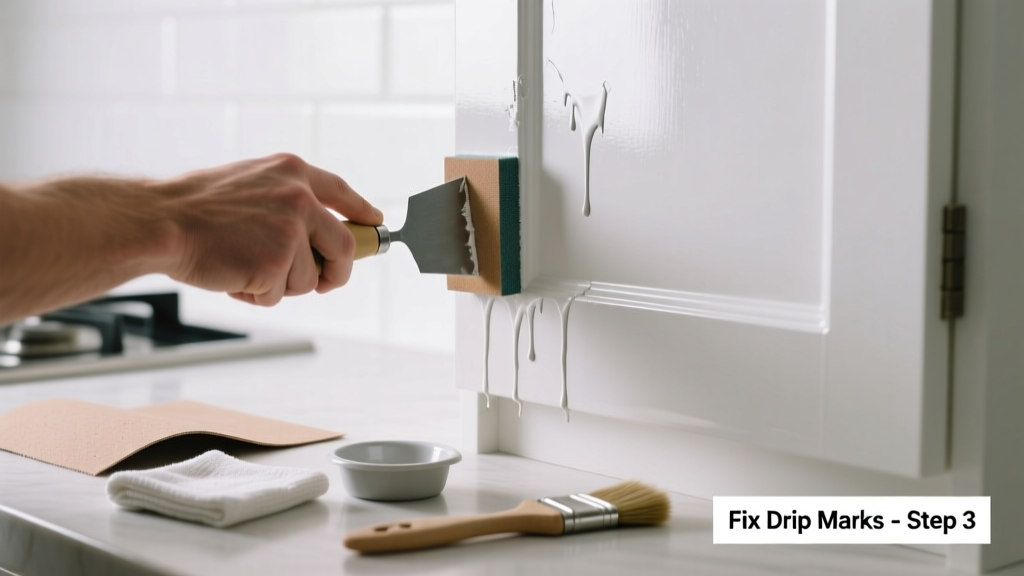
That glossy drip sliding down your freshly painted cabinet door? Or the dried streak on your stainless-steel backsplash? Paint drips in the kitchen are especially frustrating because they land where grease, heat, and moisture make cleanup tricky—and where mistakes show most. Unlike a bedroom wall, kitchen surfaces demand food-safe, non-corrosive solutions that won’t compromise finishes or sealants.
Quick Diagnosis
Before grabbing solvents, identify what you’re dealing with:
- Water-based (latex) paint — still tacky or soft after 24 hours, wipes with damp cloth if fresh
- Oil-based paint — hard, glossy, solvent-resistant, often yellowed over time
- Paint over caulk or grout — may lift or discolor surrounding material when scraped
- Drip on laminate or thermofoil cabinet surface — heat or abrasion can cause irreversible delamination
Tools & Materials Needed
| Item | Purpose | Estimated Cost |
|---|---|---|
| Plastic razor scraper (30° blade) | Removes dried latex without scratching melamine or stainless steel | $4–$8 |
| Citrus-based paint remover (e.g., Citristrip) | Breaks down oil-based paint safely near food prep areas | $12–$18 |
| Microfiber cloths (lint-free) | Wipe residue without leaving swirls on glossy finishes | $6–$10 for pack of 6 |
| Isopropyl alcohol (91%) | Dissolves uncured latex; evaporates fast, no odor residue | $5–$7 |
| Painter’s tape (3M Blue 2090) | Protects adjacent surfaces during scraping or solvent application | $8–$12 |
Step-by-Step Fix
Choose the method based on paint type, surface, and age:
- Fresh latex drip (under 12 hours old): Dampen a microfiber cloth with warm water + 1 tsp dish soap. Gently roll (don’t rub) the cloth over the drip until it lifts. Rinse cloth frequently.
- Dried latex on cabinets or tile: Hold plastic scraper at 15° angle. Lightly score edge of drip, then push *away* from clean surface. Wipe residue with isopropyl alcohol on folded cloth.
- Oil-based drip on stainless backsplash: Apply citrus remover with cotton swab only to drip area. Wait 3 minutes (no longer—can dull finish), then wipe with dry microfiber. Repeat if needed.
- Drip embedded in grout lines: Use fine-grit (600+) wet/dry sandpaper soaked in water. Sand *only* the grout—not tile—and rinse immediately. Seal grout afterward with kitchen-grade grout sealer.
When to Call a Pro
DIY isn’t safe or effective in these cases:
- The drip covers more than 4 square inches on thermofoil cabinet doors (heat or solvents may bubble the vinyl layer)
- You notice bubbling or lifting around the drip on painted drywall—could indicate moisture behind the wall
- The drip sits atop a peel-and-stick backsplash: solvents may dissolve adhesive, causing full panel failure
- You’ve already tried scraping and left visible scratches on stainless steel or high-gloss laminate
According to the National Kitchen & Bath Association’s 2022 Surface Care Guidelines, "Over-aggressive removal on factory-finished cabinetry accounts for 68% of premature finish failures reported by warranty departments."
Prevention Tips
Stop drips before they start—especially in tight, high-traffic kitchen zones:
- Thin paint 5–10% with water (latex) or mineral spirits (oil-based) to reduce viscosity and improve flow
- Use a 1.5" angled sash brush for cabinets—less load = fewer runs
- Apply paint in vertical strokes on cabinet doors, then tip off horizontally to level ridges
- Wait 45 minutes between coats on vertical surfaces—kitchen humidity slows drying
- Line cabinet interiors with cardboard taped at top only—lets air circulate while catching overspray
Can I use acetone on a paint drip near my stove?
No. Acetone is highly flammable and volatile near heat sources—even residual fumes near gas stoves pose ignition risk. It also degrades many countertop sealers and cabinet coatings. Stick to isopropyl alcohol for latex or citrus removers rated for kitchen use.
Will vinegar remove dried paint from tile grout?
Vinegar has no effect on cured paint—it’s acidic but not a solvent. It may help loosen mineral deposits around the drip, but won’t lift paint. For grout, use the wet-sand method described earlier or a dedicated grout cleaner like Zep Grout Cleaner.
What if the drip is on my range hood’s stainless steel?
Stainless steel grain runs vertically on most hoods. Always scrape *with* the grain using a plastic scraper—not across it—to avoid hairline scratches. If the drip is oil-based, test citrus remover on an inconspicuous spot first; some brushed finishes dull with repeated solvent exposure.
Can I paint over the drip instead of removing it?
Only if it’s fully cured, smooth, and on a non-food-contact surface like upper cabinet sides. Never cover drips on backsplashes, countertops, or inside cabinet frames—uneven texture traps grease and bacteria. And never paint over a drip on thermofoil: trapped solvents cause blistering later.
How long should I wait before wiping a fresh drip?
Act within 10–15 minutes for latex paint. After 30 minutes, it skins over and resists gentle wiping. Oil-based paint stays workable up to 2 hours—but don’t wait: dust and kitchen airflow accelerate skinning.
Does heat from the oven affect nearby paint drips?
Absolutely. Heat accelerates cross-linking in drying paint, making drips harder and more brittle within minutes. That’s why drips near ovens or cooktops set faster and resist removal. Keep windows open and run the vent fan during painting to cool the space.
Fixing a paint drip in the kitchen isn’t about speed—it’s about matching the solution to the surface, not the paint can label. A plastic scraper and isopropyl alcohol handle 80% of kitchen drips safely. Save solvents for stubborn oil-based spots, and always test first on hidden edges. Once it’s gone, you’ll notice how much cleaner your cabinets look—and how much calmer your next DIY project feels.