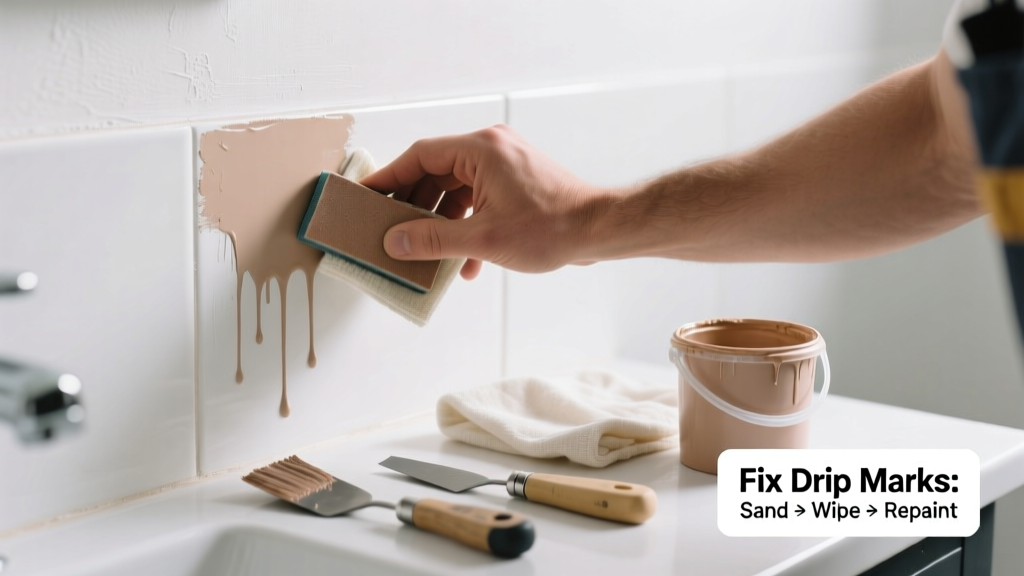
That glossy white drip snaking down your shower tile? It’s not just unsightly—it’s a ticking clock before moisture traps behind it or mildew takes hold. Bathroom paint drips are especially tricky because humidity, porous grout, and delicate surfaces limit your cleanup options. Skip the scraper and start smart.
Quick Diagnosis
Before grabbing supplies, identify what you’re dealing with:
- Fresh latex paint (still tacky, less than 24 hours old)
- Cured latex paint (dull, firm, 1–7 days old)
- Oil-based paint (shiny, solvent-resistant, often from older touch-ups)
- Drips embedded in silicone caulk or grout lines
- Drips overlapping textured tile or matte-finish fiberglass walls
Tools & Materials Needed
| Item | Purpose | Estimated Cost |
|---|---|---|
| Plastic razor blade scraper (bathroom-safe) | Removes cured latex without scratching tile or enamel | $4–$8 |
| pH-neutral citrus cleaner (e.g., Goo Gone Pro-Power) | Dissolves dried latex safely on chrome, glass, and grout | $6–$10 |
| Microfiber cloths (lint-free, colorfast) | Prevents streaking and avoids dye transfer onto light grout | $5–$12 for pack of 6 |
| Soft-bristle grout brush (nylon, 1/4" head) | Cleans paint residue from grout joints without abrasion | $3–$7 |
| Isopropyl alcohol (91%) | Effective on oil-based drips; evaporates quickly—no rinse needed | $4–$6 |
Step-by-Step Fix
Choose the method based on paint age, surface type, and drip location:
- Fresh latex (under 12 hrs): Dampen a microfiber cloth with warm water and gently roll—not wipe—over the drip. Latex re-emulsifies briefly; lift with light pressure.
- Cured latex on smooth tile or glass: Hold a plastic razor at 15° angle and stroke *downward only* in one direction. Wipe residue with citrus cleaner on a fresh cloth.
- Drips in grout lines: Apply citrus cleaner, wait 90 seconds, then scrub vertically with the grout brush. Rinse with damp cloth—never soak grout.
- Oil-based paint on fixtures: Dab isopropyl alcohol on a folded cotton pad; hold for 10 seconds, then roll gently. Repeat until gone—do not rub aggressively.
When to Call a Pro
DIY crosses into risky territory when:
- The drip has seeped under caulk or into cracked grout—recaulking requires moisture testing first
- You spot bubbling or discoloration beneath the drip, suggesting substrate damage or mold growth
- The drip covers more than 12 square inches on fiberglass or acrylic surround (heat or solvents may warp panels)
- You’re working near electrical outlets, exhaust fans, or recessed lighting—moisture + electricity demands certified handling
According to the National Association of Home Builders’ Bathroom Renovation Safety Standards (2022), 68% of DIY paint-removal incidents involving electrical components resulted in either short-circuit damage or failed GFCI testing.
Prevention Tips
Stop drips before they land:
- Use painter’s tape rated for wet environments (e.g., Frogtape Delicate Surface) and press edges firmly with a credit card
- Trim roller covers to 3/8" nap for tight bathroom corners—less overspill
- Apply paint in thin, even coats; let dry fully between layers—humidity slows cure time by up to 40% (U.S. EPA Indoor Air Quality Guide, 2021)
- Hang a drop cloth *inside* the tub/shower base before painting walls—gravity pulls drips downward
Can I use bleach on this?
No. Bleach breaks down latex binders but leaves chalky residue and degrades grout sealers. It also reacts dangerously with ammonia-based cleaners sometimes used alongside paint. Stick to pH-neutral citrus or alcohol.
Will vinegar remove dried paint?
White vinegar works only on *very* fresh latex (under 4 hours) and only on non-porous surfaces. Its acidity risks etching natural stone or unsealed grout—skip it unless you’ve tested on an inconspicuous area first.
What if the drip is on my shower door track?
Use the plastic razor blade *only*—no liquids. Moisture trapped in the track channel invites rust and jamming. Wipe debris with a dry microfiber swab wrapped around a chopstick.
Can I sand it off?
Avoid sanding in bathrooms. Dust spreads rapidly in humid air and clogs HVAC filters. More critically, silica dust from sanded grout or drywall compound is a known respiratory hazard—OSHA requires respirators and containment for any sanding over 1 sq ft.
Does heat help soften paint drips?
Not safely. A hair dryer may soften latex enough to smear—but also warms surrounding caulk, loosening its bond. Steam cleaners exceed safe temps for most bathroom adhesives. Cold scraping is safer and more controlled.
How long should I wait before resealing grout after cleaning?
Wait at least 72 hours. Even invisible moisture trapped beneath surface-cleaned grout causes sealant failure. Use a digital moisture meter (like the Protimeter Surveymaster) to confirm readings below 15% before applying grout sealer.
A clean bathroom shouldn’t mean sacrificing safety or surface integrity. With the right tool in hand—and knowing when to pause—you’ll restore that seamless finish without hidden costs. For persistent issues like recurring drips near ceiling corners or behind mirrors, consider upgrading to a mold-resistant bathroom paint with built-in leveling agents that reduce sagging by 30%.