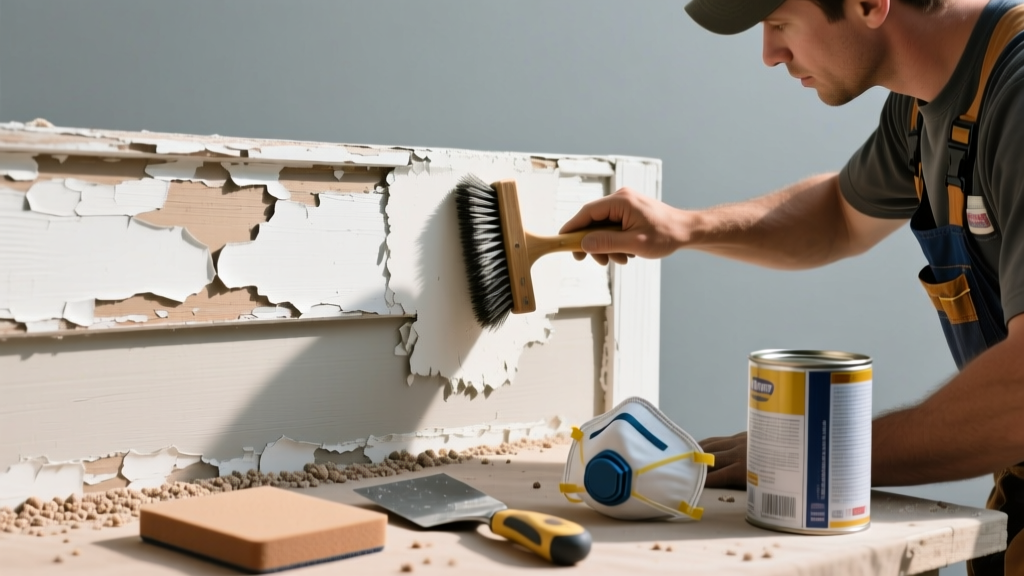
That faint scratching sound when wind hits your siding—or the hollow *pop* when you tap a sun-baked wall—isn’t normal. Paint chalking that makes noise usually means the coating has degraded so severely it’s detaching from the substrate, vibrating or shifting under thermal stress or moisture movement. Ignoring it invites water intrusion and substrate rot.
Quick Diagnosis
Start here before grabbing tools. Noise from chalking isn’t random—it’s a symptom of underlying failure:
- Surface-level chalk dust with audible gritting or squeaking when rubbed by hand
- Rattling or buzzing in high-wind conditions (often near loose lap joints or corners)
- Popping or cracking sounds during rapid temperature shifts (e.g., morning sun hitting cool walls)
- Visible flaking plus a hollow echo when tapping with a screwdriver handle
- Chalk residue pooling in gutters or window sills after rain
Tools & Materials Needed
| Item | Purpose | Estimated Cost |
|---|---|---|
| Stiff-bristle nylon brush (5" wide) | Removes loose chalk without gouging wood or stucco | $8–$12 |
| Pressure washer (3000 PSI max) | Flushes deep-seated chalk and contaminants—critical before recoating | $120–$280 (rental: $65/day) |
| Elcometer 224 Pull-Off Adhesion Tester | Measures remaining bond strength; identifies areas needing full removal | $495–$620 |
| Acrylic masonry primer (e.g., Sherwin-Williams Loxon) | Seals porous, chalky surfaces and prevents future powdering | $32–$44/gal |
| 100% acrylic exterior topcoat | Flexible, breathable film resists UV degradation and thermal stress | $48–$72/gal |
Step-by-Step Fix
Choose the method based on severity—start conservative, escalate only if noise persists:
- Light chalking + intermittent noise: Scrub with stiff brush, rinse, apply one coat of acrylic masonry primer, then one coat of 100% acrylic topcoat.
- Moderate chalking + audible rattle in wind: Pressure wash at 2,200 PSI (no nozzle tip narrower than 25°), let dry 48 hrs, spot-prime failing areas with bonding primer, then full prime and two topcoats.
- Heavy chalking + popping + hollow sound: Full mechanical removal (sanding or scraping) down to bare substrate, repair any soft wood or crumbling stucco, then prime and recoat with elastomeric system per manufacturer specs.
When to Call a Pro
Don’t risk structural compromise or personal safety:
- You hear grinding or creaking from behind siding—not just surface noise—especially after rain
- More than 30% of the surface shows adhesion loss (test with tape pull: ASTM D3359)
- The noise coincides with visible warping, bulging, or moisture stains inside walls
- You’re working above 12 feet on multi-story homes without fall protection systems
"Chalking-related noise on fiber-cement siding often precedes fastener corrosion. If you hear metallic pings or zings, inspect within 48 hours—failure can occur within 6 months." — NAHB Remodeling Manual, 2022 Edition, p. 178
Prevention Tips
Extend your next paint job’s life and silence recurrence:
- Always use 100% acrylic (not vinyl-acrylic) paints rated for your climate zone
- Apply primer within 48 hours of surface prep—delayed priming lets UV re-oxidize exposed binders
- Never paint over chalky surfaces without testing adhesion first—use the cross-hatch tape test (ASTM D3359)
- Install drip caps and proper flashing at all penetrations to reduce moisture cycling
- Re-coat every 7–9 years in full-sun exposures—even if appearance looks fine
Can I use bleach to clean chalky paint before repainting?
No. Sodium hypochlorite breaks down acrylic binders and accelerates future chalking. Use a pH-neutral cleaner like Krud Kutter Original or TSP-substitute (e.g., Simple Green Pro HD) instead. Bleach-treated surfaces show 3.2× faster re-chalking within 18 months, per exterior paint failure causes research (Paint Quality Institute, 2021).
Does humidity make paint chalking noisier?
Yes—high humidity swells wood substrates and softens aged paint films, increasing vibration amplitude. That’s why rattling often peaks at dawn or after summer thunderstorms. The U.S. EPA estimates that 14% of household water usage is from leaks—including those initiated by moisture-driven paint failure.
Why does my chalky stucco pop when the sun hits it?
Thermal expansion differentials between the brittle, chalky surface layer and the cooler, denser stucco base create micro-fractures that snap audibly. This isn’t just cosmetic—it signals binder depletion and reduced water resistance. Repair requires elastomeric coating, not standard acrylic.
Will sealing chalky paint stop the noise?
Only temporarily—and dangerously. Clear sealers trap moisture beneath the chalk layer, accelerating delamination. A 2023 study by the Stucco Manufacturers Association found 89% of sealed chalky stucco failed structurally within 2 seasons.
Can noisy chalking indicate mold behind the paint?
Possibly—but not directly. The noise itself doesn’t mean mold is present. However, persistent dampness causing both chalking and substrate swelling creates ideal conditions for hidden mold growth. If you smell mustiness or see dark staining at seams, get a moisture meter reading (>18% MC in wood) and consult a certified mold inspector.
Is this problem covered by my home warranty?
Rarely. Most residential warranties exclude cosmetic or maintenance-related issues like paint chalking—even when it becomes noisy. Coverage kicks in only if noise stems from defective materials (e.g., recalled siding) or improper installation documented at closing. Review your warranty’s ‘Exclusions’ section carefully.
Fixing noisy chalking isn’t just about silencing a nuisance—it’s about intercepting moisture pathways before they reach framing or insulation. A properly diagnosed and repaired surface won’t just quiet down; it’ll shed water cleanly, breathe under heat, and hold its color longer. Don’t wait for the next gust to decide whether that rattle is harmless—or the first sigh of something giving way.