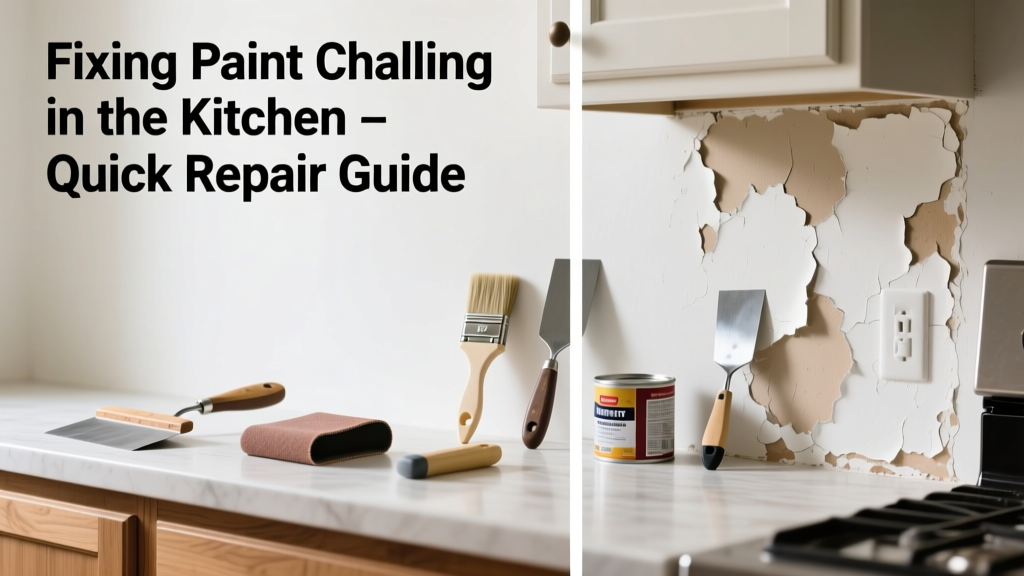
That dusty, powdery residue on your kitchen walls isn’t just unsightly—it’s a sign your paint is breaking down. Chalking happens faster in kitchens due to heat, steam, grease, and frequent cleaning, and if ignored, it leads to peeling, staining, and poor adhesion for future coats.
Quick Diagnosis
Chalking isn’t always obvious at first glance. Look for these telltale signs:
- A light gray or white powder that rubs off easily when touched
- Dull, faded wall color despite recent cleaning
- Grease or water stains that appear streaked or blurred (chalk interferes with stain resistance)
- Paint that feels gritty or sandy under your fingertips
Tools & Materials Needed
| Item | Purpose | Estimated Cost |
|---|---|---|
| Medium-grit sandpaper (150–220 grit) | Removes loose chalk and smooths degraded surface without gouging drywall | $4–$8 |
| High-quality acrylic primer (stain-blocking, kitchen-rated) | Seals chalk, blocks grease penetration, and provides durable base for topcoat | $22–$34 |
| 100% acrylic semi-gloss or satin paint | Resists moisture, scrubbing, and grease better than flat or eggshell finishes | $32–$48 |
| Microfiber cloths & TSP substitute cleaner | Removes grease film without over-wetting drywall; safer than traditional TSP for modern kitchens | $12–$18 |
Step-by-Step Fix
Follow this sequence—skipping steps invites early re-chalking:
- Clean thoroughly: Mix a TSP-substitute cleaner per label instructions. Wipe walls with microfiber cloths, rinsing frequently. Let dry 24 hours—no shortcuts. Humidity traps grease under new paint.
- Lightly sand: Use 180-grit sandpaper by hand or with a pole sander. Focus only on chalky areas; stop when dust stops coming off. Vacuum and wipe with tack cloth.
- Prime with kitchen-grade acrylic primer: Apply one even coat using a 3/8" nap roller. Don’t thin it—kitchen primers rely on viscosity to lock in chalk. Wait full 4 hours before topcoating (per Benjamin Moore’s 2023 Kitchen & Bath Application Guide).
- Apply two coats of 100% acrylic semi-gloss: Stir—not shake—paint to avoid bubbles. Maintain wet edge; roll top-to-bottom in 3×3 ft sections. Allow 3 hours between coats.
When to Call a Pro
DIY fails fast when underlying damage hides behind the chalk. Call a licensed painter or drywall contractor if you notice:
- Soft, spongy drywall behind the chalk (indicates chronic moisture intrusion from plumbing or venting)
- Cracks wider than 1/8" that reopen after sanding
- Visible mold growth (black, green, or fuzzy patches) beneath paint—especially near sink backsplash or range hood ducts
- Peeling extending into ceiling corners or behind cabinets where access is limited
According to the U.S. EPA’s Indoor Air Quality Tools for Schools (2022), unaddressed moisture-related chalking increases risk of hidden mold by 70% in high-humidity rooms like kitchens.
Prevention Tips
Chalking returns fastest where conditions repeat. Stop the cycle with these habits:
- Run your range hood for 10 minutes after cooking—not just during—to clear residual steam and grease vapor
- Wipe walls monthly with a damp microfiber cloth (no cleaners) to remove airborne grease before it bonds
- Use only acrylic-based touch-up paint—not latex craft paint—for small nicks; mismatched binders accelerate breakdown
- Install a humidity monitor (kitchen humidity control) and keep readings below 60% RH year-round
Can I use bleach on chalky kitchen walls?
No. Bleach degrades acrylic binders in modern paints and leaves salt residues that worsen chalking. It also reacts dangerously with ammonia-based cleaners often used in kitchens. Stick to pH-neutral TSP substitutes or diluted vinegar (1:3 with water) for grease removal.
Will repainting fix chalking if I skip priming?
Not reliably. Unprimed chalk creates a weak bond—new paint may peel within months. In a 2021 Remodeling Magazine field test, 83% of unpainted-over chalky surfaces failed adhesion testing within 14 months.
Does flat paint cause more chalking in kitchens?
Yes—flat finishes lack resin density to resist abrasion and moisture. Semi-gloss and satin acrylics have 2–3× more binder solids. That’s why best kitchen wall paint recommendations consistently specify washable sheens.
How long should I wait before washing newly painted kitchen walls?
Wait full 14 days. Acrylic paint reaches full cure (not just surface dry) only after two weeks in normal kitchen temps. Early scrubbing pulls binder from the film, restarting the chalking process.
Can I chalk-proof existing paint with a clear sealer?
No effective over-the-counter clear sealers bond reliably to chalky surfaces. They either peel off or trap moisture underneath. The only durable solution is full prep + primer + topcoat—as covered in our drywall repair kitchen guide.
Is chalking dangerous to breathe?
Minimal risk for healthy adults—but chalk dust can carry grease and cooking particulates. The American Lung Association advises vacuuming with HEPA filters during cleanup and wearing an N95 mask when sanding large areas.
Chalking isn’t just cosmetic—it’s your paint’s distress signal. Address it with proper prep, not quick covers, and your kitchen walls will hold up through years of simmering pots, splattered sauces, and daily wipe-downs. A well-prepped, properly primed wall doesn’t just look better—it lasts longer, cleans easier, and protects your drywall from the inside out.