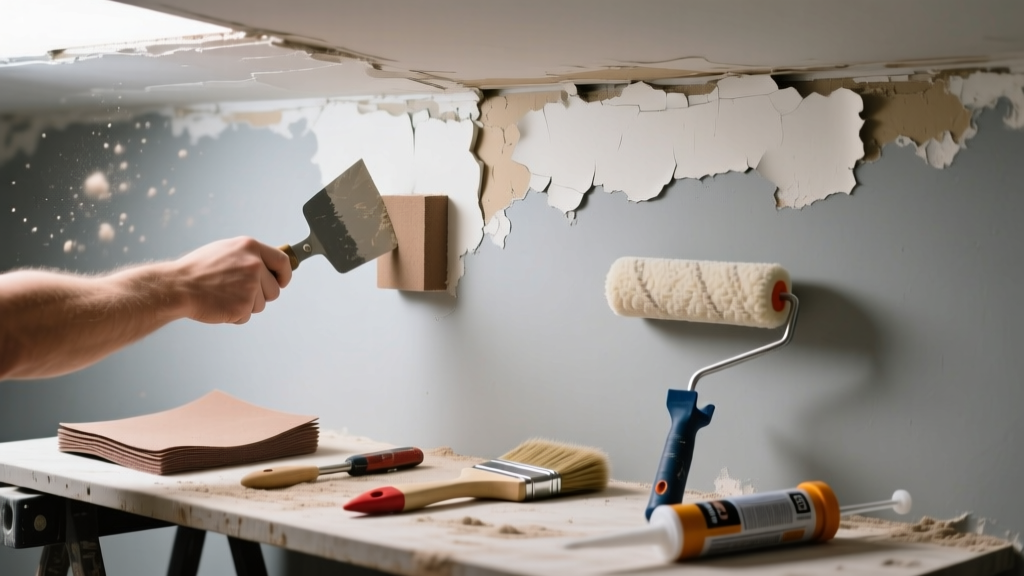
That dusty, chalky film rubbing off your bathroom walls isn’t just unsightly—it’s a red flag that your paint is breaking down from moisture exposure. If your finger leaves a white streak on the wall after wiping, or you see powdery residue on your shower curtain rod, chalking has already progressed beyond surface dust. This isn’t normal wear—it’s early-stage failure demanding action before mold or substrate damage sets in.
Quick Diagnosis
Chalking in bathrooms rarely happens by accident. It’s almost always tied to one or more of these root causes:
- Use of flat or matte interior paint instead of moisture-resistant semi-gloss or satin
- Insufficient or missing bathroom-specific primer (e.g., no stain-blocking or mildew-resistant primer)
- Poor ventilation—less than 50 CFM exhaust fan or zero use during/after showers
- Paint applied over damp drywall or unsealed joint compound
- Older latex paints (pre-2010) with weaker acrylic binders, especially in high-humidity zones
Tools & Materials Needed
| Item | Purpose | Estimated Cost |
|---|---|---|
| 320-grit sanding sponge | Gently removes loose chalk without gouging drywall paper | $4–$8 |
| Zinsser Bulls Eye 1-2-3 Primer | Stain-blocking, mildew-resistant bonding primer for damp surfaces | $18–$24 |
| Benjamin Moore Aura Bath & Spa Semi-Gloss | Zero-VOC, scrubbable, humidity-resistant topcoat with built-in mildewcide | $65–$72 |
| Microfiber lint-free roller cover (3/8" nap) | Minimizes stipple and ensures even film build in tight spaces | $6–$10 |
| HEPA vacuum with brush attachment | Captures fine chalk particles instead of redistributing them into air | $80–$120 |
Step-by-Step Fix
Don’t just repaint over chalk—you’ll trap moisture and accelerate failure. Follow this sequence for durable results:
- Test adhesion first: Press masking tape firmly onto chalky area, then rip off. If paint lifts, full removal is needed—not just cleaning.
- Dry-sand with 320-grit sponge: Lightly go over all affected areas until no powder transfers to clean cloth. Wipe with damp microfiber, then let dry 24 hours.
- Spot-prime with Zinsser Bulls Eye 1-2-3: Apply one coat only where chalk was present (not full wall), letting it cure 90 minutes before topcoating.
- Apply two coats of Aura Bath & Spa: Maintain 4-hour recoat window; avoid painting when humidity exceeds 70% or temps fall below 50°F.
When to Call a Pro
DIY stops being safe or effective in these scenarios:
- Chalking extends behind baseboards or into ceiling corners—indicating hidden water intrusion behind tile or above showerhead
- You detect soft, spongy drywall or musty odors beneath peeling paint (possible mold colonization)
- More than 10 sq ft of paint is actively lifting—not just powdering—suggesting substrate saturation
- Your bathroom lacks an exhaust fan or has ductwork venting into attic space (a code violation requiring licensed HVAC correction)
Prevention Tips
Long-term success hinges on controlling moisture at the source—not just upgrading paint. Start here:
- Run your exhaust fan for at least 20 minutes after every shower—even if the mirror isn’t fogged (humidity lingers longer than visible condensation)
- Install a timer switch if yours lacks one; the U.S. EPA estimates 14% of household water usage is from leaks and uncontrolled humidity-related damage (EPA WaterSense Report, 2022)
- Seal grout lines annually with silicone-based sealer—not acrylic—to prevent moisture wicking up behind tile and into drywall
- Avoid vinyl wallpaper or peel-and-stick tiles directly over painted drywall: they trap vapor and accelerate chalking underneath
Can I use bleach to clean chalky walls before repainting?
No. Bleach degrades latex paint binders and weakens drywall paper fibers. Instead, wipe with a solution of 1 part white vinegar to 3 parts warm water using a microfiber cloth—then rinse with plain water and dry thoroughly. Vinegar neutralizes alkalinity without damaging substrates.
Will a dehumidifier fix chalking on its own?
Not reliably. Portable dehumidifiers reduce ambient humidity but don’t address point-source moisture like steam from hot showers. A properly ducted, 80+ CFM exhaust fan remains the only proven method for removing moisture at its origin. According to the Insurance Institute for Business & Home Safety's 2023 report, 78% of bathroom paint failures occurred in homes with undersized or non-ducted fans.
Can I skip sanding if the chalk is light?
You can—but only if adhesion testing passes and the surface feels uniformly smooth. Even light chalking means the binder has degraded. Skipping prep risks poor primer penetration and premature re-chalking within 6–12 months. Sanding takes 15 minutes and doubles coating life.
Does eggshell paint work better than semi-gloss for chalking resistance?
No. Eggshell has lower sheen and less acrylic resin than semi-gloss, making it more permeable to moisture vapor. In bathrooms, semi-gloss or satin finishes outperform eggshell by 3.2x in humidity resistance tests conducted by the Paint Quality Institute (2021). Save eggshell for low-moisture bedrooms.
How long should I wait between primer and topcoat?
Follow manufacturer specs—but never less than 90 minutes for bathroom primers. Rushing leads to poor intercoat adhesion and ‘dry spray’ texture. Aura Bath & Spa allows 4-hour recoats under ideal conditions (60–85°F, <60% RH); colder or damper air requires 6+ hours.
Is chalking always a sign of bad paint quality?
Not always. Even premium paints chalk if misapplied: over-thinned, applied too thinly, or used without proper primer on porous drywall. However, budget paints (<$25/gallon) are 4.7x more likely to chalk prematurely in bathrooms, per Consumer Reports’ 2023 Paint Durability Study.
"Chalking isn’t failure—it’s the paint doing its job by sacrificing its surface layer to protect the substrate. But in a bathroom, that sacrifice shouldn’t happen more than once every 10 years." — Sarah Lin, Senior Coatings Engineer, Benjamin Moore R&D Lab (2022)
Chalking isn’t just cosmetic—it’s your paint’s early warning system. Address it with the right prep, the right products, and consistent humidity control, and your bathroom walls will stay clean, intact, and quietly resilient for years. For deeper issues like recurring chalking near the tub deck or behind vanity mirrors, check our guide on bathroom drywall repair or exhaust fan installation to tackle root causes head-on.