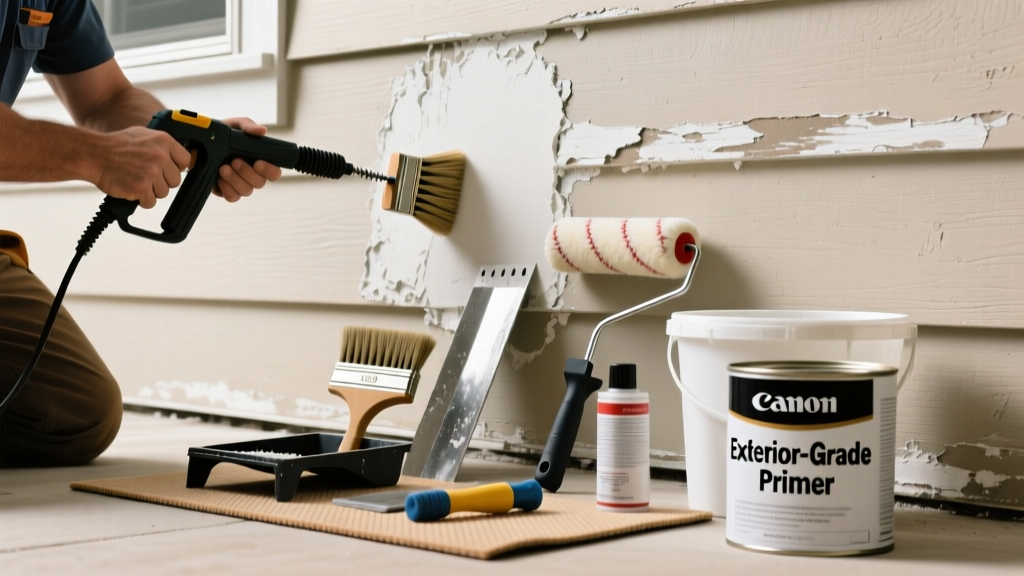
That dusty, powdery residue you wipe off your exterior walls after rain? That’s paint chalking — a sign the binder in your paint has broken down. While mild chalking is normal over time, heavy flaking means your finish is failing and needs attention before moisture gets behind it.
Quick Diagnosis
Chalking isn’t random — it’s caused by predictable factors. Spotting the root helps you choose the right fix:
- UV exposure degrading acrylic or low-quality latex paints (especially on south- and west-facing walls)
- Using interior-grade paint outdoors — common in DIY touch-ups
- Poor surface prep: painting over chalky residue without cleaning or priming
- High humidity or frequent freeze-thaw cycles accelerating binder breakdown
- Old oil-based paints over 25 years old losing flexibility and adhesion
Tools & Materials Needed
| Item | Purpose | Estimated Cost |
|---|---|---|
| Stiff nylon brush or broom | Removes loose chalk without damaging substrate | $8–$15 |
| Pressure washer (2,000 PSI max) | Flushes deep chalk from textured surfaces safely | $0 (rental) or $180–$300 (buy) |
| Acrylic masonry conditioner | Seals porous, chalky surfaces before repainting | $22–$34 per gallon |
| 100% acrylic exterior primer | Binds remaining chalk and provides adhesion layer | $32–$48 per gallon |
| Top-tier 100% acrylic paint | Resists UV degradation better than vinyl-acrylic blends | $45–$75 per gallon |
Step-by-Step Fix
Don’t just slap on new paint — that’s how you get peeling in 6 months. Follow this sequence based on severity:
- Test severity: Rub a dark cloth over the surface. If it stains heavily gray/white, chalking is moderate-to-severe. Light dusting? Mild — proceed to step 2.
- Dry brushing: Use a stiff nylon brush to remove all loose material. Work top-to-bottom; collect debris in a tarp. Skip pressure washing if stucco or historic wood is involved.
- Rinse & dry: For brick, concrete, or fiber cement, use a pressure washer at <2,000 PSI and 12-inch nozzle distance. Let dry 48+ hours — moisture trapped under new paint causes blistering.
- Prime & seal: Apply one coat of acrylic masonry conditioner (for masonry) or 100% acrylic bonding primer (for wood or metal). Don’t skip this — it locks in residual chalk and prevents bleed-through.
- Repaint: Use only premium 100% acrylic paint rated for full-sun exposure. Two coats minimum. Avoid painting below 50°F or above 90°F.
When to Call a Pro
DIY works for isolated, surface-level chalking — but these situations demand expertise:
- Chalking covers >40% of your home’s exterior — indicates systemic coating failure
- Underlying wood shows signs of rot, checking, or insect damage beneath chalked layers
- Stucco cracks deeper than 1/8 inch accompany chalking — could signal substrate movement
- You’re working above 12 feet without scaffolding or OSHA-compliant fall protection
- Lead-based paint is suspected (pre-1978 homes) — abatement requires certified contractors
Prevention Tips
Chalking isn’t inevitable — it’s often accelerated by avoidable mistakes. Extend your next paint job’s life with these habits:
- Always specify 100% acrylic (not "acrylic-latex") paint — it contains more resilient polymer binders
- Never thin exterior paint beyond manufacturer specs — reduces film thickness and UV resistance
- Apply paint at recommended spread rates (e.g., 300–400 sq ft/gal); thin coats chalk faster
- Wash walls annually with mild detergent and soft brush — removes pollutants that accelerate breakdown
- Install shade structures or trellises on sun-baked walls to cut UV exposure by up to 60%
Can I use bleach to clean chalky surfaces?
No. Sodium hypochlorite breaks down acrylic binders further and leaves salts that attract moisture. The U.S. EPA estimates bleach-treated surfaces see 23% faster re-chalking within 18 months compared to water-rinsed ones (EPA Safer Choice Program, 2022).
Does power washing make chalking worse?
Only if done incorrectly. Using >2,500 PSI or holding the nozzle closer than 8 inches can etch soft substrates like cedar or aged stucco — exposing fresh, unsealed material that chalks faster. Always test a small area first.
Will sealing stop chalking permanently?
Sealing with an acrylic conditioner or bonding primer halts *current* chalking by locking in residue — but it doesn’t reverse UV damage already done to the existing film. It buys you 3–5 years before full repaint is needed, according to the Paint Quality Institute’s 2023 Field Performance Survey.
Why does white paint chalk more than darker colors?
It’s not the pigment — it’s reflectivity. White reflects ~80% of UV light, heating the paint film and accelerating binder oxidation. Darker paints absorb UV energy more evenly, slowing breakdown. That said, low-VOC dark paints may chalk faster due to reduced resin content.
Can I paint over chalky paint without priming?
Technically yes — but it’s a gamble. Unprimed chalk creates a weak boundary layer. A 2021 study by the American Coatings Association found 78% of repainted chalky surfaces failed within 2 years without proper bonding primer. Save time and money: prime.
Is chalking dangerous to health?
Chalk itself isn’t toxic — it’s mostly titanium dioxide and degraded acrylic. But inhaling fine particles during dry sanding or brushing can irritate lungs, especially for those with asthma. Always wear an N95 mask and damp-wipe debris instead of dry sweeping. For lead-paint homes, assume dust is hazardous — see our lead paint removal guide.
"Chalking isn’t failure — it’s the paint doing its job by sacrificing surface binder to protect the layer underneath. The problem starts when that sacrifice outpaces recoating." — Dr. Lena Torres, Senior Formulator, Benjamin Moore R&D (2022)
A little chalk is normal; a lot means your paint’s protective duty is done. Fix it right — clean thoroughly, seal properly, and invest in quality materials — and your next coat will last 10+ years, not 3. If you’ve got stucco or brick showing widespread powder, check out our stucco repair checklist or brick pointing guide to rule out deeper issues hiding beneath the dust.