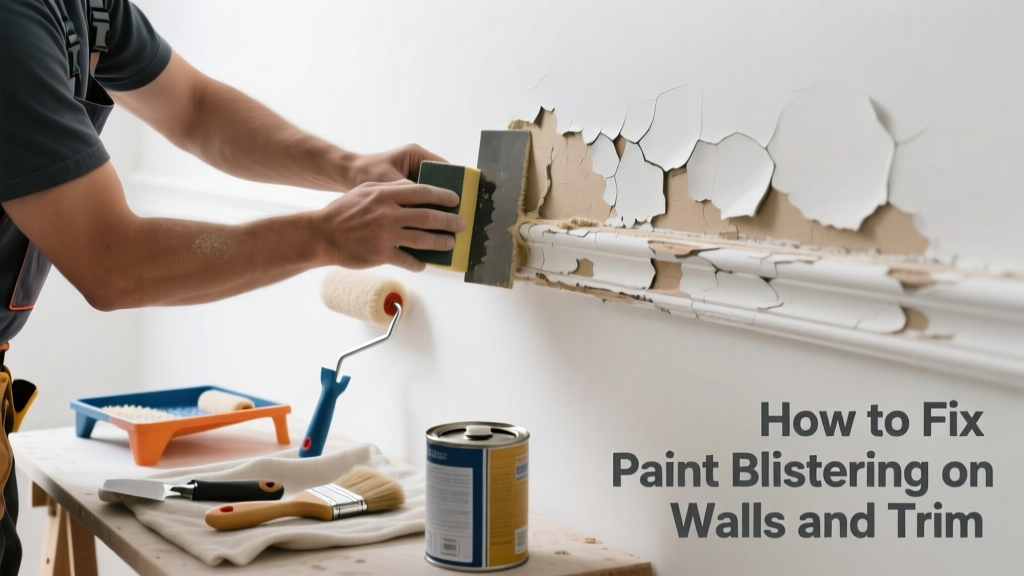
Paint blisters—those raised, bubble-like pockets on walls or trim—are more than just ugly; they’re a red flag that something’s wrong beneath the surface. Left unaddressed, they’ll worsen, peel, and expose substrate to moisture or decay. The fix isn’t just scraping and repainting—it’s about finding and solving the real cause.
Quick Diagnosis
Before grabbing a scraper, identify which of these is likely at play:
- Moisture intrusion behind the wall or under the paint film
- Applying paint over a damp, dirty, or glossy surface
- Using interior paint outdoors (or vice versa)
- High heat or direct sun exposure during drying
- Trapped solvent or moisture from improper ventilation during application
Tools & Materials Needed
| Item | Purpose | Estimated Cost |
|---|---|---|
| Plastic putty knife (3-inch) | Gentle removal of loose blisters without gouging drywall | $4–$8 |
| 120-grit sandpaper (or orbital sander) | Smoothing edges and feathering repaired areas | $3–$15 |
| Oil-based primer (e.g., Zinsser Cover Stain) | Seals moisture-prone surfaces and prevents bleed-through | $18–$24 per quart |
| Acrylic latex topcoat (interior/exterior rated) | Durable, breathable finish appropriate for location | $25–$45 per gallon |
| Dehumidifier or exhaust fan | Reduces ambient humidity during prep and curing | $80–$250 (rental available) |
Step-by-Step Fix
- Scrape and assess: Use a plastic putty knife to gently lift and remove all blistered paint. Don’t force it—if it resists, stop and check for moisture with a moisture meter (readings above 15% indicate active water).
- Dry thoroughly: If moisture is present, locate and repair the source (e.g., leaky window seal, missing caulk, roof flashings). Run a dehumidifier for 48–72 hours; verify surface moisture is below 12% with a meter.
- Prime and patch: Spot-prime bare drywall or wood with oil-based primer. Fill any shallow voids with lightweight spackle, then sand smooth with 120-grit paper.
- Repaint correctly: Apply 100% acrylic latex paint at 50–90°F, with humidity under 85%. Avoid painting in direct sun or right after rain.
When to Call a Pro
DIY stops where structural or health risks begin. Call a licensed contractor if you find:
- Water stains spreading beyond blistered areas—could signal hidden rot or mold behind drywall
- Blisters appearing on ceilings near plumbing stacks or HVAC ducts
- More than 10 sq ft of blistering on exterior stucco or EIFS (these require specialized inspection)
- Mold growth (black, green, fuzzy patches) visible under lifted paint or in wall cavities
"Over 60% of paint failures traced to moisture originate from undetected leaks—not poor paint quality." — Painting & Decorating Contractors of America (PDCA) Technical Bulletin, 2022
Prevention Tips
Long-term success means changing habits, not just fixing spots:
- Always test surface moisture with a pinless meter before priming—never rely on touch alone
- Use vapor-permeable paints on exterior wood; avoid vinyl siding coatings that trap moisture
- Caulk all window and door perimeter joints annually—even if no gaps are visible
- Run bathroom and kitchen exhaust fans for 20 minutes post-shower/cooking to reduce condensation
Can I use bleach to clean the area before repainting?
No—bleach won’t fix underlying moisture and can degrade drywall paper facing. For suspected mold, use an EPA-registered fungicide like Concrobium Mold Control instead. Always wear an N95 mask and gloves, and never mix cleaners.
Will a fan speed up drying enough to prevent new blisters?
A fan helps—but only if humidity is already low. In high-humidity environments (e.g., coastal basements), fans alone increase airflow without reducing moisture content, potentially worsening blistering. Pair with a dehumidifier for real results.
Why do blisters form only on south-facing walls?
Sun-heated surfaces accelerate solvent release in uncured paint, especially oil-based or alkyd products applied too thickly. This creates steam pressure under the film. Use 100% acrylic paints rated for exterior use and apply thin, even coats in shaded conditions.
Can I paint over small blisters without scraping?
Never. Trapped moisture or air will continue expanding, pushing paint off in larger sections within weeks. What looks like a minor spot today often becomes a 2-ft-wide peel zone in 3–6 months.
Does using cheap paint cause blistering?
Not directly—but low-VOC or bargain-brand paints sometimes lack proper resin solids or breathability, making them less forgiving on marginally prepped surfaces. The U.S. EPA estimates that 14% of household water usage is from leaks, many of which go unnoticed until paint fails.
How long should I wait between primer and topcoat?
Follow manufacturer specs—but assume minimum 4 hours for oil-based primer and 2 hours for acrylic, provided temperature stays above 50°F and humidity remains under 75%. Rushing this step traps solvents and invites blistering.
Fixing paint blistering isn’t about covering up—it’s about listening to what the wall is telling you. Every bubble is evidence of imbalance: moisture versus vapor transmission, heat versus cure time, preparation versus expectation. Get the fundamentals right, and your next coat won’t just look better—it’ll last longer. For related issues, see our guides on drywall cracks and peeling paint.