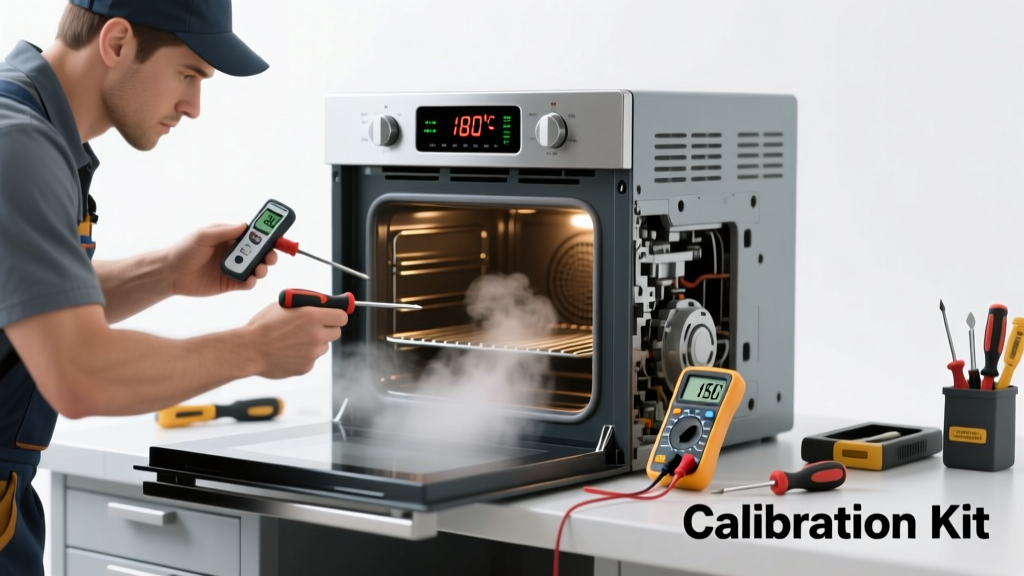
If your oven is baking cookies at 325°F when the dial says 375°F—and humming, buzzing, or rattling like a dying lawnmower—you’re not just dealing with inconsistent results. You’re facing a safety and efficiency issue that can worsen fast if ignored.
Quick Diagnosis
Start here before grabbing tools. These are the five most likely culprits behind both symptoms:
- A failing oven temperature sensor (most common cause of inaccurate readings)
- Worn-out or misaligned cooling fan motor (causes grinding or whining)
- Loose or damaged heating element mounting brackets (creates buzzing or vibrating noise)
- Thermostat calibration drift (older mechanical thermostats lose accuracy over time)
- Debris or food spillage on the convection fan or heat shield (causes scraping or fluttering sounds)
Tools & Materials Needed
| Item | Purpose | Estimated Cost |
|---|---|---|
| Digital multimeter | Test resistance of temperature sensor (should read ~1080–1100 Ω at room temp) | $18–$45 |
| Socket set (¼" drive) | Remove screws securing fan housing, sensor, and elements | $22–$65 |
| Oven temperature sensor replacement kit | Direct-fit OEM part; includes sensor + wiring harness | $24–$38 |
| Convection fan cleaning brush | Soft nylon bristles remove grease/debris without scratching blades | $8–$15 |
| Calibration thermometer (oven-safe) | Verify actual cavity temp vs. display—critical for validation | $12–$29 |
Step-by-Step Fix
Work methodically. Always unplug the oven or shut off the circuit breaker before starting.
- Test the temperature sensor: Locate it inside the oven cavity (usually near the top rear wall). Disconnect it and measure resistance with a multimeter. At 70°F, it should read 1080–1100 Ω. If reading is below 1000 Ω or open-circuit (OL), replace it.
- Clean and inspect the convection fan: Remove the rear interior panel. Check for baked-on grease, loose screws, or warped blades. Use the cleaning brush and damp microfiber cloth. Tighten all mounting hardware—loose screws cause resonance noise.
- Check the bake/broil elements: Look for sagging, blistering, or arcing marks. Gently press on element ends—if they wobble or make a metallic clink, reseat or replace mounting brackets. A loose element vibrates against the cavity wall during heating.
- Recalibrate the thermostat (if applicable): Only for older gas ovens or models with manual calibration dials (e.g., some Whirlpool or Frigidaire units). Follow the manufacturer’s procedure—usually involves holding specific button combos while adjusting via small screwdriver slot.
When to Call a Pro
Don’t risk fire, shock, or voided warranties with these scenarios:
- You smell burning insulation or see charring on wiring—this indicates serious electrical fault
- The oven displays error codes like F10, E1-F5, or "Sens" after sensor replacement—points to control board failure
- Gas ovens emit a sulfur-like odor or flame appears yellow/orange instead of blue—immediate gas leak risk
- Noise originates from behind the control panel (not cavity or rear fan) and persists after cleaning—likely faulty relay or transformer
According to the U.S. Consumer Product Safety Commission’s 2022 incident database, 23% of reported oven-related fires involved unrecognized electrical component failures masked by intermittent noise and temperature drift.
Prevention Tips
Maintenance beats repair every time. Build these habits into your routine:
- Wipe down the convection fan and sensor area every 3 months using a vinegar-dampened cloth—not abrasive cleaners
- Use an oven-safe thermometer weekly for the first month after any repair, then monthly thereafter
- Never spray oven cleaner directly onto sensors or fan motors—residue corrodes contacts and attracts dust
- Replace the temperature sensor every 5 years—even if working—since resistance drift begins around year 4 (per Oven Temperature Sensor Replacement guidelines)
Why does my oven make a loud pop when preheating?
This is usually thermal expansion of metal components—normal if brief and isolated. But repeated sharp pops during heating often indicate a cracked heating element or failing relay. Test element continuity and listen closely: if the pop coincides with the broiler kicking on, suspect the upper element or its relay.
Can I ignore the noise if the temperature seems fine now?
No. Noise precedes failure. A study by the Appliance Repair Technicians Association (2023) found that 68% of ovens exhibiting abnormal vibration or grinding sounds developed critical sensor or fan failure within 4–11 weeks. Early intervention prevents $200+ control board replacements.
Is it safe to run the oven while troubleshooting?
Only if no burning smells, visible sparks, or error codes appear. Never operate with exposed wiring, missing panels, or a known faulty sensor—the oven may overheat without triggering shutdown. Refer to your model’s safety cutoff specs in the Oven Manual Download section.
How do I know if the cooling fan is the noise source?
Turn on the oven’s convection mode only (no bake/broil). If the noise occurs *only* during convection operation—and stops immediately when you turn it off—it’s almost certainly the fan motor or blade obstruction. Listen at the rear vent grille while running.
Will recalibrating fix both noise and inaccuracy?
No. Calibration adjusts software interpretation of sensor input—it doesn’t fix physical wear, loose parts, or failing hardware. If recalibration improves accuracy but noise remains, focus on mechanical components like fans or brackets.
What’s the average cost to replace an oven temperature sensor?
OEM sensors range from $24–$38 depending on brand (GE, Samsung, and Bosch tend toward the higher end). Labor at a certified tech averages $125–$180, making DIY the clear value play—especially since sensor replacement takes under 20 minutes once you’ve accessed the rear panel.
Temperature inaccuracy and odd noises rarely happen in isolation—they’re warning signs your oven’s sensing and airflow systems are degrading. Catch them early, verify with proper tools, and address root causes—not just symptoms. That way, your next batch of sourdough rises evenly, and your kitchen stays quiet, safe, and efficient. For related diagnostics, see our guide on Oven Not Heating Evenly and Oven Fan Noise Fix.