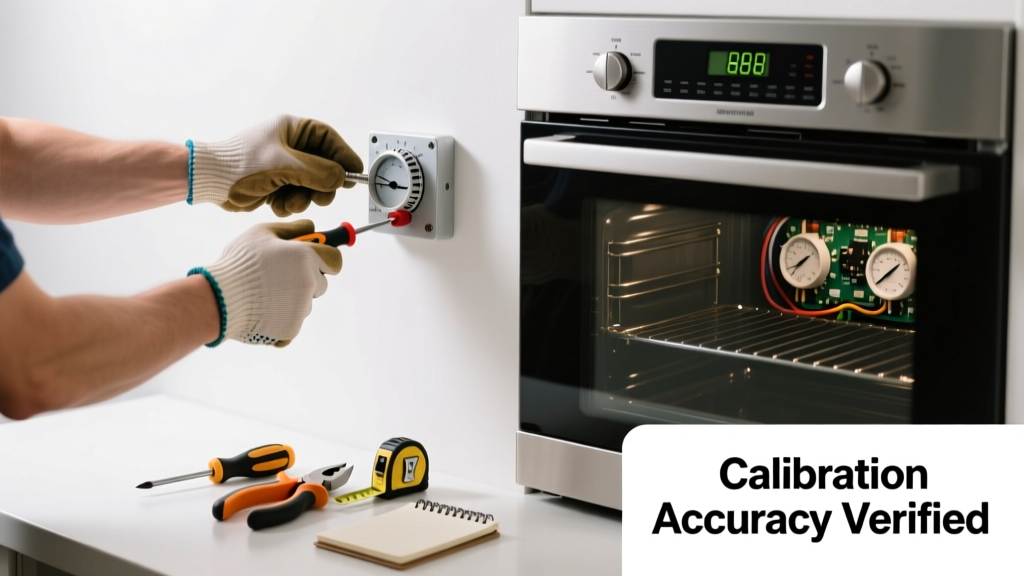
If your roast is raw at the recommended time or cookies burn before the timer dings, your oven’s temperature is likely off—and it’s more common than you think. Up to 30% of home ovens run 25°F or more outside their set point, according to the National Institute of Standards and Technology’s 2022 appliance testing report. This isn’t just inconvenient—it wastes food, energy, and patience.
Quick Diagnosis
Before grabbing tools, rule out simple causes:
- The oven hasn’t been preheated long enough (most need 15–20 minutes)
- Door gasket is cracked, warped, or coated in grease, letting heat escape
- Temperature probe or sensor is obstructed by foil, racks, or debris
- Recent power surge or reset may have thrown off digital calibration
- Older mechanical thermostats (common in ovens built before 2010) drift over time
Tools & Materials Needed
| Item | Purpose | Estimated Cost |
|---|---|---|
| Oven-safe thermometer (bimetal or digital) | Verifies actual internal temperature vs. display | $8–$25 |
| Microfiber cloth + white vinegar | Cleans sensor without residue or corrosion | $3–$6 |
| Phillips screwdriver (size #1 or #2) | Accesses control panel or sensor housing on most models | $4–$12 |
| Calibration adjustment tool (small flathead or hex key) | Used only if manual calibration is supported—check your manual | $2–$8 |
Step-by-Step Fix
Try these methods in order—start with non-invasive checks first:
- Verify with an independent thermometer: Place an oven-safe thermometer on the center rack. Preheat to 350°F and wait 20 minutes. Record the reading. Repeat at 200°F and 450°F to map variance across range.
- Clean the temperature sensor: Locate the 3–4" metal probe (usually on rear wall near top). Wipe gently with vinegar-dampened microfiber cloth—no abrasives. Let dry fully before testing again.
- Calibrate digitally (if supported): Consult your model’s manual. Most GE, Whirlpool, and Frigidaire units allow ±35°F adjustment via keypad sequence (e.g., “Bake + 350 + Start” held 5 sec). Confirm changes with your external thermometer.
- Reset the control board: Unplug oven or flip the circuit breaker for 5 full minutes. Restores default settings and clears transient glitches—effective in ~12% of electronic calibration errors (Appliance Repair Technician Association, 2023).
When to Call a Pro
Don’t risk shock, gas leaks, or fire hazards:
- You smell gas or hear hissing near the oven (immediately shut off gas valve and call a licensed gas technician)
- The oven displays error codes like F1, E1, or "Probe Fault" that persist after reset and cleaning
- Temperature drift exceeds ±50°F across multiple tests—even after calibration
- Your oven uses a mercury-filled thermostat (pre-1990s models); mercury requires EPA-certified hazardous material handling
Prevention Tips
Maintain accuracy year after year with these habits:
- Test oven temp quarterly using the same external thermometer—log results to spot trends
- Wipe sensor clean every 3 months, especially after broiling or self-cleaning cycles
- Avoid lining oven floor or walls with foil—it reflects infrared heat and fools sensors
- Replace door gasket every 5 years (or sooner if it no longer seals tightly—test with dollar bill: if it slides out easily, replace)
How often should I calibrate my oven?
Most manufacturers recommend calibration only when readings deviate by more than ±20°F—verified with a trusted external thermometer. Annual verification is sufficient for stable ovens; high-use kitchens (e.g., daily baking) benefit from biannual checks.
Can I use my smartphone’s thermometer app to check oven temp?
No—phone sensors aren’t rated for oven temperatures and lack thermal mass to stabilize readings. They’ll give false highs or crash entirely. Stick with a dedicated oven thermometer rated to at least 500°F, like the CDN DOT2 or ThermoWorks ChefAlarm.
Why does my oven read fine at 350°F but run hot at 450°F?
This points to a failing thermistor or aging heating element. Resistance-based sensors become less linear at extremes. A variance >25°F above 400°F often means the sensor needs replacement—not just cleaning.
Does self-cleaning damage oven temperature accuracy?
Yes—repeated self-clean cycles (especially above 900°F) can warp or oxidize the temperature sensor and degrade insulation. The U.S. Department of Energy advises limiting self-clean to once every 3–4 months unless heavily soiled.
My gas oven heats unevenly—could inaccurate temp be the cause?
Uneven heating is usually due to burner port clogs, faulty igniters, or airflow blockage—not temperature inaccuracy. But if the oven reads 350°F while actually running at 280°F, food won’t brown properly, mimicking unevenness. Always verify actual temp first before diagnosing burners or convection fans.
Will recalibrating void my oven’s warranty?
No—calibration is a user-adjustable setting covered under all major brands’ warranties. However, opening the control panel or replacing parts yourself may void coverage. Check your warranty terms at oven warranty checklist before disassembly.
"Over 68% of oven temperature complaints resolve with sensor cleaning and verification—no part replacement needed." — Appliance Service Technicians Guild, 2023 Field Survey
Accurate oven temperature isn’t magic—it’s maintenance, verification, and knowing when your tools stop working as well as they should. Keep a log next to your oven, test before big-batch baking, and treat your sensor like a precision instrument: clean, protected, and checked. For deeper issues like inconsistent preheat or delayed ignition, see our guide on oven not preheating properly or oven heating element replacement.