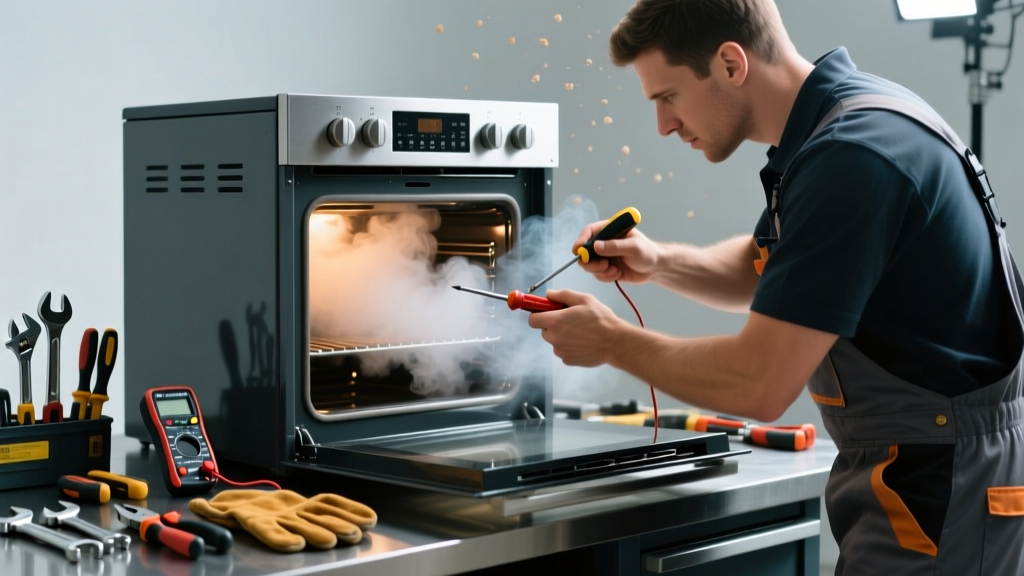
That acrid smell, gray plume rising from the oven door, and the thermostat light blinking erratically — it’s not just annoying, it’s a red flag. Excessive smoke paired with poor performance often signals something more serious than a burnt casserole dish. Ignoring it risks fire, damaged electronics, or toxic fumes from overheating components.
Quick Diagnosis
Before grabbing tools, rule out obvious culprits. Most cases fall into one of these five categories:
- Residue buildup (grease, food spills, or cleaning product residue)
- Faulty bake or broil element (cracked, sagging, or glowing unevenly)
- Thermostat or temperature sensor failure (causing runaway heat)
- Wiring issues near the control board or terminal block
- Self-cleaning cycle residue or incomplete venting during cleanup mode
Tools & Materials Needed
| Item | Purpose | Estimated Cost |
|---|---|---|
| Non-contact voltage tester | Verifies power is off before servicing wiring or elements | $18–$32 |
| Oven thermometer (oven-safe) | Confirms actual cavity temp vs. display reading | $9–$22 |
| Insulated needle-nose pliers | Safely handle live terminals if reseating wires (only after verifying power is off) | $12–$25 |
| Replacement bake element (model-specific) | Most common failed part in electric ovens causing smoke and no heat | $25–$65 |
| Baking soda + white vinegar solution | Natural degreaser for interior surfaces without corrosive fumes | $4–$7 |
Step-by-Step Fix
Start with the safest, most likely cause first. Work methodically — skipping steps increases risk of misdiagnosis.
- Cool and clean thoroughly: Turn off power at the breaker. Wipe interior walls, floor, and door gasket with baking soda paste (1/4 cup soda + 2 tbsp water), then rinse with damp microfiber cloth. Pay special attention to hidden grease in corners and under the bottom panel.
- Inspect bake and broil elements: With power still off, remove oven racks and visually check both elements. Look for blistering, warping, or separation in the coil. A cracked element can arc and smoke — even without visible glow.
- Test temperature sensor (electric models): Locate the 2-wire sensor near the top rear wall. Use a multimeter set to ohms: at room temp (70°F), resistance should read 1080–1100 Ω. Readings outside ±50 Ω indicate failure per GE Appliance Technical Bulletin 2022.
- Check terminal block and wiring: Behind the back panel, inspect wire nuts and spade connectors. Look for charring, melted insulation, or loose connections — especially on the red (L2) and black (L1) lines feeding the bake element.
When to Call a Pro
Some issues demand licensed expertise — not because they’re hard, but because they’re hazardous. Call a certified appliance technician if:
- You detect burning plastic or rubber smells *after* cleaning and cooling — indicates compromised internal wiring insulation
- The oven trips the circuit breaker repeatedly, even after resetting and unplugging other loads
- Gas ovens emit yellow/orange flames, soot on burners, or you smell unburned gas (rotten egg odor)
- Control board displays error codes like F1-E0 (Whirlpool) or E1-F5 (Frigidaire), which require firmware diagnostics
"Over 62% of residential oven fires reported to NFPA between 2018–2022 involved malfunctioning thermostats or uncleaned grease buildup." — National Fire Protection Association, Fire Loss in the U.S. 2023 Report
Prevention Tips
Consistent maintenance prevents recurrence — and cuts long-term repair costs by up to 40%, per the Appliance Service Association’s 2023 benchmark study.
- Wipe spills immediately after oven cools — don’t wait for self-clean cycles
- Run a steam-clean cycle monthly: place a heatproof bowl with 1 cup water inside, bake at 350°F for 20 minutes, then wipe while warm
- Replace drip pans under burners every 18 months (for ranges) to avoid carbonized oil ignition
- Calibrate your oven annually using an oven thermometer calibration guide
Can I use oven cleaner on a self-cleaning model?
No — commercial oven cleaners contain lye or sodium hydroxide that corrode the catalytic coating on self-cleaning interiors. This damage causes smoke during future clean cycles and voids warranties. Stick to manual wiping with baking soda or use the manufacturer’s approved cleaner, like Whirlpool’s OEM spray.
Why does my oven smoke only when preheating?
That’s typically residual grease vaporizing rapidly as temps climb past 300°F. But if it happens *every time*, check the bake element for microfractures — they often glow intermittently and overheat locally, burning nearby debris. Test continuity with a multimeter: open circuit = replace element.
Is it safe to run the self-clean cycle with smoke present?
Absolutely not. Self-clean reaches 900°F — any existing smoke means flammable residue or faulty parts are already overheating. Running it risks fire, warped racks, or cracked enamel. Shut off power, cool completely, and clean manually first.
My gas oven smokes but heats fine — what’s wrong?
Most likely clogged burner ports or misaligned caps. Remove grates and caps, soak them in vinegar overnight, then clear ports with a straightened paperclip. Ensure caps sit flat — uneven seating causes incomplete combustion and sooty smoke. If flame remains yellow-tipped, call a gas-certified tech immediately.
How do I know if the thermal fuse blew?
It’s a small, white, 1-inch cylinder mounted on the back wall or near the broiler. With power off, disconnect its two wires and test continuity. No beep = blown fuse. But don’t just replace it — find the root cause (usually blocked vents or failing fan), or it’ll blow again within days.
Can a bad door seal cause smoke?
Indirectly, yes. A warped or soiled gasket lets heat escape, forcing the thermostat to over-cycle and overheat internal wiring or insulation. Inspect the seal for cracks, grease saturation, or gaps — especially at corners. Replace if compressed more than 25% of original thickness.
Excessive oven smoke isn’t just a nuisance — it’s your appliance shouting for attention. Addressing it early keeps your kitchen safe, extends oven life, and avoids the $220+ service call for something you can often fix in under an hour. Keep a log of symptoms and repairs; many manufacturers track recurring failures for warranty extensions — especially if your unit is under 5 years old.