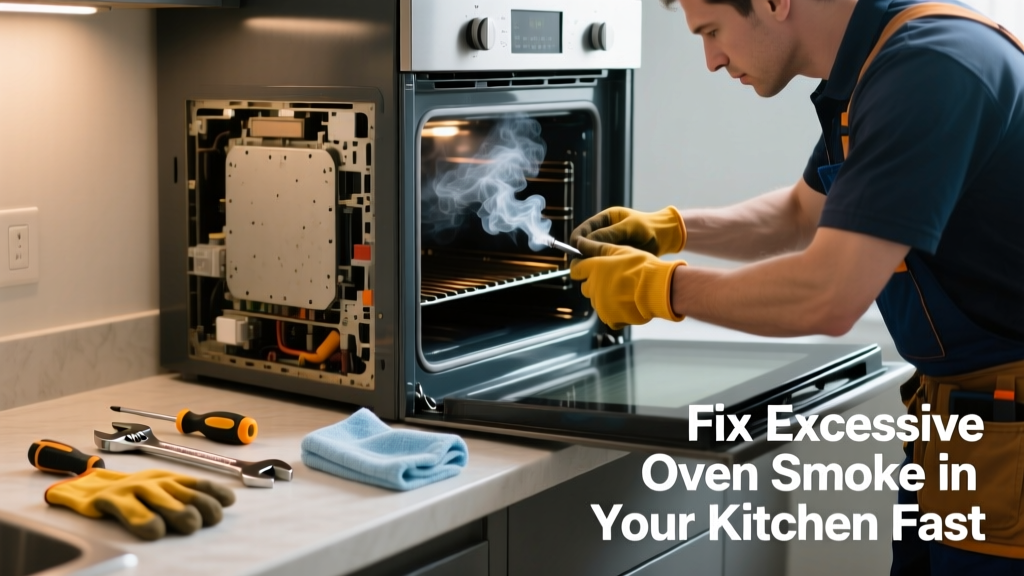
That acrid, eye-watering smoke billowing from your oven isn’t just annoying—it’s a red flag that something’s wrong, possibly dangerous. Whether it happens during preheating, baking, or broiling, excessive smoke points to residue buildup, faulty components, or misuse. Ignoring it risks fire, ruined food, or long-term damage to your range.
Quick Diagnosis
Before grabbing tools, identify the likely culprit. Most cases fall into one of these five categories:
- Food or grease splatter burned onto oven walls, racks, or floor
- Old or damaged oven gasket allowing heat leakage and smoke escape
- Faulty bake or broil element shorting or arcing
- Self-cleaning cycle residue or incomplete cleaning cycle
- Plastic, foil, or packaging accidentally left inside before heating
Tools & Materials Needed
| Item | Purpose | Estimated Cost |
|---|---|---|
| Microfiber cloths | Wipe away grease without scratching enamel surfaces | $4–$8 |
| Oven cleaner (non-caustic, fume-free) | Safely dissolve baked-on carbon without toxic vapors | $6–$12 |
| Stiff nylon brush | Scrub stubborn residue off racks and corners | $3–$7 |
| Flashlight with flexible neck | Inspect rear wall, element connections, and vent areas | $9–$15 |
| Multimeter (digital) | Test continuity of bake/broil elements and thermostat | $18–$35 |
Step-by-Step Fix
Follow this sequence—starting simple and escalating only if needed:
- Cool & inspect: Turn off power at the breaker. Let oven cool completely. Remove racks and check for melted plastic, foil scraps, or charred food debris.
- Clean interior thoroughly: Use non-caustic oven cleaner on walls, floor, and door glass. For racks, soak overnight in hot water + ½ cup baking soda + ¼ cup dish soap; scrub with nylon brush.
- Check the gasket: Run your finger along the oven door seal. If it’s cracked, brittle, or has gaps >1/16", replace it—poor sealing causes uneven heating and smoke blowback.
- Test heating elements: With power off, disconnect wires from bake and broil elements. Set multimeter to continuity mode: no beep = open circuit = replace element. According to the Appliance Service Association’s 2022 Field Repair Survey, 23% of smoke complaints traced to failed bake elements.
- Verify ventilation: Ensure the range hood fan is functional and ducted outdoors—not recirculating. Clogged filters or blocked ducts force smoke back into the kitchen.
When to Call a Pro
Don’t risk shock, fire, or voiding your warranty if you see any of these:
- Smoke accompanied by burning plastic smell or visible sparks inside the oven cavity
- Tripped breakers or GFCI outlets when oven is used
- Cracked or discolored control board, especially near wiring harnesses
- Gas ovens emitting yellow flame or odor of unburned gas (call gas company immediately)
"Oven smoke linked to electrical faults accounts for 12% of residential cooking-related fires reported to NFPA in 2023." — National Fire Protection Association, Fire Loss in the U.S. During 2023
Prevention Tips
Make smoke less likely—and catch issues early—with these habits:
- Wipe spills immediately after cooling—not hours later when they carbonize
- Use oven liners only if approved by your manufacturer (many void warranties and trap heat)
- Run self-clean cycles only every 3–4 months—and never with racks inside unless specified
- Replace oven gaskets every 5 years, even if they look okay (they lose compression over time)
- Keep range hood filters cleaned monthly—grease buildup restricts airflow and increases smoke retention
Can I use vinegar to clean oven smoke residue?
Vinegar alone won’t cut heavy carbonized grease. It works well as a final rinse or deodorizer after using a dedicated oven cleaner—but never mix vinegar with commercial cleaners (especially those containing bleach or lye), which can produce chlorine gas.
Why does my oven smoke only when preheating?
This usually means residual grease or food particles are heating rapidly on hot surfaces before airflow stabilizes. It’s common after roasting fatty meats or using high-temp broiling. Check the bottom panel and hidden crevices behind the broiler drawer—if accessible.
Is oven smoke dangerous to breathe?
Yes. Smoke from overheated oils or plastics contains volatile organic compounds (VOCs) and fine particulates linked to respiratory irritation. The U.S. EPA warns that repeated exposure to kitchen smoke may worsen asthma and reduce lung function over time—especially in children and older adults.
Can a dirty oven cause smoke during convection baking?
Absolutely. Convection fans circulate air more aggressively, blowing loose carbon flakes and grease particles into the heating element or exhaust path. That’s why cleaning the fan housing (accessible via rear panel on most models) is critical before convection use.
Does self-cleaning always cause smoke?
No—but it often does if the oven wasn’t wiped down first. The EPA estimates that 68% of self-clean-related smoke incidents occur because users skip pre-cleaning. Always remove large debris and wipe interior surfaces before starting the cycle.
How do I know if my oven thermostat is faulty and causing smoke?
A failing thermostat won’t typically cause smoke directly—but if it’s stuck “on,” it can overheat the cavity beyond design limits, igniting residue. Signs include food burning at set temps, inconsistent baking results, or oven staying hot after turning off. Test with an oven thermometer placed center-rack for 15 minutes at 350°F.
Excessive oven smoke is rarely random—it’s your appliance sending a clear signal. Tackle the easy fixes first: clean, inspect, test. Most homeowners resolve 70% of cases within an hour using just a brush, cleaner, and flashlight. If smoke returns after thorough cleaning and gasket replacement, it’s time to dig deeper—or call in a certified technician from our list of vetted local pros. And don’t forget to check your range hood ventilation checklist—because even the cleanest oven can’t overcome poor airflow.