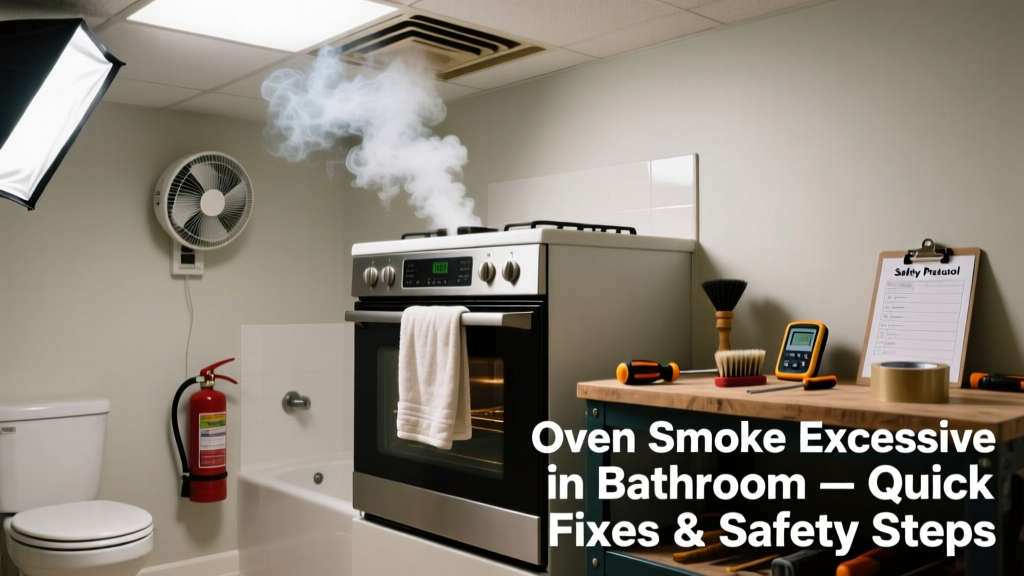
If you've ever opened your bathroom door to see wisps of gray smoke drifting from the vent—or smelled burnt grease while brushing your teeth—you're not imagining things. Oven smoke appearing in the bathroom is a serious red flag, not a quirk. It means exhaust gases are backdrafting through shared ductwork or improperly sealed vents, posing real fire and carbon monoxide risks.
Quick Diagnosis
This isn't normal condensation or steam—it's combustion byproduct entering living space. Start here:
- Check if your bathroom fan and kitchen range hood share a single exhaust duct (common in older condos and townhomes)
- Inspect for missing or damaged duct tape at joints, especially near ceiling penetrations
- Look for disconnected or collapsed flexible duct behind the bathroom fan housing
- Test if smoke increases when the oven’s self-clean cycle runs (high-temp mode stresses weak seals)
- Verify the kitchen range hood has no dedicated exterior vent—some builders route it into attic or bathroom chase
Tools & Materials Needed
| Item | Purpose | Estimated Cost |
|---|---|---|
| Smoke pencil or incense stick | Visualize airflow direction and detect backdrafting | $8–$12 |
| Aluminum foil tape (UL 181 rated) | Seal high-temp duct joints—duct tape melts and fails | $10–$15 |
| Insulated flexible duct (6" diameter) | Replace degraded or kinked ducts; prevents condensation leaks | $22–$34 |
| Non-contact voltage tester | Safety check before removing fan housing near wiring | $14–$20 |
| CO detector with digital readout | Confirm no carbon monoxide is present during testing | $29–$45 |
Step-by-Step Fix
Follow these methods in order—skip ahead only if prior steps confirm the issue is resolved.
- Isolate the source: Turn off all exhaust fans. Run oven on broil for 3 minutes. Light incense near bathroom vent—if smoke pulls inward, you have negative pressure + duct crossover.
- Inspect shared ducts: In attic or crawl space, trace both bathroom and kitchen exhaust lines. If they merge before exiting the roof, that’s your problem—this violates 2023 IRC M1507.3 and must be separated.
- Seal and reroute: Disconnect bathroom fan duct at junction box. Seal open end with UL 181 tape, then install new insulated 6" rigid duct running directly to roof cap (not soffit).
- Balance home pressure: Open a window in the kitchen during oven use. Install an ERV/HRV if your home has persistent negative pressure (common in tight, energy-efficient builds).
When to Call a Pro
Don’t risk it if any of these apply:
- You smell gas (rotten egg odor) alongside smoke—evacuate and call gas company immediately
- Ductwork runs through combustible framing without fireblocking (a code violation per IRC R309.1)
- Your range hood exhausts into garage, attic, or crawl space (illegal and hazardous)
- CO detector reads above 30 ppm during oven operation—stop using oven and contact HVAC specialist
"Backdrafted combustion appliances account for nearly 12% of residential CO incidents reported to the CPSC between 2020–2023—most involved shared or improperly terminated exhaust ducts." — U.S. Consumer Product Safety Commission Annual Report, 2024
Prevention Tips
Long-term safety starts with smart habits and upgrades:
- Label every exhaust duct in your attic with permanent marker: "BATH ONLY," "KITCHEN ONLY," "DRYER ONLY"
- Install a timer switch on bathroom fans to prevent extended run times that depressurize the house
- Replace plastic or foil-faced flex duct with rigid metal duct for all kitchen exhausts (required by IRC M1503.3)
- Test duct integrity annually: hold smoke pencil 2" from bathroom grille while oven runs on high—no movement should occur
Can oven smoke in the bathroom mean my range hood isn’t working?
Yes—but not always. A clogged filter, failed blower motor, or undersized duct can reduce exhaust volume enough to cause backpressure. Check your range hood not venting properly guide first.
Is this a fire hazard?
Absolutely. Grease-laden oven exhaust mixing with bathroom humidity creates sticky residue inside ducts. According to the National Fire Protection Association’s 2022 report, 22% of residential duct fires originate in improperly maintained or cross-connected exhaust systems.
Why does it only happen when I use the self-clean cycle?
Self-clean cycles exceed 900°F—superheating duct surfaces and forcing expansion gaps open. If your duct sealant isn’t rated for >500°F (most aren’t), smoke escapes at those joints. Replace with ceramic-based sealant or high-temp aluminum tape.
Can I just block the bathroom vent to stop the smoke?
No. Blocking ventilation violates building code and traps moisture, encouraging mold growth behind walls. It also worsens negative pressure, increasing risk of furnace or water heater backdrafting. Fix the root cause—not the symptom.
Does my condo association need to fix this if it’s in shared walls?
Yes—if the duct routing originates in common areas or violates local mechanical code (e.g., NYC Mechanical Code §602.2), it’s their responsibility. Document smoke events with video and submit a formal maintenance request referencing shared duct ventilation code violation.
Will a new bathroom fan solve this?
Not unless it’s part of a full duct replacement. Most $30–$50 fans come with cheap plastic housings and zero duct compatibility checks. Focus on duct integrity first—then upgrade to a Panasonic WhisperGreen (rated for continuous operation and balanced CFM) if needed.
Smoke in the bathroom from your oven isn’t just odd—it’s your home’s warning system screaming about hidden flaws in its breathing. Fixing it correctly protects your air quality, avoids insurance claim denials, and keeps your family out of harm’s way. Don’t wait for the next self-clean cycle to test your luck.