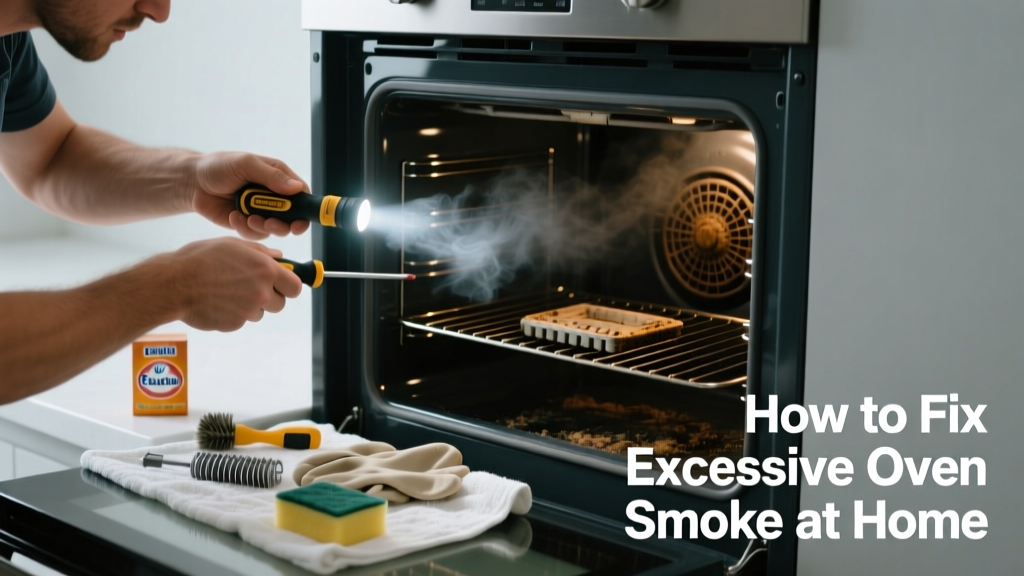
That acrid smell of burning smoke every time you preheat your oven isn’t normal — it’s a warning sign. Excessive smoke often points to grease buildup, faulty components, or food debris igniting at high temps. Ignoring it risks fire, ruined meals, and potential carbon monoxide exposure in severe cases.
Quick Diagnosis
Before grabbing tools, identify the likely culprit:
- Visible grease or food residue on oven walls, racks, or floor
- Smoke appearing only during broil or self-clean cycles
- Smoke starting immediately after turning oven on (points to heating element issue)
- Burning odor without visible smoke (could indicate wiring insulation overheating)
- Smoke accompanied by flickering lights or tripped breakers (electrical fault)
Tools & Materials Needed
| Item | Purpose | Estimated Cost |
|---|---|---|
| Heavy-duty oven cleaner (non-caustic) | Dissolves baked-on grease without damaging enamel or heating elements | $8–$15 |
| Microfiber cloths & non-scratch scrub pads | Clean without scratching interior surfaces or damaging sensor ports | $5–$12 |
| Stainless steel brush (for coil elements) | Removes carbonized debris from exposed bake/broil elements | $6–$10 |
| Multimeter (with continuity setting) | Tests heating element resistance and checks for shorted wiring | $25–$45 |
| Heat-resistant gloves | Protects hands when handling hot components or cleaning near elements | $12–$20 |
Step-by-Step Fix
Follow these methods in order — most issues resolve with the first two steps:
- Cool and vacuum the interior: Turn off power at the breaker. Let oven cool completely. Use a shop vac with crevice tool to remove crumbs, sugar residue, and loose debris from corners, under racks, and around the door gasket.
- Deep-clean grease and spills: Apply non-caustic oven cleaner to interior surfaces (avoiding heating elements and control panels). Let sit per label (usually 15–30 min), then wipe with damp microfiber cloth. For stubborn spots, use a plastic scraper — never metal on enamel.
- Inspect and clean heating elements: Visually check bake (bottom) and broil (top) elements for blistering, sagging, or dark burn marks. Gently brush away carbon buildup with stainless steel brush. If an element glows unevenly or shows visible breaks, replace it.
- Check door seal integrity: Close door on a dollar bill — if you can pull it out easily at any point, the gasket is compromised. Heat escaping past the seal causes uneven cooking and smoke from external grease ignition on the exterior housing.
When to Call a Pro
Stop working and call a certified appliance technician if you encounter any of these:
- Smoke originates from behind the control panel or near the oven’s rear wall
- Oven trips the circuit breaker repeatedly, even after cleaning
- You detect a strong electrical burning odor (like melted plastic or fishy smell)
- Self-cleaning cycle fails to start or shuts down mid-cycle with error codes (e.g., F9, E1)
- Gas ovens emit yellow or orange flames instead of steady blue — indicates incomplete combustion and CO risk
"Over 70% of residential oven fires reported to NFPA between 2018–2022 were caused by uncleaned grease or food debris — not equipment failure." — National Fire Protection Association, Home Structure Fires Involving Cooking Equipment, 2023
Prevention Tips
Make smoke-free baking routine, not luck:
- Wipe up spills immediately after oven cools — don’t wait for them to bake on
- Line oven racks with non-stick liners designed for high heat (never aluminum foil on bottom rack)
- Run a 10-minute “steam clean” monthly: place a heat-safe bowl with 1 cup water inside, bake at 400°F for 10 min, then wipe while warm
- Replace oven gaskets every 5 years — they harden and crack, compromising seal and efficiency
- Use a splatter screen over roasting pans to catch grease before it hits oven floor
Can I use vinegar and baking soda to clean my oven?
Yes — but only for light maintenance, not heavy smoke-causing buildup. Mix ½ cup baking soda with 3 tbsp water into a paste, apply to cool interior, let sit overnight, then wipe. Follow with white vinegar spray to neutralize and lift residue. This method won’t cut through years of carbonized grease like commercial cleaners, but it’s safe for frequent use and avoids harsh fumes. For persistent smoke, skip this and go straight to a non-caustic commercial formula like Eco-Me Oven Cleaner.
Why does my oven smoke only when using the broiler?
Broilers operate at 500°F+ and expose food directly to intense radiant heat. Grease drippings hit the hot element or pan base instantly — vaporizing and smoking. Always use a broiler pan with a drip tray, trim excess fat from meats, and clean the pan *immediately* after each use. Also inspect the broil element for warped sections or carbon crust — those trap grease and ignite repeatedly.
Is oven smoke dangerous to breathe?
Yes. Smoke from burning food residue contains fine particulate matter (PM2.5) and polycyclic aromatic hydrocarbons (PAHs), known respiratory irritants and potential carcinogens with chronic exposure. The U.S. EPA estimates indoor air pollution levels can be 2–5x higher than outdoors during active oven smoking. Ventilate well, run your range hood on high, and evacuate if smoke becomes thick or acrid — especially if you have asthma or young children.
Can a dirty oven filter cause smoke?
Most ovens don’t have filters — but your range hood does. A clogged grease filter won’t cause oven smoke, but it *will* recirculate smoke back into your kitchen instead of exhausting it. Clean metal filters monthly in hot soapy water or dishwasher; replace charcoal filters every 6 months. Check your range hood maintenance guide for model-specific tips.
How often should I replace oven heating elements?
Typical lifespan is 5–8 years with regular use. Signs they’re failing include delayed heating, uneven browning, visible damage, or repeated smoke at startup. Test resistance with a multimeter: a functional bake element reads 20–50 ohms. Infinite resistance = open circuit = replacement needed. Don’t delay — a shorted element can overheat wiring and trigger thermal cutoffs or fire.
Does self-cleaning cause smoke — and is it safe?
Yes, self-cleaning *can* cause smoke — especially if large food particles remain inside. The cycle heats to 880°F+, turning residue into ash. But heavy grease or sugary spills will smoke heavily and may ignite. Always remove racks, clean visible spills first, and ensure room ventilation is open. Never use self-clean if you smell gas (gas ovens) or see cracked enamel (risk of toxic fumes). For safer alternatives, try steam cleaning or enzymatic cleaners like Biokleen Bac-Out.
A little smoke now and then is inconvenient. Consistent smoke is your oven’s way of asking for help — and sometimes, demanding it. Tackle the easy fixes first: clean thoroughly, inspect seals, and verify airflow. When in doubt about wiring, gas lines, or error codes, trust your instincts and call a pro. Your safety — and your next batch of cookies — depends on it.