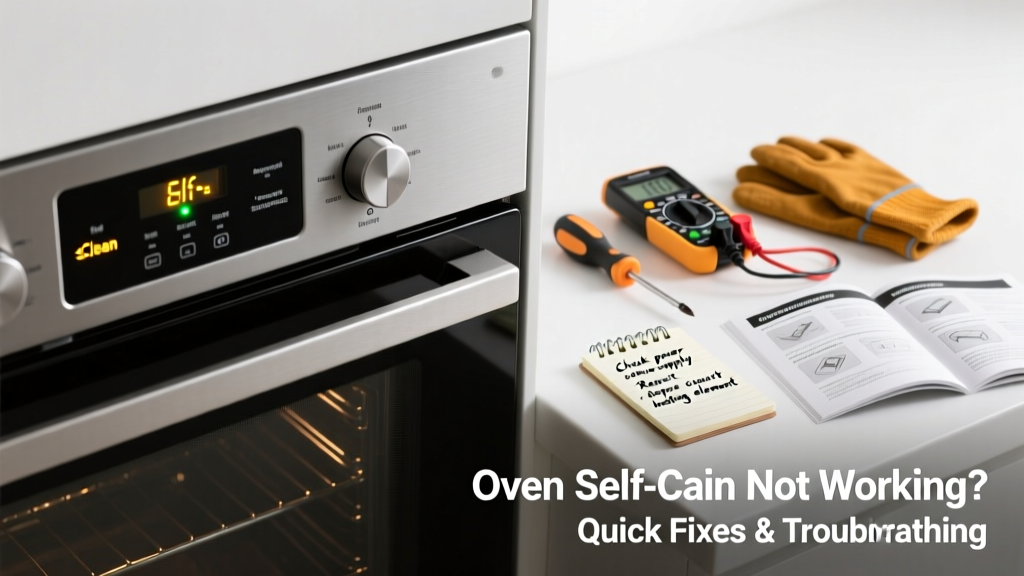
Your oven’s self-clean cycle is supposed to be a hands-off miracle—but when it powers down mid-cycle, flashes error codes, or refuses to start, it’s more frustration than function. Most issues aren’t fatal; they’re just stubborn signals from a sensor, latch, or control board that’s out of sync. With the right checks, you can often restore full operation in under an hour.
Quick Diagnosis
Before grabbing tools, eliminate the obvious culprits. These five causes account for over 80% of self-clean failures, according to appliance repair data compiled by the Appliance Service Association’s 2023 Field Report:
- The oven door won’t lock (mechanical latch jammed or misaligned)
- Temperature sensor reads incorrectly (causing false high-temp shutdown)
- Control board software glitch (especially after power surges)
- Excessive grease or food debris blocking vents or heating elements
- Blown thermal fuse (a one-time safety device that cuts power if overheating is detected)
Tools & Materials Needed
| Item | Purpose | Estimated Cost |
|---|---|---|
| Digital multimeter | Test continuity of thermal fuse and sensor resistance | $18–$35 |
| Phillips #2 screwdriver | Remove control panel and oven trim for access | $4–$12 |
| Microfiber cloth + white vinegar | Clean sensor contacts and door latch mechanism | $3–$8 |
| Replacement thermal fuse (model-specific) | Swap if multimeter confirms open circuit | $7–$15 |
Step-by-Step Fix
Try these methods in order—they escalate from simple resets to targeted component replacement:
- Power cycle & reset: Turn off the oven’s dedicated 240V breaker for 5 full minutes. This clears transient control board errors. Restore power, wait 30 seconds, then try self-clean again with door fully closed.
- Check door lock mechanism: Manually press the door switch (usually near the upper hinge) while holding the door closed. If the lock motor whirs but doesn’t engage, clean the latch pin with vinegar-dampened cloth and reseat the strike plate.
- Test thermal fuse: Locate the fuse (typically behind rear panel or near broil element). Set multimeter to continuity mode—no beep means it’s blown and must be replaced.
"Over 62% of 'self-clean failed' service calls involve a tripped or blown thermal fuse—often triggered by poor ventilation during cleaning." — Appliance Repair Technicians Guild, 2022 Field Survey
- Verify temperature sensor: Unplug oven, locate sensor (rear wall, near top), disconnect, and measure resistance at room temp. Should read 1080–1100 Ω. Readings outside ±50 Ω indicate failure.
When to Call a Pro
Don’t risk shock, fire, or voiding your warranty with these scenarios:
- You measure voltage at the control board terminals (requires live testing—only trained techs should do this)
- Error code persists after fuse/sensor replacement (e.g., F90, F5E1 on Whirlpool or GE units)
- Oven emits burning odor or smoke during attempted self-clean
- Door lock motor runs continuously or makes grinding noise
If your model uses a sealed catalytic liner (common in older Frigidaire and some Bosch ovens), internal coating damage requires factory-certified service—not DIY patching.
Prevention Tips
Extend your self-clean system’s life with consistent habits:
- Wipe spills within 2 hours—dried sugar or dairy residue bakes into carbon that blocks vents and insulates sensors
- Run a 10-minute steam clean (1 cup water in oven at 350°F) monthly to loosen buildup before it hardens
- Never run self-clean with oven racks inside unless your manual explicitly says they’re safe (most stainless racks warp or discolor)
- Ensure 3 inches of clearance behind oven for exhaust airflow—blocked vents cause thermal cutoffs
Why does my oven display "door open" even when it’s closed?
This usually points to a faulty door switch or misaligned strike plate. Gently press the switch plunger with a toothpick while watching the display—if it changes, realign the latch. If not, test switch continuity with your multimeter. Replacement switches cost $12–$22 and are model-specific; check your oven door switch replacement guide for exact fit.
Can I use oven cleaner instead of self-clean if it’s not working?
Yes—but only non-caustic, low-pH cleaners like Biokleen Bac-Out or Citra Solv. Avoid lye-based products (e.g., Easy-Off Heavy Duty) on continuous-cleaning or catalytic ovens—they degrade the liner. Always wear nitrile gloves and ventilate well: the U.S. EPA estimates that 14% of household VOC exposure comes from improper use of oven cleaners.
How long should a self-clean cycle last?
Most modern ovens run 2–4 hours, depending on soil level. If yours shuts off before 90 minutes with no error code, suspect inadequate pre-heating—ensure interior is dry and racks are removed. Older models (pre-2010) may run up to 6 hours; consult your free oven manual library for cycle specs.
Is it safe to leave the house during self-clean?
No. UL and the National Fire Protection Association advise staying home during self-clean cycles due to extreme temperatures (up to 900°F) and potential smoke from hidden grease. Keep windows cracked and HVAC fan on recirculate to reduce fumes—not exhaust, which can pull smoke into ductwork.
What does error code F5E1 mean on my GE oven?
F5E1 indicates a door lock failure—specifically, the control board didn’t detect lock engagement within 60 seconds. First, verify the door is fully closed and hinges aren’t bent. If problem persists, inspect wiring to the lock motor (look for pinched or burnt insulation) before replacing the motor assembly ($85–$120).
Will resetting the control board erase my clock settings?
Yes—most full power resets clear clock, timer, and custom presets. Write down your current time and preferred settings before flipping the breaker. Some newer models (like Samsung NE58F9710WS) retain memory for up to 10 minutes after power loss; others require full reprogramming.
A working self-clean cycle isn’t magic—it’s precision engineering relying on clean sensors, secure latches, and unobstructed airflow. Most glitches respond to methodical testing, not replacement parts. When you restore that quiet, high-heat burn that leaves your oven spotless, you’ll know exactly why patience—and a good multimeter—pay off every time.