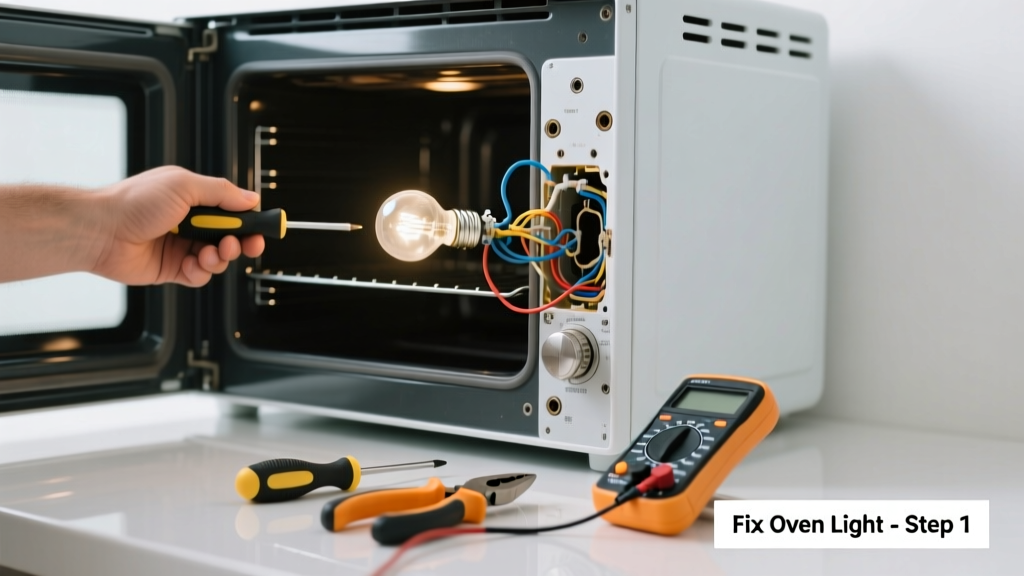
Your oven light flickers or stays dark when you open the door — and suddenly, checking on that roast feels like operating blind. It’s a small part of your appliance, but without it, you risk undercooked meals, burnt food, or even opening the oven mid-cycle by mistake. The good news? Most causes are simple, inexpensive, and safe to troubleshoot yourself.
Quick Diagnosis
Before grabbing tools, eliminate the obvious:
- The bulb has burned out (most common cause — bulbs typically last 1–2 years with regular use)
- The door switch isn’t engaging properly (many ovens only power the light when the door is fully closed or opened, depending on design)
- A tripped circuit breaker or blown fuse affecting the oven’s lighting circuit
- Loose or corroded wiring at the socket or junction box behind the panel
- A failed light switch mounted near the door frame or control panel
Tools & Materials Needed
| Item | Purpose | Estimated Cost |
|---|---|---|
| Replacement oven bulb (30–40W, appliance-rated) | Must withstand high heat; standard LED or incandescent bulbs can melt or shatter | $2.99–$8.49 |
| Insulated screwdriver set | For safely removing panels and accessing internal components without shock risk | $12.00–$24.99 |
| Non-contact voltage tester | Verifies power is off before touching wires — critical for safety | $14.99–$29.99 |
| Needle-nose pliers | Helps grip and reposition small wires or bent socket contacts | $6.50–$15.00 |
| Work gloves (heat-resistant) | Protects hands from sharp edges and residual heat inside oven cavity | $8.99–$19.99 |
Step-by-Step Fix
- Unplug the oven or turn off its dedicated 240V circuit breaker. Never skip this — even low-voltage lighting circuits may share power with live oven controls.
- Remove the old bulb carefully. Let the oven cool completely. Wear gloves, twist counterclockwise, and avoid pressing hard — ceramic sockets crack easily. Inspect the filament and base for blackening or warping.
- Test the door switch (if accessible). Locate the small plunger-style switch near the door frame. Press it manually while listening for a faint click. If silent or stiff, clean with compressed air or replace (oven door switch replacement guide).
- Check voltage at the socket. With power restored *only* at the socket terminals (using your non-contact tester), verify 120V is present when the door is in the correct position. No voltage means wiring or switch failure — not the bulb.
- Install the new bulb and test. Use only bulbs rated for >300°F (e.g., Philips Appliance A15 or GE Reveal Heat-Resistant). Tighten snugly — over-tightening cracks the socket; under-tightening causes arcing and premature failure.
When to Call a Pro
Stop and call a licensed appliance technician if you encounter any of these:
- Sparks, burning smell, or discolored wiring behind the light socket
- No voltage at the socket terminals after confirming breaker is on and door switch functions
- Tripping GFCI or main breaker when oven light is activated
- Light works intermittently *only* when tapping the control panel — points to failing main control board
- You own a dual-fuel or convection steam oven with integrated lighting circuits (e.g., Wolf, Thermador, or Miele models)
According to the U.S. Consumer Product Safety Commission’s 2022 Appliance Incident Report, 12% of residential oven-related electrical incidents involved DIY attempts on internal lighting circuits without proper lockout/tagout procedures.
Prevention Tips
- Replace oven bulbs every 18 months — even if still working — to avoid sudden failure during cooking
- Always let the oven cool below 100°F before changing the bulb to prevent thermal shock to glass or socket
- Wipe the bulb socket annually with a dry cloth to remove grease buildup that insulates contacts
- Avoid slamming the oven door — repeated impact wears out the door switch faster than normal use
Can I use a regular household bulb instead of an oven-rated one?
No. Standard bulbs aren’t designed for temperatures above 250°F. They’ll blacken, leak gas, or shatter inside the oven cavity. Appliance-rated bulbs use thicker glass and tungsten filaments that tolerate sustained heat — see our full appliance bulb compatibility chart.
Why does my oven light only work when the door is open?
This usually indicates a faulty door switch wired in reverse or misaligned. Some models energize the light only when the door opens (to illuminate the cavity), while others require the door to be closed. Check your owner’s manual — if behavior contradicts specs, the switch or wiring harness needs inspection.
Is it safe to replace the oven light while the oven is warm?
No. Even residual heat above 120°F can warp plastic sockets or crack ceramic bases. Wait until the oven surface reads below 100°F on an infrared thermometer — or at least two hours after last use.
My LED oven light won’t turn on, but the old incandescent one did — what’s wrong?
Many older ovens lack the low-voltage DC drivers needed for LED bulbs. The fixture may supply unregulated AC directly to the socket. Try a filament-style LED (like Sylvania LED Appliance Bulb) or revert to a heat-rated incandescent. If neither works, the socket’s center contact may be flattened — gently lift it with needle-nose pliers.
Do I need to reset the oven’s control board after changing the bulb?
Not usually — unless your model displays an error code (e.g., F1 or E3 on Frigidaire units). In that case, disconnect power for 5 minutes to reboot the board. Persistent codes point to deeper control system issues beyond the light circuit.
How do I know if the light socket itself is bad?
Look for cracked porcelain, melted plastic, or charred metal contacts. Test continuity between socket terminals with a multimeter: no continuity = dead socket. Also check for loose mounting screws — vibration can loosen them and break internal connections.
A working oven light isn’t just about convenience — it’s a subtle but vital layer of kitchen safety and cooking accuracy. Taking 15 minutes to inspect, clean, and replace the bulb correctly extends the life of your entire appliance’s control system. And if you find yourself troubleshooting lights often, consider upgrading to a model with a dedicated lighting diagnostic mode — many newer Bosch and KitchenAid ranges include this feature (smart oven features worth considering).