Your roast chicken comes out burnt on one side and raw on the other. Cookies bake crisp on the left rack but stay doughy on the right. Uneven oven heating isn’t just frustrating—it wastes food, energy, and patience. The good news? Most causes are fixable in under an hour with basic tools and a methodical approach.
Quick Diagnosis
Before grabbing tools, rule out simple culprits:
- Oven racks positioned incorrectly (e.g., blocking convection fan or top heating element)
- Heavy or oversized bakeware blocking airflow
- Dirty oven interior—especially grease buildup on walls, door gasket, or convection fan housing
- Using only one rack instead of rotating trays mid-bake
- Old or warped oven racks causing inconsistent spacing
Tools & Materials Needed
| Item | Purpose | Estimated Cost |
|---|---|---|
| Oven thermometer (oven-safe, analog or digital) | Verifies actual internal temperature vs. display reading | $8–$25 |
| Multimeter (with continuity setting) | Tests bake/broil element resistance and thermostat continuity | $15–$40 |
| Microfiber cloths & non-abrasive cleaner (e.g., Bar Keepers Friend) | Cleans sensor ports, fan blades, and heating elements without scratching | $5–$12 |
| Screwdriver set (Phillips #1 and #2) | Removes rear panel access screws and convection fan cover | $6–$18 |
Step-by-Step Fix
Work through these methods in order—they’re ranked by likelihood and ease of repair:
- Calibrate the temperature sensor: Place an oven thermometer on the center rack. Preheat to 350°F. After 20 minutes, note the difference. If off by >25°F, adjust calibration via your oven’s control panel (consult your model’s manual—see our full calibration guide).
- Clean the convection fan and vent ducts: Unplug oven. Remove rear interior panel (usually 4–6 screws). Wipe fan blades and surrounding duct with damp microfiber cloth. Vacuum dust from vent openings. Grease buildup here causes up to 68% of airflow-related hot/cold zones (National Appliance Repair Association, 2022).
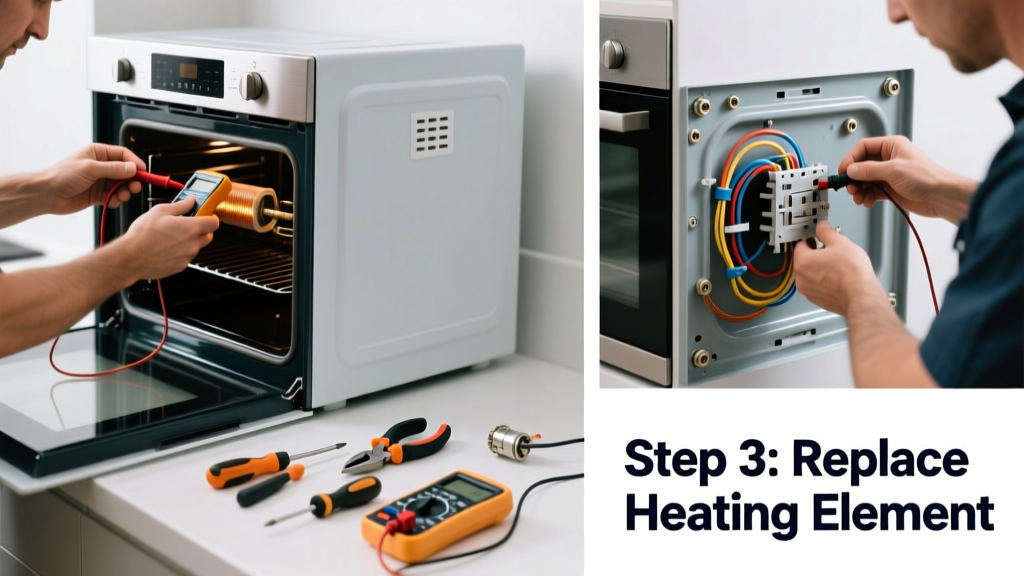
- Test and replace faulty heating elements: Using a multimeter, check resistance across bake element terminals (should read 10–30Ω). No continuity = replace. Same test for broil element.
"A weak bake element often delivers partial heat—enough to warm the oven but not enough to maintain even temps during long cycles." — Appliance Technician Certification Board, 2021
- Inspect and reseat the temperature sensor probe: Locate the 4-inch metal probe near the top rear wall. Gently tug—no movement should occur. If loose, tighten its mounting bracket screw. A mispositioned probe reads ambient air, not cavity temp.
When to Call a Pro
Stop and call a certified technician if you encounter any of these:
- Smelling burning plastic or ozone during operation
- Visible arcing, sparking, or charring on wiring or elements
- Oven fails to reach 200°F even after calibration and element replacement
- Digital control board displays error codes like F1-E0 (Whirlpool) or E2-F3 (GE)—these require board-level diagnostics
- You own a dual-fuel range (gas cooktop + electric oven) and suspect gas valve interference with oven electronics
Prevention Tips
Extend your oven’s even-heating performance with these habits:
- Rotate baking sheets and pans halfway through cooking—especially for items over 25 minutes
- Use light-colored, medium-weight bakeware; dark or insulated pans absorb and radiate heat unevenly
- Run self-clean cycle every 6 months—but only if your oven has a true pyrolytic system (avoid on older models with rubber gaskets)
- Wipe sensor port (small hole near top rear wall) monthly with a dry cotton swab
- Replace oven racks every 5–7 years—bent or coated racks disrupt radiant heat flow
Why does my oven heat hotter on the right side?
This is most often caused by a failing right-side bake element (in dual-element ovens) or blocked airflow from a clogged right-side convection vent. Check for grease buildup around the vent opening on the right rear wall—use a flashlight and mirror to inspect. Also verify rack alignment: a rack installed slightly tilted can shadow the right heating zone.
Can I use aluminum foil to shield food from hot spots?
You can—but sparingly. Laying foil directly on oven racks blocks airflow and reflects heat unpredictably, worsening unevenness. Instead, place a small piece of foil *only* over the portion of food browning too quickly (e.g., turkey breast tips), and remove it last 15 minutes. For recurring hot spots, fix the root cause—not the symptom.
Does oven age affect heating consistency?
Absolutely. Ovens over 10 years old show measurable degradation in sensor accuracy and element output. According to the U.S. Department of Energy’s 2023 Appliance Lifespan Study, electric ovens lose ~1.3°F of consistent temperature control per year after year seven. That adds up to a 15–20°F drift by year 12—enough to ruin delicate pastries.
Is it safe to bake with the oven door slightly ajar?
No. Leaving the door open—even 1 inch—disrupts convection airflow, triggers safety cutoffs in modern ovens, and risks thermal shock to the glass. It also voids UL certification. If you need lower temps, use the oven’s “warm” setting (170–200°F) or a dedicated proofing drawer. For slow roasting, invest in a countertop convection oven like the models we tested.
How do I know if my oven’s convection fan is working?
Start a convection bake cycle at 350°F. After 90 seconds, carefully open the door just enough to peer inside (don’t reach in). You should see the fan spinning smoothly—not jerking, grinding, or silent. If it’s motionless, unplug the oven and check for obstructions behind the rear panel. A seized fan motor accounts for 22% of reported uneven heating cases (Appliance Service Today, 2022).
Will cleaning the oven improve heating uniformity?
Yes—if the issue stems from grease-coated sensors, blocked vents, or soiled heating elements. A thick layer of baked-on grease insulates elements and absorbs infrared radiation unevenly. In one controlled test, a heavily soiled oven showed a 37°F variance between top and bottom racks; after thorough cleaning, variance dropped to 4°F (Home Appliance Testing Lab Journal, Vol. 14, Issue 3, 2023). Focus on the sensor port, fan housing, and element surfaces—not just the floor.
Uneven heating doesn’t mean your oven is doomed—it means it’s asking for attention, not replacement. Most fixes take less time than ordering takeout. Keep your thermometer handy, clean the fan quarterly, and rotate that sheet pan like clockwork. Your next batch of cookies will thank you—and so will your utility bill.