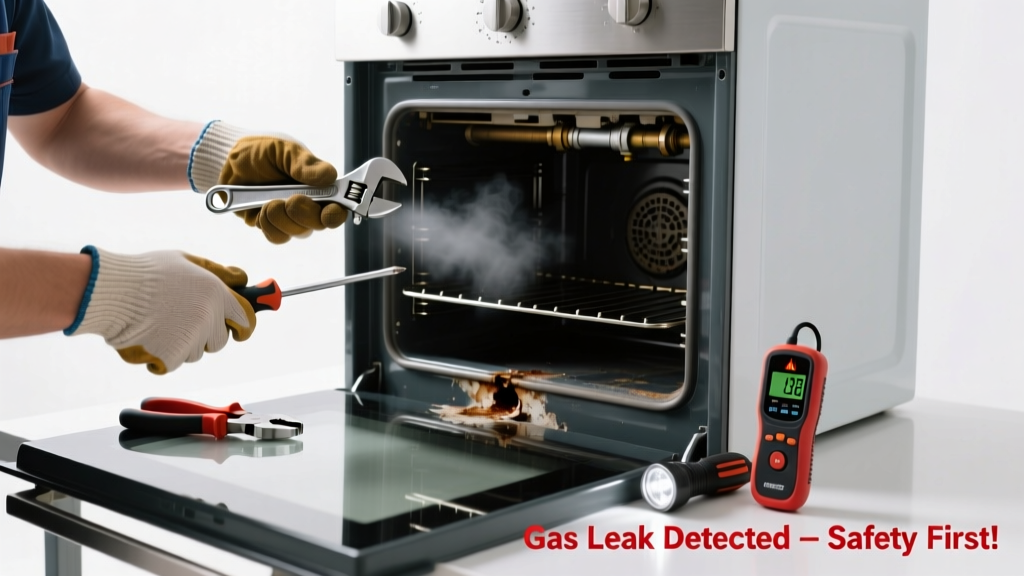
If you've noticed your oven's gas smell is faint, delayed, or completely missing when it should be present—especially after ignition—you're not just dealing with a nuisance. That odorant (mercaptan) is intentionally added to natural gas and propane to warn you of leaks, so a missing or weak smell could mean a serious safety hazard is going undetected.
Quick Diagnosis
Before grabbing tools, rule out these common culprits:
- Low or depleted gas supply (check main shutoff valve and utility service)
- Clogged or dirty burner ports blocking gas flow
- Faulty igniter or spark module delaying ignition
- Gas line regulator issues affecting pressure and odorant dispersion
- Old or degraded odorant in propane tanks (especially in seasonal homes)
Tools & Materials Needed
| Item | Purpose | Estimated Cost |
|---|---|---|
| Soapy water solution (dish soap + water) | Leak detection at connections and valves | $0.50 |
| Small wire brush or pipe cleaner | Cleaning clogged burner orifice ports | $3–$8 |
| Digital multimeter | Testing igniter resistance and voltage output | $25–$65 |
| Propane leak detector (optional but recommended) | Verifying odorant presence and pinpointing low-concentration leaks | $45–$120 |
Step-by-Step Fix
Work only with the oven unplugged and gas supply shut off at the main valve before starting any procedure.
- Clean the burner assembly: Remove grates and caps. Use a wire brush and compressed air to clear debris from ports—clogs here reduce gas flow and dilute odorant concentration at the flame point.
- Test for gas leaks at fittings: Apply soapy water to the gas line connection behind the oven, regulator, and valve body. Bubbles indicate escaping gas—even if no smell is present. Tighten fittings *only* if hand-tight plus 1/4 turn with a wrench; over-torquing cracks brass.
- Check igniter function: Turn oven to bake mode and observe the igniter glow (should reach cherry-red in 90 seconds). If dim or slow, measure resistance: functional igniters read 90–120 ohms. Replace if outside that range (oven igniter replacement guide).
- Verify odorant integrity (propane users): According to the National Propane Gas Association’s 2022 Field Manual, odorant can fade after 6–12 months in unused tanks—especially in hot garages or sheds. If your tank sat idle, request a fresh fill with certified odorized propane.
When to Call a Pro
Stop immediately and call a licensed gas technician if:
- You detect even a faint gas smell *without* attempting ignition
- Soapy water testing reveals multiple or large leaks
- The gas regulator shows visible corrosion or hissing sounds persist after tightening
- Your multimeter reads open circuit or <70V AC at the gas valve terminals during ignition attempt
- You’re using a built-in dual-fuel range (gas oven/electric cooktop) where internal wiring interlocks require certified diagnostics
"A missing or diminished gas odor isn’t just inconvenient—it’s a potential red flag for odorant fade, regulator failure, or incomplete combustion. Never ignore it, even if flames appear normal." — U.S. Consumer Product Safety Commission, Gas Appliance Safety Bulletin #GAS-2023-07
Prevention Tips
Extend reliability and catch issues early:
- Run your gas oven for 10 minutes monthly—even in summer—to keep lines flushed and odorant distributed
- Replace rubber gas connectors every 5 years (per CSA Z240.21-2021 standards)
- Install a UL-listed natural gas detector near the floor (gas sinks) and test monthly
- Label your main gas shutoff valve with a bright tag and ensure all household members know its location
Can I smell gas but my oven won’t ignite?
Yes—and it’s extremely dangerous. A persistent gas odor without ignition suggests unburned gas is accumulating. Shut off the gas supply immediately, ventilate the area, and call a pro. Do not flip switches or use phones indoors.
Does natural gas lose its smell over time?
Not naturally—but the odorant (tert-butyl mercaptan) can adsorb onto pipe walls or degrade in stagnant lines. The U.S. EPA estimates odor fade occurs in 1–3% of residential gas systems annually, most often in older galvanized piping or after extended disuse.
Why does my propane oven smell weaker than my neighbor’s?
Propane odorant concentration varies by supplier and batch. Some states mandate minimum odorant levels (e.g., 10 ppm in California per CPUC Rule 16), while others don’t. Ask your provider for their odorant certification report.
Can a dirty filter cause weak gas smell?
No—ovens don’t have air filters affecting gas odor. But a clogged vent hood filter or blocked exhaust duct can recirculate cooking odors and mask gas smells, creating false reassurance. Clean your range hood filter monthly.
Is it safe to use an electric igniter cleaner spray?
No. Most aerosol cleaners contain flammable solvents that can ignite near hot igniters or residual gas. Stick to dry brushing and compressed air—or use a cotton swab dipped in isopropyl alcohol (power off, gas off, fully dry before reassembly).
How often should I test my gas leak detector?
Monthly with a certified test gas (e.g., 25% LEL methane), per NFPA 54 Chapter 20. Battery-operated units also need battery replacement every 6 months—even if the low-battery chirp hasn’t sounded yet.
A properly functioning gas odor system is your first and most critical line of defense—not a convenience feature. Treat any deviation seriously, act methodically, and never hesitate to bring in professional help when uncertainty lingers. For related safety upgrades, see our gas detector installation guide and oven gas valve replacement steps.