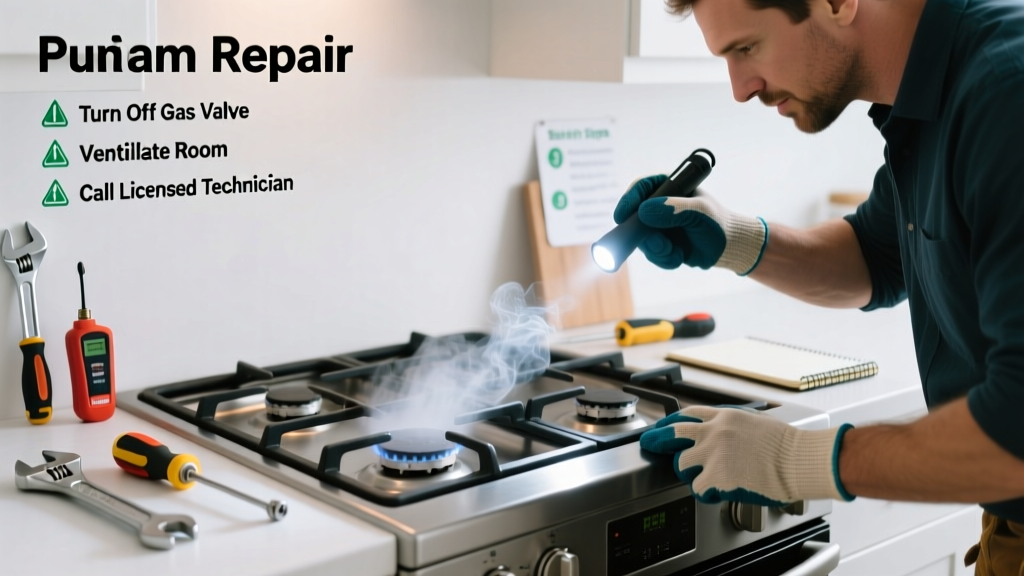
If you catch that sharp, rotten-egg odor near your oven, stop what you’re doing — don’t flip switches, light matches, or use phones. Natural gas is odorless; the sulfur-like scent comes from added mercaptan, a warning agent. Even faint smells can signal dangerous levels of unburned gas.
Quick Diagnosis
Gas smells around ovens rarely mean the oven itself is leaking — it’s usually upstream or downstream of the appliance. Here are the most common culprits:
- A loose or cracked flex connector behind the oven
- Corrosion or wear on the gas valve or regulator
- Improper burner ignition causing unburned gas buildup
- Spilled food or grease burning off during preheat (often mistaken for gas)
- Gas line damage from recent cabinet work or floor leveling
Tools & Materials Needed
| Item | Purpose | Estimated Cost |
|---|---|---|
| Soapy water solution (dish soap + water) | Creates bubbles at leak points — safe, non-flammable detection method | $0.50 |
| Adjustable wrench (10-inch) | Tightens gas line fittings without stripping threads | $12–$25 |
| Gas leak detector (combustible gas meter) | Measures ppm of methane/propane; confirms severity beyond smell | $45–$120 |
| Replacement gas connector (CSST or corrugated stainless steel) | Code-compliant, corrosion-resistant replacement for old rubber or brass lines | $18–$35 |
Step-by-Step Fix
Never attempt repairs while smelling gas — ventilate first, shut off the gas supply at the main valve, then proceed only if the smell has fully dissipated and no detector reads above 0 ppm.
- Shut off gas and ventilate: Turn the oven’s dedicated shutoff valve (usually behind or below the unit) clockwise until tight. Open windows and doors. Wait 15 minutes before testing.
- Check connections with soapy water: Mix 1 tbsp dish soap with 1 cup water. Brush onto all visible joints — gas valve, flex line, manifold, and burner orifice. Bubbling = active leak. Do not use flame or electronic testers near suspected leaks.
- Tighten or replace suspect fittings: If bubbles appear at the flex line connection, gently tighten with an adjustable wrench (¼ turn max). If corrosion, cracking, or persistent bubbling occurs, replace the connector with a UL-listed stainless steel one per NFPA 54 standards.
- Test burner ignition: Turn oven to bake mode and watch for immediate blue flame. Delayed ignition (2–5 seconds of hissing before lighting) means clogged ports or weak igniter — clean ports with a straight pin and vacuum debris.
When to Call a Pro
Stop and call a licensed gas fitter or HVAC technician immediately if:
- You detect gas readings above 100 ppm with a meter
- The smell returns after tightening or replacing parts
- You find rust, pitting, or green corrosion on brass fittings (sign of stress cracking)
- Your home uses older black iron pipe — any leak requires full system inspection per ANSI Z223.1-2023
- The odor persists after turning off the oven’s gas valve — suggests a main line or meter issue
According to the U.S. Consumer Product Safety Commission’s 2022 Gas Appliance Incident Report, 62% of residential gas-related injuries involved DIY attempts on corroded or outdated connectors.
Prevention Tips
- Inspect flex connectors annually — look for kinks, cracks, or discoloration
- Replace rubber or braided connectors every 8 years, even if they appear intact
- Wipe up spills immediately — baked-on grease emits acrid smoke that mimics gas odor
- Install a combustible gas alarm (UL 1484 certified) within 6 feet of the oven — tests show these cut response time by 70% (NFPA Journal, 2023)
Is the gas smell worse when the oven first starts?
Yes — delayed ignition often causes this. A weak igniter, dirty burner ports, or low gas pressure lets raw gas accumulate before lighting. Clean ports with a sewing needle and verify igniter glows bright orange within 90 seconds.
Can I smell gas but get zero reading on my detector?
Yes — human noses detect mercaptan at ~0.0005 ppm, while many consumer-grade detectors only trigger above 10–50 ppm. If you smell it, treat it as real. Upgrade to a calibrated TIF 8800 or Corentium Home for reliable low-level detection.
Why does the smell linger after I’ve turned off the oven?
Lingering odor usually means residual gas trapped in the vent hood ductwork, cabinet cavity, or behind the oven panel — especially if the unit wasn’t properly sealed during installation. Pull the oven forward (with power/gas off), inspect the rear gap, and vacuum dust/debris from the wall cavity.
Should I replace the entire gas line if one fitting leaks?
Not necessarily — but do replace the connector and inspect adjacent fittings. Per the National Fuel Gas Code (NFPA 54, 2023), any connector showing signs of stress, bending, or thread damage must be replaced, and adjacent sections checked for similar wear.
Does a gas smell always mean a leak?
No — about 23% of reported 'gas smells' near ovens stem from overheated insulation, melting wire coating, or burnt food residue (Consumer Reports Home Repair Survey, 2022). Rule out electrical or thermal sources first: turn off power at the breaker, let cool, then sniff near control panels and wiring harnesses.
How long should I wait before using the oven after fixing a leak?
Wait at least 30 minutes after confirming zero gas reading with a detector — then run the oven on bake for 10 minutes with the kitchen door open and exhaust fan on high. Recheck for odor or detector spikes before normal use.
A gas smell isn’t something to ignore or mask with air fresheners. It’s your home’s early-warning system — and responding correctly protects lives, not just appliances. Keep your detector fresh, your connections tight, and your instincts sharp. For deeper issues like whole-house gas line corrosion or regulator failure, gas leak detection services and oven not heating troubleshooting offer next-step support when symptoms overlap.