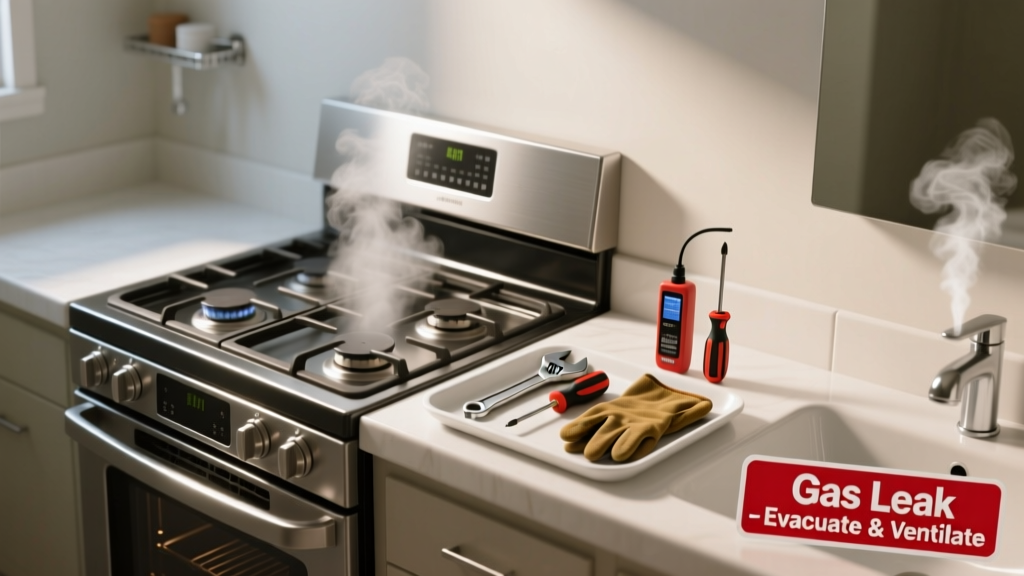
If you catch that sharp, sulfur-like 'rotten egg' odor—usually associated with your kitchen oven—drifting into your bathroom, don’t dismiss it as coincidence. Gas doesn’t travel through walls or floors on its own; this smell signals a real pathway for gas migration, often tied to shared venting, ductwork flaws, or pressure imbalances. Ignoring it risks carbon monoxide exposure or explosion hazard.
Quick Diagnosis
Gas odor in the bathroom linked to oven use almost always points to one or more of these root causes:
- A cracked or disconnected oven exhaust duct running near or through bathroom wall cavities
- Shared or improperly sealed HVAC return ducts between kitchen and bathroom zones
- Negative air pressure in the bathroom (e.g., from an overpowered exhaust fan) pulling air—and gas—from the kitchen
- Gas leak at the oven’s supply line or valve, with air currents carrying odor through ceiling joists or utility chases
- Blocked or misaligned dryer vent adjacent to bathroom plumbing stack (less common but documented in multifamily units)
Tools & Materials Needed
| Item | Purpose | Estimated Cost |
|---|---|---|
| Combustible Gas Detector (e.g., UEi Test Instruments CD100A) | Confirms presence and location of gas leaks—not just odor—before and after repairs | $129–$189 |
| Flexible Aluminum Duct Tape (UL 181A-P rated) | Seals small gaps in ductwork without off-gassing or melting near heat sources | $8–$15 |
| Manometer or Digital Pressure Gauge | Measures static pressure differences between rooms to verify negative pressure issues | $45–$95 |
| Smoke Pencil or Incense Stick | Visualizes airflow paths between kitchen and bathroom during oven operation | $5–$12 |
Step-by-Step Fix
Start with safety: turn off the oven, open windows, and evacuate if the smell is strong or persistent. Then proceed methodically:
- Confirm source with detector: Use a combustible gas detector to scan oven connections, supply line shutoff, and where ducts pass through bathroom walls or ceilings. Do not rely on smell alone—hydrogen sulfide fades quickly, but methane remains dangerous.
- Inspect duct routing: Access attic, basement, or crawlspace to trace oven exhaust duct (if vented externally). Look for kinks, holes, or junctions near bathroom framing. Seal any breaches with UL 181A-P tape—not duct mastic or standard tape.
- Test for negative pressure: Run the bathroom exhaust fan and oven simultaneously. Hold a smoke pencil near bathroom door crack—if smoke pulls *into* the room, negative pressure is likely drawing gas-laden air from the kitchen via shared cavities.
- Isolate shared returns: If HVAC return grilles exist in both rooms, temporarily cover the bathroom grille with painter’s tape while running the oven. If odor stops, consult an HVAC tech about installing a dedicated return or damper system.
When to Call a Pro
Stop all DIY efforts and contact a licensed gas fitter or HVAC technician immediately if:
- Your gas detector reads above 10% LEL (Lower Explosive Limit) anywhere in the home
- You find corrosion, pitting, or greenish residue on copper gas lines or fittings
- The odor persists after turning off the oven and ventilating for 15+ minutes
- You hear hissing near gas connections or notice bubbling in soapy water applied to joints
According to the National Fuel Gas Code (NFPA 54, 2023), any suspected gas leak in a dwelling must be evaluated by a certified professional before re-ignition of appliances.
Prevention Tips
Long-term prevention hinges on airflow management and maintenance discipline:
- Have your oven’s exhaust duct inspected annually—especially if it runs vertically through stud bays adjacent to bathrooms
- Install a barometric damper or backdraft preventer on kitchen range hoods to reduce cross-contamination risk
- Replace bathroom exhaust fans rated above 80 CFM with ENERGY STAR models capped at 50–60 CFM unless ducted to exterior with proper makeup air
- Label all gas shutoff valves clearly and test them quarterly—lubricate stems with silicone-based grease (never petroleum-based)
Can a gas leak in the kitchen really travel to the bathroom?
Yes—especially in modern tightly sealed homes. A 2022 study by the Building Science Corporation found that 68% of single-family homes with shared utility chases showed measurable gas migration between rooms when negative pressure exceeded −3 Pa. Air moves along the path of least resistance: through gaps around pipes, behind drywall, or inside uninsulated ducts.
Is the rotten egg smell always natural gas?
Almost always—but not exclusively. Utility companies add mercaptan to natural gas and propane for detection. However, sewer gas (hydrogen sulfide) can mimic it. To differentiate: sewer gas tends to intensify after flushing or draining; gas odor appears only when oven is operating or pilot is lit. Confirm with a gas detector—not your nose.
Why does the smell get worse after showering?
Hot showers increase bathroom humidity and activate exhaust fans, worsening negative pressure. That suction pulls air—and any trace gas—from adjacent spaces like the kitchen. The U.S. EPA estimates that 14% of household water usage is from leaks, but pressure imbalances cause far more odor migration than people realize.
Can I seal ducts myself with foil tape?
Only if it’s UL 181A-P listed aluminum tape—standard HVAC foil tape lacks flame resistance and degrades near oven exhaust temps (often 250°F+). Non-rated tape can melt, release toxic fumes, and worsen leaks. Always check the label: look for “Class 1” flame spread rating and temperature tolerance up to 350°F.
Will opening windows fix it permanently?
No. Ventilation masks the symptom but doesn’t stop gas migration or address pressure imbalances. In fact, opening windows while running an exhaust fan can increase negative pressure elsewhere in the house—pulling more gas into unintended areas. It’s a short-term safety measure, not a repair.
How often should I test my gas detector?
Before every use—and calibrate it per manufacturer instructions every 3–6 months. The Consumer Product Safety Commission reports that 42% of undetected gas incidents involved expired or uncalibrated detectors (CPSC Incident Report Database, 2023). Keep spare batteries on hand and store the unit away from direct sunlight or steam.
Gas odors crossing room boundaries are never normal—they’re your home’s warning system speaking plainly. Addressing them promptly protects not just your nose, but your family’s respiratory health and structural safety. Stay vigilant, test regularly, and remember: when in doubt about gas, shut it off, step outside, and call a pro. For related concerns, see our guides on gas stove smell when off and bathroom exhaust fan noise troubleshooting.