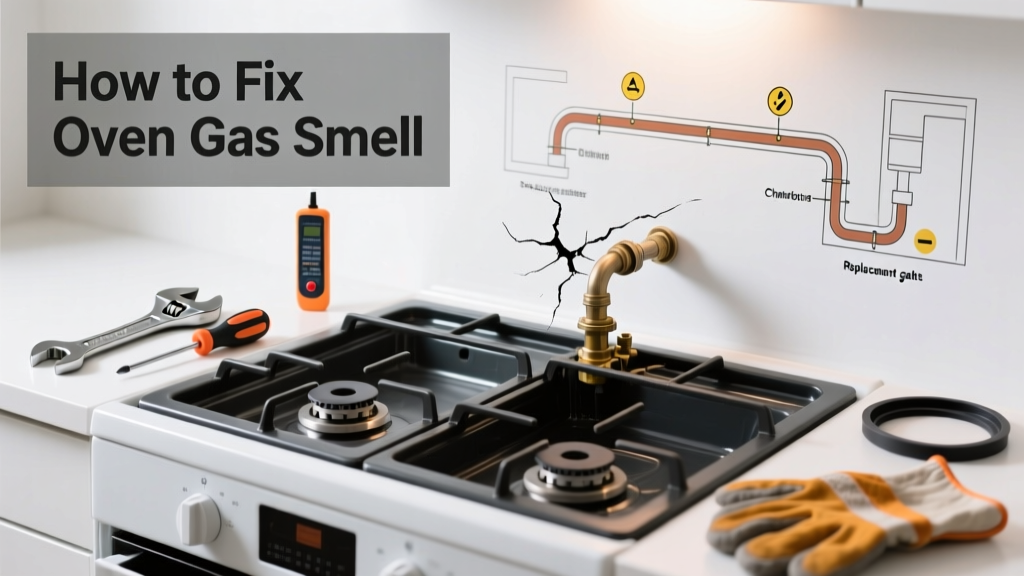
If you catch a whiff of gas near your oven—especially a sharp, rotten-egg odor—don’t ignore it. That smell means mercaptan, an additive the gas company puts in natural gas and propane to alert you to leaks. Even a faint odor can signal a serious safety hazard requiring immediate attention.
Quick Diagnosis
Most oven gas smells stem from one of these five causes:
- A loose or cracked gas line connection behind or beneath the oven
- Failed or misaligned burner ports (clogged or warped)
- Gas valve seal degradation due to age or heat cycling
- Residual gas after ignition failure (common with older pilot-light ovens)
- Spilled food or grease burning off during preheat—often mistaken for gas but actually a burnt-sugar or sulfur-like odor
Tools & Materials Needed
| Item | Purpose | Estimated Cost |
|---|---|---|
| Soapy water solution (dish soap + water) | Identifies gas leaks via bubble formation at fittings | $0.50 |
| Adjustable wrench (10-inch) | Tightens gas line nuts without stripping threads | $12–$22 |
| Flashlight with magnetic base | Illuminates tight spaces behind oven and under cooktop | $8–$18 |
| Replacement rubber gasket kit (for gas valve) | Fixes worn seals on older oven valves (e.g., Whirlpool W10853273) | $14–$26 |
| Digital gas leak detector (e.g., UEi Test Instruments CD100A) | Confirms presence/absence of gas beyond smell threshold | $129–$199 |
Step-by-Step Fix
Follow these methods in order—stop if odor persists or intensifies:
- Turn off gas supply: Locate the shut-off valve (usually behind oven or in basement utility line) and rotate handle 90° to close. Wait 5 minutes before proceeding.
- Check burner alignment and ports: Remove grates and caps. Inspect for bent igniters or debris blocking gas flow. Clean ports gently with a straightened paperclip—not wire—to avoid widening holes.
- Test connections with soapy water: Mix 1 tsp dish soap per ½ cup water. Brush onto all visible gas line joints (flex tube, valve inlet, manifold). Bubbles = active leak. Tighten only 1/8 turn with wrench—over-tightening cracks brass fittings.
- Verify pilot light function (if applicable): On older ovens, relight pilot per manufacturer instructions. If flame lifts or flickers, thermocouple may be faulty—replace if over 5 years old.
- Wipe interior thoroughly: Use baking soda paste on racks and walls to neutralize organic residue. Burnt sugar and dairy residues emit sulfurous fumes when heated—this mimics gas but isn’t dangerous.
When to Call a Pro
Stop DIY immediately and call a licensed gas technician if:
- You hear hissing near gas lines or smell gas after shutting off the main valve
- Bubbles form at multiple points—or worsen after tightening
- Your digital detector reads >100 ppm methane (U.S. EPA action level for indoor air)
- The oven is less than 1 year old (warranty voids if tampered with)
- You own a built-in dual-fuel range (gas oven + electric cooktop)—complex internal routing requires certified service
According to the National Fire Protection Association’s NFPA 54: National Fuel Gas Code 2023 Edition, any gas leak exceeding 10 ppm detected by calibrated equipment must be repaired by a qualified professional before re-energizing the system.
Prevention Tips
Extend your oven’s safe operation with these habits:
- Clean burners and drip pans every 3 months—grease buildup restricts airflow and overheats valves
- Inspect flexible gas connectors annually for kinks, corrosion, or cracking (replace every 10 years per CSST Safety Council guidelines)
- Use oven self-clean sparingly—high heat degrades rubber gaskets faster; limit to once per year
- Install a natural gas detector (e.g., Kidde Nighthawk) near kitchen ceiling—it alerts at 15% LEL, well below flammability threshold
Is the gas smell worse when the oven first starts up?
Yes—especially in older models. A brief, faint odor during ignition is common as unburned gas clears the line. But if it lingers longer than 10 seconds or triggers your nose *before* ignition, suspect a delayed spark or weak igniter. Test igniter glow: it should glow cherry-red within 90 seconds. If dim or slow, replace it (oven igniter replacement guide).
Can I use bleach to eliminate the gas odor?
No—bleach reacts with mercaptan and creates toxic chloramine vapors. It also corrodes stainless steel and aluminum components. Instead, ventilate the area and use activated charcoal filters or baking soda paste on non-gas surfaces. For persistent odor, check for hidden leaks behind walls—hidden gas leak detection techniques apply here.
Why does my electric oven smell like gas?
Electric ovens don’t use gas—but the odor may come from adjacent gas cooktops, shared ventilation ducts, or residual gas migrating through cabinetry gaps. Also, new electric ovens sometimes emit a sulfur-like smell from factory-applied lubricants burning off during first use. Run at 400°F for 30 minutes with windows open to clear it.
How long should I wait before using the oven after fixing a gas leak?
Wait until you’ve confirmed zero detectable gas with both soapy water and a calibrated detector—and run the oven through three full heating cycles (preheat to 350°F, hold 10 minutes, cool completely) while monitoring for odor or pressure drop. The U.S. Consumer Product Safety Commission recommends 24 hours of leak-free operation before resuming normal use.
Will tightening the gas line fix the smell permanently?
Only if the cause is a loose compression fitting. But if the leak stems from a cracked flex tube, degraded valve seat, or corroded manifold, tightening may worsen the leak or damage threads. Always verify root cause first—gas stove leak repair basics covers diagnostic workflows used by HVAC techs.
What’s the difference between propane and natural gas odor strength?
Propane has higher mercaptan concentration—so its odor is detectable at lower concentrations (≈1,000 ppm vs. natural gas at ≈2,500 ppm). That’s why propane users often report stronger, more pungent smells even from tiny leaks. Both fuels are hazardous at 5% volume in air—the Lower Explosive Limit—so never rely solely on smell for detection.
A gas odor near your oven isn’t something to mask with air fresheners or ignore until ‘next week.’ Small leaks escalate quickly under thermal stress, and delayed response increases risk of fire or carbon monoxide exposure. Treat every whiff as urgent—but stay calm, follow the steps, and know exactly when to step back and call for help. Your safety—and your home’s structural integrity—depends on acting decisively, not dramatically.