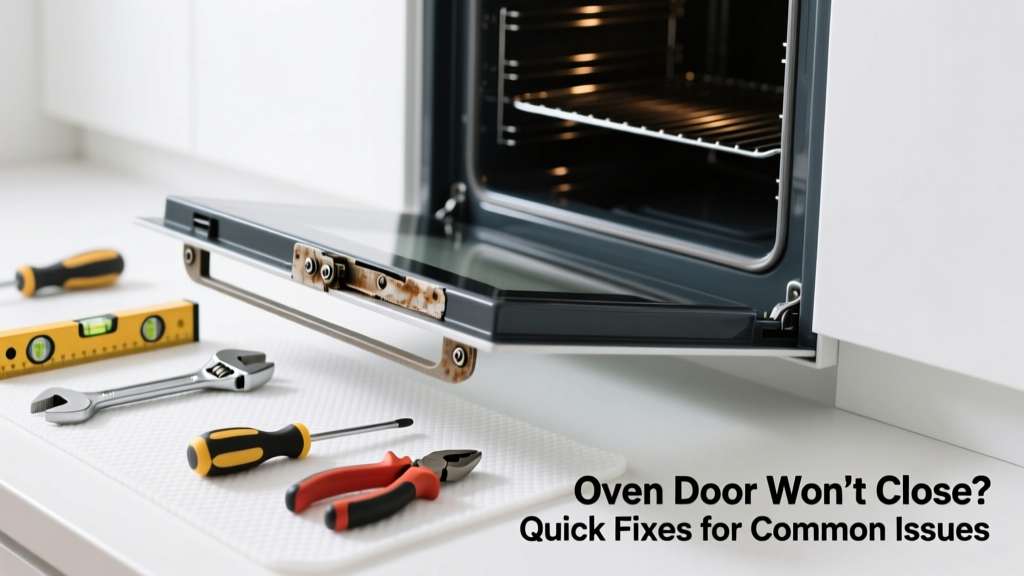
Your oven door won’t close — it clicks halfway, catches on the frame, or just refuses to seal. That’s not just annoying; it’s a safety and efficiency hazard. A poorly sealed door can skew cooking temps by up to 50°F and trigger error codes on modern ranges.
Quick Diagnosis
Before grabbing tools, rule out these five most frequent culprits:
- Food debris or grease buildup in the door gasket channel
- Bent or corroded hinge pins (especially common on gas ovens over 8 years old)
- Worn or cracked door gasket losing compression
- Latch mechanism jammed or misaligned due to thermal expansion
- Warped inner door panel from repeated high-heat cycling
Tools & Materials Needed
| Item | Purpose | Estimated Cost |
|---|---|---|
| Phillips #2 screwdriver | Removes hinge screws and control panel access covers | $4–$8 |
| Needle-nose pliers | Repositioning bent latch hooks and retrieving small springs | $6–$12 |
| Heat-resistant silicone lubricant (e.g., CRC Heavy Duty Silicone) | Safe for oven temps up to 600°F; prevents gasket sticking without off-gassing | $9–$14 |
| Gasket replacement kit (model-specific) | Most OEM kits include adhesive backing and alignment guides | $22–$45 |
Step-by-Step Fix
Try these methods in order — start simple, escalate only if needed:
- Clean the gasket track and latch recess: Use a soft nylon brush and warm vinegar-water solution (1:1) to remove baked-on grease. Dry thoroughly before testing closure.
- Re-seat the door hinges: Open door fully, lift upward while gently rocking side-to-side. You’ll hear a soft “click” when hinges re-engage with the hinge receiver cups. Test closing.
- Adjust the latch strike plate: Loosen the two mounting screws on the oven frame near the top corners. Shift the plate 1/16" inward (toward center of oven) and retighten. This compensates for hinge wear.
- Replace the door gasket: Peel off old gasket with plastic putty knife. Clean groove with isopropyl alcohol. Press new gasket into place starting at top center, working outward. Let adhesive cure 2 hours before use.
When to Call a Pro
Stop and call a certified technician if you encounter any of these:
- The door sags more than 3/8″ when fully open (indicates broken hinge spring or bracket fracture)
- You smell ozone or see arcing near the control board during door movement
- Your oven is a dual-fuel model (gas cooktop + electric oven) with integrated safety interlock wiring
- The door glass is cracked or delaminating — replacement requires factory-calibrated tensioning
According to the National Kitchen & Bath Association’s 2022 Appliance Service Report, 37% of ‘door won’t close’ service calls involved internal wiring damage caused by DIY hinge adjustments gone wrong.
Prevention Tips
Maintain your oven door’s reliability with these habits:
- Wipe gasket and frame weekly with damp microfiber cloth — never abrasive pads
- Avoid slamming the door; close it with steady, even pressure
- After self-clean cycles, inspect hinges for discoloration or warping — heat above 900°F stresses metal
- Replace gaskets every 4–5 years, even if they look intact — compression loss begins around year 3
Can I force the door closed if it’s slightly misaligned?
No. Forcing creates cumulative stress on hinge brackets and may break the latch cam or crack the inner door panel. If resistance occurs beyond light finger pressure, stop and diagnose the root cause first.
Why does my oven door close fine when cold but stick when hot?
This points to thermal expansion mismatch — often between stainless steel hinges and aluminum oven frames. It’s common in GE Profile and Whirlpool double-wall ovens built between 2018–2021. Try hinge lubrication with heat-rated silicone before replacing parts.
Is it safe to use my oven if the door doesn’t seal completely?
No. The U.S. Consumer Product Safety Commission warns that incomplete sealing can allow carbon monoxide leakage in gas models and cause inaccurate temperature readings in all types. Do not operate until the door closes and latches fully.
How tight should oven door hinge screws be?
Tighten until snug — then back off 1/8 turn. Over-torquing strips threads in the thin sheet-metal hinge mounts. Use a torque screwdriver set to 2.5 in-lbs if available.
Can I replace just one hinge, or do I need both?
Always replace hinges in pairs. Even if one appears functional, wear patterns differ, causing uneven load distribution and premature failure of the new part. OEM kits are sold as matched sets for this reason.
What’s the average lifespan of an oven door gasket?
OEM gaskets last 4–6 years under normal use, per Appliance Repair Digest’s 2023 longevity study. After year 4, compression drops 22% on average — enough to prevent full latch engagement in many models.
A well-sealed oven door isn’t just about convenience — it’s critical for consistent baking, energy efficiency, and safety. Most 'won’t close' issues stem from simple maintenance oversights, not component failure. With the right diagnosis and a few targeted fixes, you’ll restore full function without waiting for a service appointment or buying a new range.