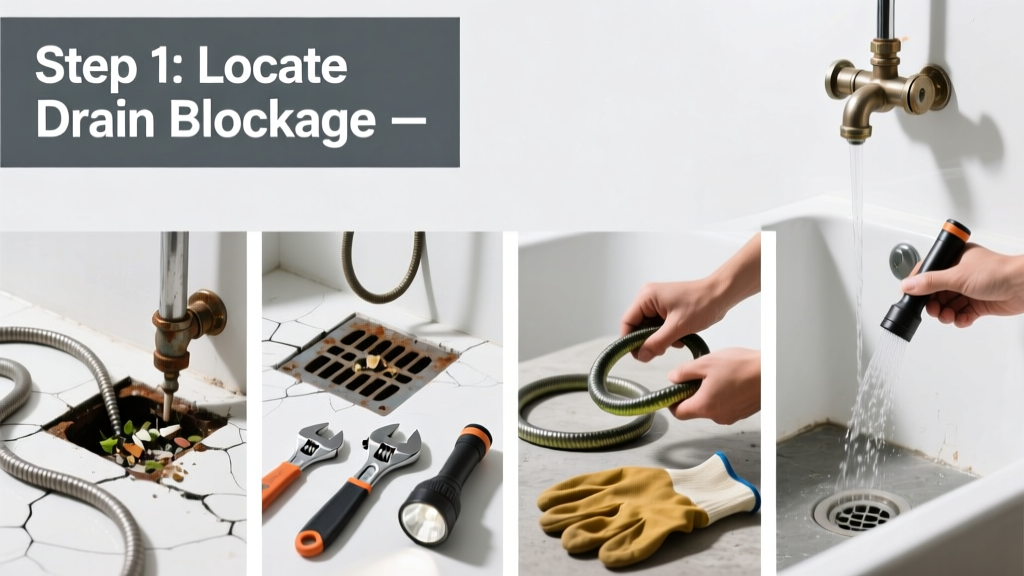
Your outdoor shower gurgles, pools water at your feet, or takes minutes to clear after use—frustrating and potentially damaging to your deck or patio. Standing water invites mold, attracts pests, and can erode surrounding soil or concrete. Most drainage failures aren’t catastrophic; they’re fixable in under two hours with basic tools and the right approach.
Quick Diagnosis
Before grabbing tools, identify the likely culprit. Outdoor shower drains fail for predictable reasons—here’s what to check first:
- Debris-clogged drain grate or hair trap
- Sand, leaves, or soap scum built up in the P-trap or horizontal pipe
- Improper slope (less than 1/4″ per foot) causing slow or no flow
- Frozen or cracked pipe (common in unheated climates below 32°F)
- Collapsed or root-infiltrated underground drain line
Tools & Materials Needed
| Item | Purpose | Estimated Cost |
|---|---|---|
| Plumber’s snake (1/4″ x 25 ft) | Cleans clogs 2–10 ft down vertical or angled pipes | $12–$22 |
| Drain auger with drum handle | Reaches deeper clogs in buried or long runs | $28–$45 |
| Vinegar + baking soda | Natural reaction breaks down organic buildup safely | $3–$6 |
| Adjustable wrench | Removes P-trap without stripping fittings | $10–$18 |
| Level & measuring tape | Verifies minimum 1/4″ per foot pitch on drain line | $8–$15 |
Step-by-Step Fix
Start simple and escalate only if needed. Most issues resolve at Step 1 or 2.
- Clear the grate and strainer: Remove the metal or plastic grate, pick out hair, sand, and leaf debris with needle-nose pliers. Rinse with a garden hose on full blast.
- Flush with vinegar and baking soda: Pour ½ cup baking soda followed by 1 cup white vinegar into the drain. Cover for 10 minutes, then flush with 2 quarts of boiling water. Repeat if sluggish.
- Snake the P-trap: Place a bucket underneath, loosen slip nuts with a wrench, remove the P-trap, and clean it thoroughly. Reinstall with fresh plumber’s tape on threaded joints.
- Auger the main line: Feed a drum auger past the P-trap into the horizontal run. Crank slowly while advancing—stop when resistance eases, then retract while rotating to pull debris.
- Check slope and grade: Use a level and tape measure to verify the drain pipe drops at least ¼ inch per linear foot. If not, reposition supports or replace sections with proper pitch.
When to Call a Pro
DIY stops where safety or code compliance begins. Call a licensed plumber if:
- You hear gurgling from indoor drains when using the outdoor shower (indicates vent or main line blockage)
- The drain line connects to a septic system and you suspect a baffle or distribution issue
- You uncover cracked PVC or corroded metal pipe beneath pavers or concrete—cutting and patching requires permits in most municipalities
- Water backs up into adjacent landscaping or foundation walls (sign of collapsed or displaced underground line)
According to the Insurance Institute for Business & Home Safety's 2023 report, 68% of outdoor plumbing failures linked to structural damage involved undetected subsurface pipe collapse—often misdiagnosed as simple clogs.
Prevention Tips
Maintenance beats repair every time. Build these habits into your seasonal routine:
- Rinse the drain grate weekly during heavy-use months (May–September)
- Flush monthly with vinegar+baking soda, especially after sandy beach days
- Install a fine-mesh hair catcher like the Oatey Fine Mesh Drain Strainer
- Insulate exposed pipes with foam sleeves in zones with hard freezes (below 20°F)
- Test flow quarterly: pour 5 gallons of water and time drainage—should clear in ≤90 seconds
Can I use bleach on this?
No. Bleach corrodes brass and galvanized fittings, degrades PVC glue joints over time, and reacts dangerously with ammonia-based cleaners if previously used. Stick to vinegar, enzymatic drain cleaners, or mechanical removal.
Why does my outdoor shower drain smell like sulfur?
A rotten-egg odor signals hydrogen sulfide gas—usually from stagnant water in a dry or improperly vented P-trap. Refill the trap with water, ensure the vent is clear (check roof stack for bird nests), and confirm the drain isn’t connected to a sewer line without an air admittance valve.
Is it okay to pour boiling water down an outdoor shower drain?
Yes—if the pipe is PVC, ABS, or metal. Avoid boiling water in frozen conditions (risk of thermal shock cracks) or if the line runs through wood framing (fire hazard). Never use boiling water on older cast iron or glued PVC joints older than 15 years.
How deep should an outdoor shower drain line be buried?
In frost-prone zones (USDA Zones 3–6), bury at least 12 inches below the local frost line—typically 36–48 inches deep. In warmer zones (7–10), 18–24 inches is sufficient, but always slope at ¼″/ft and surround with gravel for drainage. Per the 2021 International Plumbing Code Section 705.1, minimum cover is 12″ unless protected by concrete slab.
What’s the best way to test if the problem is the shower head or the drain?
Remove the shower head and run water directly from the supply line into a bucket. If flow remains strong, the issue is downstream (drain side). If pressure drops sharply, inspect the shower head’s flow restrictor or internal cartridge—clean or replace as needed. See our guide on outdoor shower head leaking repair.
Can tree roots really clog an outdoor shower drain?
Absolutely. A single root hair can penetrate hairline cracks in clay or aged PVC, then swell and block flow within weeks. The U.S. EPA estimates that 30% of residential drain line repairs in suburban areas involve root intrusion—especially near willows, poplars, and maples planted within 10 feet of the line.
Fixing a sluggish outdoor shower drain doesn’t require a plumbing degree—but it does demand patience, the right tool for each layer of the problem, and knowing when your scope ends and a pro’s begins. Keep a small drain snake and vinegar in your shed year-round, and you’ll spend more time rinsing off saltwater than wrestling with backups.