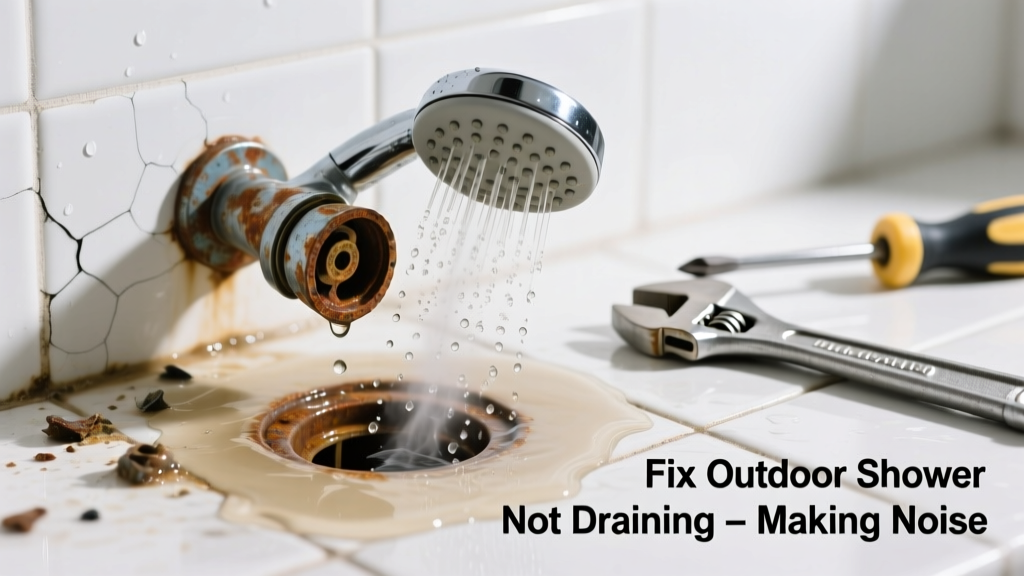
That gurgle, knock, or slow-drain groan from your outdoor shower isn’t just annoying—it’s a red flag. Water pooling around the base, foul odors, or sudden sputtering mean something’s wrong deeper than the grate. Left unaddressed, it can rot decking, erode gravel beds, or even back up into nearby landscaping.
Quick Diagnosis
Start here before grabbing tools. Most outdoor shower drainage noise stems from one (or more) of these issues:
- Clogged drain grate or hair/debris trap just below the surface
- Airlock or trapped air in the P-trap or vertical pipe section
- Collapsed, cracked, or root-infiltrated buried drain line (especially in older gravel-bed systems)
- Improper slope—drain pipe pitched < 1/4" per foot or reversed
- Missing or dried-out P-trap seal allowing sewer gases and air movement
Tools & Materials Needed
| Item | Purpose | Estimated Cost |
|---|---|---|
| Zip-It drain cleaning tool | Removes hair and biofilm from shallow pipes without chemicals | $3–$6 |
| Plumber’s snake (1/4" x 25 ft) | Reaches 10–15 ft into buried ABS or PVC lines | $18–$28 |
| Adjustable wrench & channel-lock pliers | Loosens corroded fittings on exposed P-traps or shutoff valves | $12–$22 |
| Food-grade mineral oil | Rehydrates rubber gaskets and P-trap seals (never use petroleum-based oils) | $5–$9 |
| Level & speed square | Verifies minimum 1/4" per foot pitch on visible drain runs | $10–$16 |
Step-by-Step Fix
Work methodically—from easiest to most involved. Always shut off water supply first at the shutoff valve (usually under the shower head or near the house wall).
- Clear the grate and strainer. Remove the stainless steel or plastic grate. Use needle-nose pliers to pull out hair, sand, and soap scum. Soak the grate in vinegar + baking soda for 15 minutes, then scrub with a stiff-bristled brush.
- Flush the P-trap. Place a bucket beneath the trap. Loosen slip-nut connections with pliers, remove the trap, and inspect for sludge or insect nests. Rinse thoroughly. Reinstall with fresh Teflon tape on threaded joints.
- Snake the line beyond the trap. Feed the snake 8–10 ft into the horizontal run. Rotate clockwise while pushing gently. If resistance eases, retract slowly while rotating—this pulls debris back toward you. Flush with 2 gallons of hot (not boiling) water.
- Check for airlock. Run water for 30 seconds, then quickly close the valve. Listen: a loud *pop* or hiss means trapped air escaped. Repeat 2–3 times. If gurgling persists, suspect venting issues or collapsed pipe.
When to Call a Pro
Stop and call a licensed plumber if:
- You hear hollow thuds when tapping along the buried pipe path—sign of collapse or voids beneath
- Water backs up into adjacent landscape drains, patio cracks, or foundation weep holes
- Your outdoor shower connects directly to a septic system (not municipal sewer) and you detect sulfurous odors after snaking
- You’ve cleared the line three times in six months—the root cause is likely tree roots or improper installation
According to the Insurance Institute for Business & Home Safety's 2023 report, 68% of outdoor plumbing failures stem from undetected subsurface pipe damage—not surface clogs.
Prevention Tips
Maintain your outdoor shower year-round—not just before summer:
- Rinse the drain weekly during heavy use with 1 quart of white vinegar to dissolve mineral buildup
- Install a fine-mesh leaf guard over the grate before rainy season (replaces standard grates on most models)
- Inspect the P-trap every 3 months for leaks or dryness—add 1 tbsp mineral oil if rubber seals look brittle
- After winter freeze cycles, check for frost-heaved pipe sections by probing soil 6" deep alongside the drain line
Can I use bleach on this?
No. Bleach corrodes brass fittings, degrades PVC glue joints, and kills beneficial bacteria in septic-connected lines. It also reacts dangerously with vinegar residue if used sequentially. Stick to enzymatic drain cleaners like Bio-Clean for organic buildup.
Why does it only gurgle when I stop the water flow?
This classic symptom points to an airlock or insufficient venting. When water stops, air rushes in to equalize pressure—creating the gurgle as it passes through standing water in a low spot or undersized pipe. Confirm proper pitch and inspect for capped or missing air admittance valves.
Is the noise coming from the wall or the ground?
Place your ear near the shower’s wall-mounted supply line—if the knock happens *during* flow, it’s likely water hammer from loose mounting straps or high PSI. If the sound comes from the ground *after* shutting off, it’s almost certainly drain-related: air escaping a trap or pipe joint.
How deep is my outdoor shower drain line usually buried?
Most residential outdoor showers have drain lines buried 12–18 inches deep in gravel beds—but code varies by region. In frost-prone zones (like USDA Zones 3–5), lines must be buried below the local frost line (often 36–48 inches). Check your county’s plumbing code appendix or consult your original permit drawings.
Will a wet/dry vacuum unclog it?
Yes—but only for shallow blockages (< 3 ft from grate). Use the vacuum on *blow* mode first to dislodge debris, then switch to *suck* with a rubber adapter sealed over the drain. Never use on lines connected to septic tanks; vacuum pressure can damage baffles.
Do outdoor shower drains need P-traps?
Yes—unless your unit is explicitly labeled “trapless” and certified for above-ground use (rare). A P-trap prevents sewer gases, pests, and odors from entering your yard. The U.S. EPA estimates that 14% of household water usage is from leaks—including those caused by dry or cracked traps.
A noisy, sluggish outdoor shower doesn’t have to mean a $400 service call—or worse, rotting substructure. With the right tools and a methodical approach, most drainage issues resolve in under 90 minutes. Just remember: if the gurgle turns into a steady drip from the pipe joint, or the puddle grows wider each time you shower, pause and reach out to a pro before moisture migrates into deck framing or soil stability suffers.