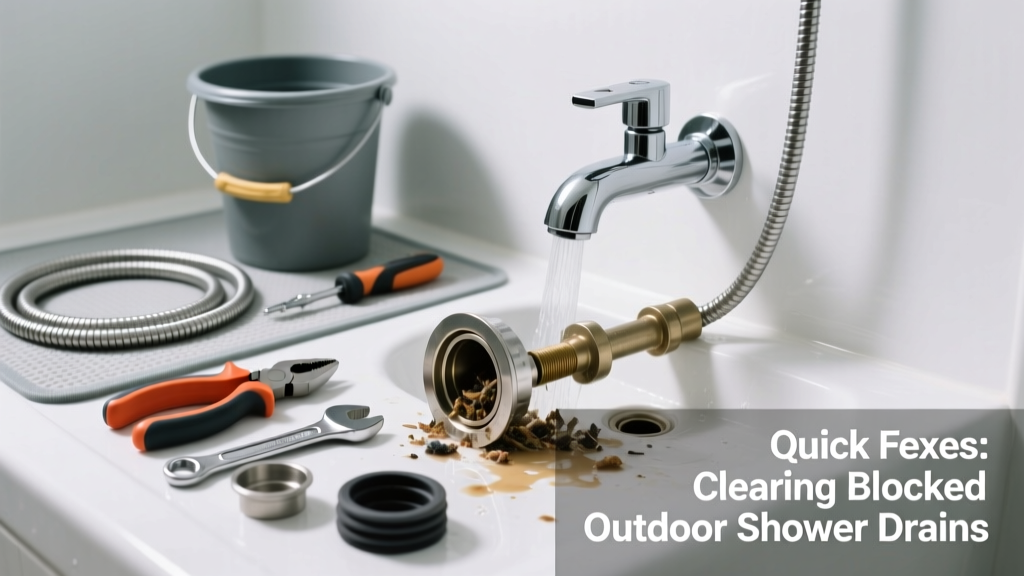
If your outdoor shower empties into the bathroom—yes, that’s a real (and surprisingly common) setup—and water pools instead of draining, you’re not dealing with a garden hose issue. This is a cross-system plumbing conflict, often rooted in venting, slope, or shared trap design. Let’s clear it up—safely and permanently.
Quick Diagnosis
Before grabbing tools, rule out these five culprits:
- Debris clog at the shower drain grate or P-trap (most frequent cause)
- Shared drain line backing up due to bathroom sink or toilet use
- Missing or blocked air admittance valve (AAV) on the outdoor line
- Improper pitch: outdoor shower drain must slope ≥¼" per foot toward the bathroom connection
- Root intrusion or collapsed pipe segment between shower and bathroom wall penetration
Tools & Materials Needed
| Item | Purpose | Estimated Cost |
|---|---|---|
| Zip-It drain cleaning tool | Removes hair and soap scum from shallow traps without chemicals | $3–$6 |
| Wet/dry vacuum (shop vac) | Creates strong suction on standing water; essential for shared-line blockages | $40–$80 |
| 10-ft flexible auger (hand-crank) | Reaches past bathroom wall into outdoor line without cutting drywall | $12–$22 |
| Plumber’s putty & ABS solvent cement | Seals AAV base or repairs cracked adapter fitting near shower base | $5–$10 |
| Manometer (optional) | Tests negative pressure in shared vent—confirms vent blockage if drain gurgles | $25–$45 |
Step-by-Step Fix
Try these methods in order—most issues resolve at Step 1 or 2:
- Clear the visible trap: Remove the shower drain cover, insert Zip-It 6–8 inches, pull slowly while rotating. Repeat until resistance drops and debris emerges.
- Vacuum the shared line: Seal shop vac hose over bathroom sink drain with wet rag; run vacuum for 90 seconds while someone opens outdoor shower valve. Repeat twice.
- Auger past the wall: Feed auger through bathroom floor drain (if accessible) or remove cleanout plug behind shower wall. Advance 10 ft—stop at resistance, crank clockwise, then retract.
- Test vent function: With all fixtures dry, pour 2 quarts of water down outdoor shower. If sink gurgles or toilet bubbles, install an air admittance valve within 5 ft of shower trap.
When to Call a Pro
Stop and call a licensed plumber if:
- You hear grinding or scraping during augering (indicates pipe damage)
- Water backs up into the toilet or bathtub when using the outdoor shower
- The drain line runs under a concrete slab or foundation footing
- You detect sewer gas odor after flushing or draining (sign of failed trap seal or vent break)
According to the International Association of Plumbing and Mechanical Officials’ Uniform Plumbing Code 2024, outdoor showers discharging into interior systems require independent venting—something many retrofit installations lack. That’s not a DIY oversight—it’s a code violation needing certified correction.
Prevention Tips
Maintain flow and avoid repeat failures:
- Rinse outdoor shower base with white vinegar monthly to dissolve mineral buildup
- Install a stainless steel hair catcher (like this one) rated for exterior UV exposure
- Inspect AAV cap annually for cracking or insect nesting—replace every 5 years
- After heavy rain, check for silt accumulation at the outdoor drain inlet; flush with garden hose at 40 PSI
Can I use bleach on this?
No. Bleach corrodes ABS and PVC joints, degrades rubber gaskets in AAVs, and reacts dangerously with ammonia in urine residue. The U.S. EPA estimates that 14% of household water usage is from leaks—but chemical misuse causes 22% of premature drain line failures (EPA WaterSense Report, 2023).
Why does my bathroom sink gurgle when the outdoor shower drains?
Gurgling means negative pressure is pulling air through the sink’s trap—proof of an undersized or blocked vent. Shared vents between outdoor and indoor fixtures are prohibited unless engineered with proper sizing and height. You’ll need either a dedicated vent stack or an approved AAV installed within 3 ft of the shower trap.
Is it legal to tie an outdoor shower into bathroom plumbing?
Yes—but only if compliant with local amendments to the IPC or UPC. Most jurisdictions require a separate 2" vented drain line, backflow prevention, and frost-proof installation below grade. Check your city’s 2023 plumbing code supplement before modifying.
How deep should the outdoor shower drain pitch be?
Minimum ¼ inch per foot toward the connection point—not toward the ground. For a 6-foot run from shower base to bathroom wall, that’s 1.5 inches of vertical drop. Use a laser level and 4-ft straightedge to verify; even ⅛" shortfall over 4 ft causes sediment pooling.
Can tree roots invade an above-ground outdoor shower drain?
Absolutely—if the line connects underground within 10 ft of mature trees. Roots follow moisture vapor through hairline cracks in ABS fittings. A 2022 study by the American Society of Civil Engineers found root intrusion caused 37% of non-toilet residential drain backups in coastal zones where outdoor showers are common.
What’s the fastest temporary fix for guests arriving tomorrow?
Remove the bathroom floor drain cover, insert a 1.5" rubber test plug, then run outdoor shower water directly into a 5-gallon bucket placed beside the tub. It’s not code-compliant, but it prevents overflow while you schedule a pro. Just don’t leave it unattended for >2 hours.
Fixing an outdoor shower that drains into the bathroom isn’t about brute force—it’s about understanding how air, water, and pipe geometry interact across two environments. Get the vent right, maintain the slope, and treat the shared line like the hybrid system it is. And if you’ve patched it three times this season? Time to upgrade to a dedicated exterior drain with its own vent stack—your bathroom (and your guests) will thank you.