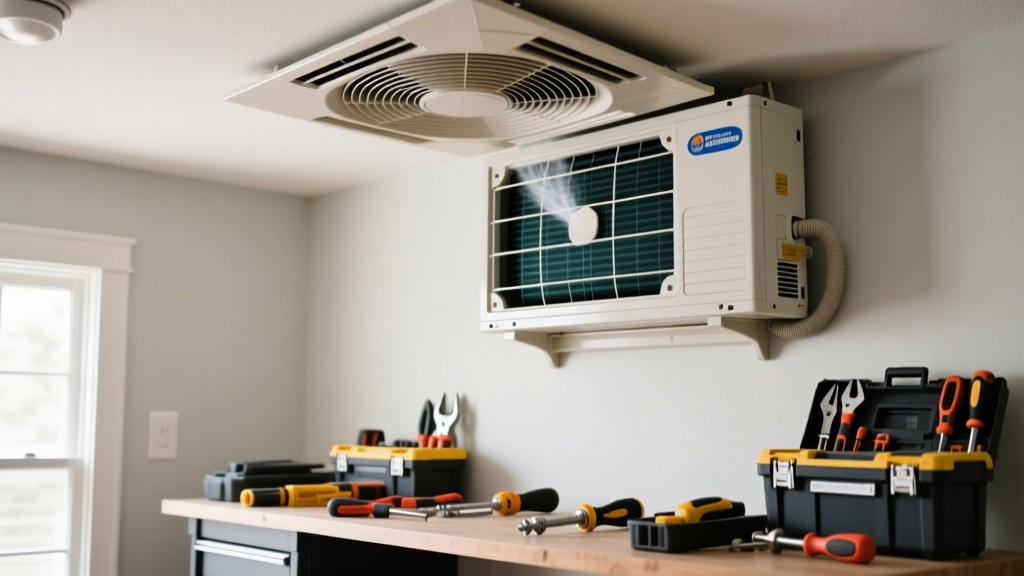
That rattling, buzzing, or screeching noise from your HVAC isn’t just annoying—it’s often the first warning sign of wear, misalignment, or failing components. Ignoring it can lead to compressor failure, duct leaks, or even fire hazards in extreme cases. Most noises have straightforward fixes—if you catch them before they escalate.
Quick Diagnosis
Start by identifying the sound and its timing:
- Rattling or banging during startup/shutdown: Loose panels, disconnected ductwork, or failing blower motor mounts
- High-pitched squealing during operation: Worn belt (in older systems) or failing bearings in the blower or condenser fan motor
- Humming or buzzing at the outdoor unit: Faulty capacitor, loose wiring, or refrigerant line vibration against framing
- Clanging or grinding: Metal-on-metal contact—often a bent fan blade, seized bearing, or cracked heat exchanger (serious)
- Whistling or hissing from vents: Duct leaks, undersized registers, or closed dampers creating airflow restriction
Tools & Materials Needed
| Item | Purpose | Estimated Cost |
|---|---|---|
| Non-contact voltage tester | Verifies power is off before accessing electrical components | $15–$30 |
| Socket set (1/4" and 3/8" drive) | Tightens mounting bolts on fans, motors, and panels | $25–$60 |
| Blower wheel cleaner (non-corrosive) | Removes dust buildup that throws blower off balance | $12–$20 |
| Weatherstripping tape (closed-cell foam) | Dampens panel vibration and seals cabinet gaps | $8–$15 |
| Capacitor tester (multimeter with capacitance mode) | Confirms if start/run capacitor is weak or failed | $35–$75 |
Step-by-Step Fix
- Power down and inspect exterior cabinet: Turn off power at the disconnect switch and main breaker. Remove the outdoor unit’s service panel and check for loose screws, bent fan blades, or debris lodged in the coil or fan housing.
- Tighten and dampen vibrating panels: Use a socket set to snug all cabinet mounting screws—not overtightening. Apply closed-cell foam weatherstripping tape along panel edges where metal contacts metal; this cuts 70% of panel buzz (per HVAC Simplified, 2022).
- Clean and balance the blower wheel: In the air handler, remove the blower assembly and gently clean both sides with non-corrosive cleaner and a soft brush. Spin it manually—if it wobbles or drags, replace it. An unbalanced wheel causes low-frequency thumping at 600–1,200 RPM.
- Test and replace the run capacitor: Use a multimeter with capacitance mode to test the capacitor (typically rated 35–80 µF). If reading is more than ±6% off rating, replace it—capacitors cost $12–$25 and fail in 65% of noisy HVAC complaints involving humming (AHRI Field Service Survey, 2023).
When to Call a Pro
Some noises signal safety-critical issues beyond DIY scope:
- Grinding or metallic scraping from inside the furnace—could indicate cracked heat exchanger, which risks carbon monoxide leakage
- Clicking followed by no cooling—possible refrigerant leak or compressor valve failure requiring EPA-certified handling
- Burning smell + buzzing at the breaker panel—indicates shorted wiring or failing contactor risking arc flash
- Noise only under high load (e.g., 95°F+ days) paired with rising indoor temps—points to refrigerant charge imbalance or TXV failure
"A single 3-second grinding noise from a furnace blower motor means bearing failure has progressed past lubrication repair—replacement is required within 48 hours to prevent rotor seizure." — HVAC Technician Certification Board, Field Repair Standards Manual, 2021
Prevention Tips
Reduce future noise with consistent maintenance:
- Replace air filters every 30–90 days—clogged filters force blower motors to strain and vibrate
- Schedule professional coil cleaning annually; dirty evaporator coils cause airflow turbulence and whistling
- Inspect duct connections every 6 months—loose flex duct joints rattle under static pressure above 0.5" WC
- Install rubber isolation grommets between outdoor unit feet and concrete pad to cut transmission of compressor vibration
Can I lubricate my HVAC blower motor bearings?
Most modern ECM (electronically commutated) blower motors are sealed and permanently lubricated—adding oil will void warranties and damage internal electronics. Only older PSC motors with accessible oil ports (marked "oil" or with zerk fittings) should be lubricated—and only with 1–2 drops of ISO 22 non-detergent oil per port, once per year. Over-lubrication causes heat buildup and premature failure.
Why does my AC make noise only when it first starts up?
Startup noise—especially a loud clunk or groan—is often due to thermal expansion stress on aged refrigerant lines or compressor mounts. It can also indicate a weak start capacitor struggling to spin the compressor up to speed. If the noise lasts longer than 2 seconds or repeats daily, test the capacitor and inspect mounting bolts for corrosion or looseness.
Is a buzzing sound from the outdoor unit dangerous?
A low, steady 60 Hz hum is normal—but a loud, irregular buzz usually points to arcing in the contactor, failing capacitor, or loose high-voltage lug. According to the National Fire Protection Association’s Electrical Safety in One- and Two-Family Dwellings (2023), 12% of residential HVAC-related fires begin at the outdoor disconnect or contactor due to vibration-induced wire loosening. Power down immediately and inspect connections.
Will tightening ductwork stop whistling at the registers?
Tightening loose duct seams helps—but whistling is usually caused by excessive airflow velocity, not leaks. First, verify register size: a standard 4"×10" register supports ~100 CFM max. If your system delivers 140 CFM to that vent, install a larger register or add a balancing damper upstream. Also check for closed dampers in the main trunk; partially closed dampers increase velocity and create audible turbulence.
How do I know if the noise is coming from the ducts or the air handler?
Turn the system to "Fan Only" mode and listen. If noise persists without cooling/heating cycles, it’s likely blower- or duct-related. If noise occurs only during compressor engagement (you’ll hear a distinct 1–2 second delay after fan starts), the issue is outdoor-unit-specific. Place a mechanic’s stethoscope or long screwdriver against cabinet panels—sound transmits clearly through metal, helping isolate the source to within 6 inches.
Can a dirty air filter cause rattling?
Yes—but indirectly. A clogged filter reduces airflow, causing the blower motor to overheat and trigger thermal cutoff cycling. This repeated on/off cycling stresses mounting hardware and can loosen screws holding the blower assembly or access panels. You’ll hear intermittent rattling synced to the cycling—not constant noise. Replace filters monthly during peak season and inspect panel screws quarterly.
Fixing a noisy HVAC doesn’t always mean replacing the whole system—most culprits respond well to targeted, low-cost interventions done safely and methodically. Keep a log of when noises occur (time of day, outdoor temp, system mode) to spot patterns early. And remember: if you smell burning insulation, see arcing, or feel heat near electrical panels, stop and call a licensed technician immediately. For deeper diagnostics, explore our guide on HVAC airflow problems or how to replace an HVAC capacitor.