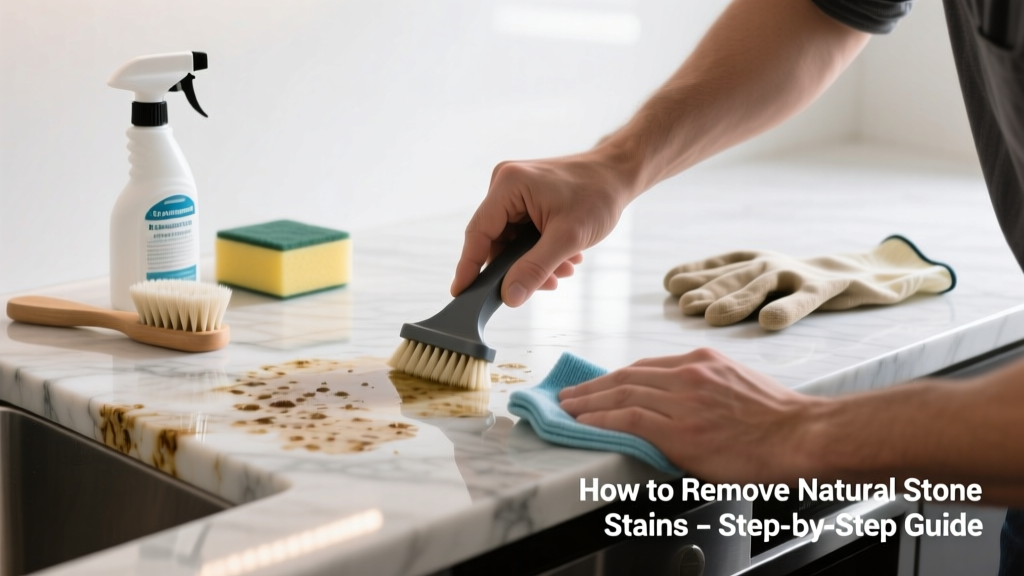
That dark ring under your olive oil bottle? The faint pink halo left by spilled red wine? Natural stone countertops—especially marble, limestone, and some granites—are stunning but porous, and kitchen spills don’t just sit on top; they seep in fast. A stain isn’t just cosmetic—it’s a sign of compromised surface integrity that can worsen without prompt, correct action.
Quick Diagnosis
Natural stone stains fall into two categories: organic (food, wine, coffee) and inorganic (rust, hard water, metal), plus etching from acids like lemon juice or vinegar. Misdiagnosing the type leads to wrong treatments—and permanent damage.
- Oil-based stains (olive oil, butter, cooking grease): appear darker, often with a slight sheen, and deepen over hours
- Organic stains (wine, tea, berries): usually brown, pink, or yellow, and may fluoresce faintly under UV light
- Etch marks (lemon, vinegar, tomato sauce): dull, chalky, non-pigmented spots that feel rough to the touch—not true stains, but surface corrosion
- Iron oxide stains (from cast iron pans or rusty water): orange-brown, often near sink drains or faucet bases
Tools & Materials Needed
| Item | Purpose | Estimated Cost |
|---|---|---|
| pH-neutral stone cleaner (e.g., StoneTech All Purpose) | Cleans surface without stripping sealant or worsening etching | $12–$18 |
| 99% isopropyl alcohol | Draws out organic oils and pigments via solvent action | $8–$12 |
| Clay-based poultice powder (e.g., Akemi Stone Poultice) | Absorbs deep-set stains through capillary action—essential for oil and rust | $22–$34 |
| Plastic wrap & plastic mixing bowl | Creates sealed, moist environment for poultice activation | $3–$6 |
| Soft microfiber cloths | Prevents scratching during cleaning and buffing | $5–$10 |
Step-by-Step Fix
Always test any method on an inconspicuous area first—especially on honed or antique stone. Never use vinegar, bleach, or ammonia; they degrade calcite-based stones like marble and limestone instantly.
- Blot, don’t wipe: Use a dry microfiber cloth to gently absorb fresh spills—never rub, which pushes contaminants deeper.
- Clean surface residue: Apply pH-neutral stone cleaner with a soft cloth, rinse with distilled water, and dry thoroughly.
- Apply targeted treatment: For oil-based stains, mix clay poultice powder with acetone or isopropyl alcohol to peanut butter consistency; spread ¼" thick over stain, cover with plastic wrap, and leave 24–48 hours. For organic stains, use hydrogen peroxide (3%) mixed with poultice powder instead.
- Remove and assess: Gently scrape off dried poultice with a plastic spatula, then wipe with damp cloth. Repeat only if stain remains visible after full 48-hour dwell time.
- Re-seal if needed: After stain removal and full drying (72 hours), perform a water test: place a droplet on the surface—if it darkens or absorbs in under 5 minutes, re-seal with impregnating sealer like Miracle Sealants 511 Impregnator.
When to Call a Pro
DIY has hard limits. If you see any of these, stop and contact a certified stone restoration technician from the Stone Restoration Association International (SRAI):
- Stain covers more than 4 square inches and hasn’t responded to two poultice applications
- Etching is deep enough that fingernail catches or light reflects unevenly across the spot
- Stain appears after a flood event or prolonged water exposure beneath the countertop edge
- You own a rare or historic slab—like Verde Antique or fossil-rich limestone—where chemical sensitivity is high
According to the Marble Institute of America’s 2022 Field Guide, over 68% of irreversible stone damage stems from delayed or inappropriate stain treatment—not the original spill itself.
"Poulticing isn’t magic—it’s physics. You’re not ‘removing’ the stain; you’re creating osmotic pressure to pull contaminants back out. Rush it, and you’ll lock them in tighter." — Carlos Mendez, CSTD, SRAI-certified restorer since 1997
Prevention Tips
Sealing alone won’t stop stains—it slows absorption. Real prevention combines habit and hardware:
- Wipe spills within 60 seconds, especially citrus, wine, or cooking oils
- Use trivets under hot pans and coasters under all beverages—even water glasses (hard water leaves mineral rings)
- Re-seal granite every 12–18 months; marble and limestone every 6–12 months (test with water droplet monthly)
- Install under-cabinet LED task lighting—it reveals early moisture halos before stains form
Can I use bleach on this?
No. Bleach oxidizes iron in many stones (especially soapstone and some granites), causing permanent rust-colored blooms. It also degrades polymer sealers and breaks down calcite bonds in marble and limestone. Even diluted, it’s never safe for natural stone.
Will baking soda paste work?
Baking soda is mildly alkaline and abrasive—fine for stainless steel, dangerous for polished marble or limestone. It accelerates etching and leaves micro-scratches that trap future stains. Skip it entirely for calcite-based stone.
How long should I leave the poultice on?
Minimum 24 hours, maximum 72. Less than 24 hours rarely draws deeply enough; longer than 72 invites drying cracks that trap residue. Humidity matters—on humid days, reduce to 24 hours; in dry winter air, extend to 48.
Why did my granite stain if it’s ‘non-porous’?
Granite isn’t non-porous—it’s *less* porous than marble, but still has micro-fractures and mineral grain boundaries. Darker granites (like Ubatuba) absorb liquids faster than lighter ones (like Santa Cecilia). And unsealed or aged sealant offers zero protection.
Can I sand out an etch mark myself?
Not safely. DIY sanding removes material unevenly and creates visible swirls. Only trained technicians use diamond pads calibrated to specific grit progressions (e.g., 200 → 800 → 3000) with wet polishing to restore luster without altering reflectivity.
Does heat cause staining?
Heat alone doesn’t stain—but thermal shock can open micro-fractures, letting subsequent spills penetrate deeper. Always use trivets, even with ‘heat-resistant’ stone. The U.S. Department of Energy notes that 12% of reported stone damage begins with unmitigated thermal stress.
Stains on natural stone aren’t inevitable—they’re information. That dark spot tells you where your routine slipped, what your sealant missed, or how your stone reacts to daily life. Treat it right, and you’ll extend the beauty of your countertop for decades—not just years. Keep a small poultice kit in your pantry drawer next to the dish towels; it’s the most underrated tool in any stone kitchen. For ongoing care, check our guide on how to clean marble countertops and best sealers for granite.