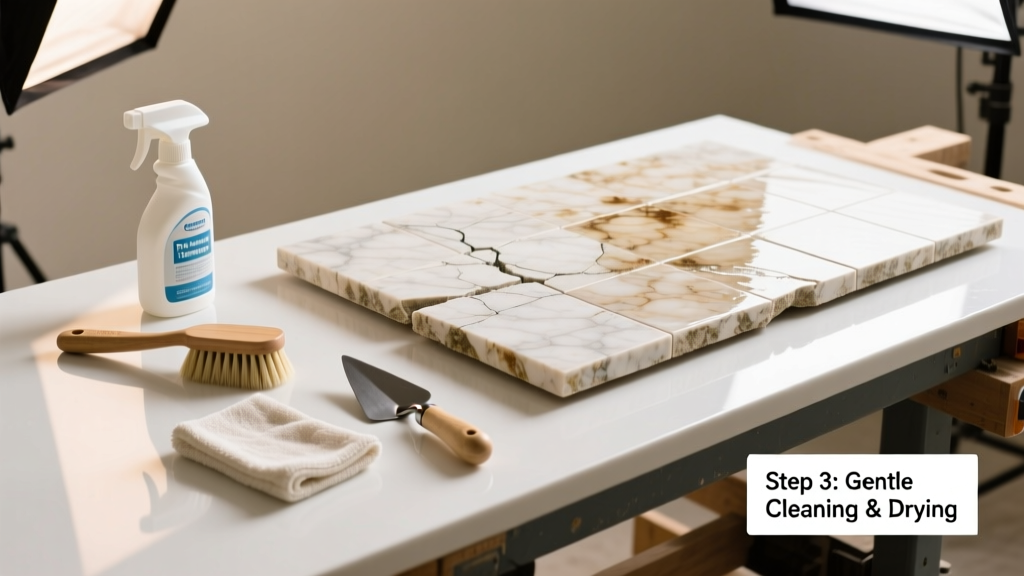
Natural stone—granite, marble, limestone, travertine—adds timeless elegance to kitchens, bathrooms, and entryways. But one spill of wine, oil, or rust can leave a stubborn stain that looks like it’s etched in forever. The good news? Most stains respond well to targeted, gentle treatment—if you act fast and avoid harsh chemicals.
Quick Diagnosis
Before grabbing supplies, identify the stain type. Natural stone is porous and chemically sensitive—using the wrong method can worsen damage. Here are the most common culprits:
- Oil-based stains (cooking oil, cosmetics, lotions): Dark, greasy-looking spots that deepen over hours
- Organic stains (coffee, tea, berries, wine): Brown or pink discoloration, often with a faint odor
- Iron oxide (rust) stains: Orange-red marks from metal fixtures, tools, or water with high iron content
- Etching (not a stain but often mistaken for one): Dull, whitish, chalky spots caused by acid contact—common on marble and limestone
- Biological growth (mold/mildew): Green, black, or yellow patches in damp areas like shower grout lines
Tools & Materials Needed
| Item | Purpose | Estimated Cost |
|---|---|---|
| Stone-safe poultice powder (e.g., Prosoco Sure Klean Poultice) | Absorbs deep-set oil and organic stains without etching | $18–$24 |
| Isopropyl alcohol (91%) | Cleans surface residue and preps for poultice application | $5–$8 |
| White vinegar (for rust only—never on marble/limestone) | Dissolves iron oxide deposits on granite and slate | $2–$4 |
| Soft microfiber cloths & plastic wrap | Prevents evaporation during poultice dwell time; avoids scratching | $6–$10 |
| pH-neutral stone cleaner (e.g., StoneTech All Purpose Cleaner) | Safe daily cleaning without stripping sealers or damaging calcite | $12–$16 |
Step-by-Step Fix
Choose the method based on stain type and stone species. Always test any solution on an inconspicuous area first.
- For oil-based and organic stains: Mix poultice powder with distilled water or acetone (for oil) to peanut butter consistency. Spread ¼" thick over stain, cover with plastic wrap, and tape edges. Let sit 24–48 hours. Remove, rinse with pH-neutral cleaner, and dry thoroughly.
- For rust stains on granite or slate: Dampen cloth with white vinegar, press onto stain for 10 minutes, then wipe and rinse. Repeat if needed—but never use vinegar on marble, limestone, or travertine (it dissolves calcium carbonate).
- For etch marks (dull spots from acid): Light etches on polished marble may be buffed with a marble polishing compound like MB Stone Care Marble Polishing Powder. Heavy etching requires professional honing.
- For mold/mildew in grout or porous stone: Spray with hydrogen peroxide (3%), wait 10 minutes, scrub gently with soft brush, then rinse. Avoid chlorine bleach—it degrades grout and can yellow some stones.
When to Call a Pro
Some situations go beyond DIY safety or effectiveness. Don’t risk irreversible damage:
- Stains covering more than 12 inches square or penetrating deeper than surface layer
- Any stain on honed or antique stone where finish integrity matters
- Multiple overlapping stain types (e.g., rust + oil + etching in same zone)
- Stones with historic value, rare veining, or custom finishes—like Calacatta Gold or Verde Antique
- Recurring stains despite proper sealing and cleaning—could indicate subsurface moisture or failed grout
"Over 68% of stone restoration calls we handle involve improper prior DIY attempts—especially vinegar on marble or abrasive pads on polished surfaces." — John R. Delaney, President, Surface Solutions Group, 2023
Prevention Tips
Sealing isn’t optional—it’s essential maintenance. But not all sealers are equal, and timing matters:
- Apply impregnating sealer (e.g., Dry Treat STAIN-PROOF) every 1–3 years depending on traffic and stone porosity
- Wipe spills within 3–5 minutes—especially citrus, vinegar, wine, and tomato-based sauces
- Use coasters under glasses and trivets under hot pans—even heat can degrade sealers over time
- Install water softeners if your municipal supply tests above 0.3 ppm iron (per U.S. Geological Survey, 2022)
- Never use generic bathroom cleaners—they’re often acidic or contain dyes that stain stone permanently
Can I use bleach on this?
No. Chlorine bleach corrodes grout, yellows light-colored stones like Carrara marble, and breaks down sealers. It also reacts unpredictably with minerals in stone, sometimes creating new stains. Use hydrogen peroxide instead for biological stains.
Will baking soda paste work?
It’s mildly alkaline and safe for occasional surface cleaning—but too weak for embedded oil or rust. Worse, if left damp on stone for hours, baking soda can draw moisture into pores and promote efflorescence. Skip it for serious stains.
How long should I wait after sealing before cleaning?
Wait at least 24 hours before light use, and 72 hours before exposing to water or cleaners. Most solvent-based sealers need full cure time to bond properly—rushing this leads to hazy residues or premature wear.
Why did my granite stain even though it’s ‘non-porous’?
Granite isn’t non-porous—it’s *less* porous than marble or limestone, but still absorbs liquids over time. A 2021 study by the Natural Stone Institute found that 42% of residential granite countertops showed measurable absorption within 10 minutes of oil exposure—especially near cut edges or seams.
Can I reseal over a stain?
No. Sealing traps moisture and contaminants underneath, making stains darker and harder to remove later. Always remove the stain first, then clean and dry completely for 48+ hours before resealing.
Does temperature affect stain removal?
Yes. Cold surfaces slow chemical reactions—poultices take up to 72 hours in basements or garages below 60°F. Warm rooms (70–75°F) yield best results. Never apply poultice to stone heated by radiant floor systems—it accelerates drying and reduces absorption.
Natural stone rewards patience and precision—not brute force. A single misstep with vinegar on marble or steel wool on limestone can cost hundreds in professional correction. But with the right diagnosis, tools, and timing, most stains lift cleanly, restoring that rich, natural luster. For ongoing care, pair regular cleaning with proper stone sealer application and revisit your kitchen countertop maintenance routine every season. And if you’re unsure whether a mark is a stain or structural flaw, stone crack repair guidance helps distinguish cosmetic from critical issues.