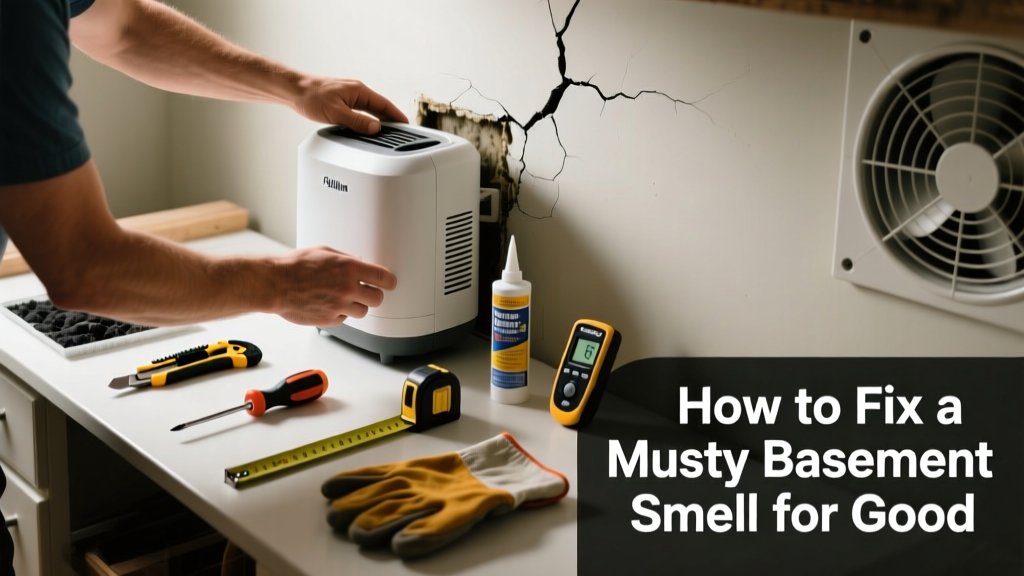
That damp, earthy, slightly sour odor clinging to your basement isn’t just unpleasant—it’s a red flag. Musty smells almost always point to hidden moisture, mold, or mildew thriving where you can’t see them. Ignoring it risks structural damage, respiratory irritation, and long-term indoor air quality problems.
Quick Diagnosis
Before grabbing supplies, pinpoint the source. Most musty basements stem from one or more of these:
- Condensation on cold pipes or foundation walls
- Standing water or chronic dampness near floor drains or sump pits
- Mold growing behind drywall, under carpet padding, or inside HVAC ductwork
- Poor ventilation trapping humid air below grade
- Leaking windows, cracks in foundation walls, or improper grading directing rainwater toward the house
Tools & Materials Needed
| Item | Purpose | Estimated Cost |
|---|---|---|
| Hygrometer | Measures relative humidity—critical for confirming if levels exceed 60% (ideal range: 30–50%) | $12–25 |
| Dehumidifier (70-pint capacity) | Removes excess moisture from air; essential for sustained control in basements over 1,000 sq ft | $220–380 |
| HEPA vacuum with sealed system | Captures mold spores instead of recirculating them—standard vacuums worsen the problem | $180–450 |
| Concrobium Mold Control spray | EPA-registered, non-toxic mold inhibitor that bonds to surfaces without bleach or VOCs | $22–34 |
| Exterior caulk (silicone-acrylic blend) | Seals foundation cracks and window perimeters to block water intrusion | $5–12 |
Step-by-Step Fix
Work methodically—from moisture control to surface treatment. Don’t skip steps; mold regrows fast if humidity stays high.
- Measure and monitor humidity: Place a hygrometer in the center of the basement for 48 hours. If readings consistently hit 60% or higher, run a dehumidifier continuously until they drop to 45–50%, then maintain that level.
- Eliminate standing water sources: Check sump pump operation, clean floor drains, inspect for leaks around plumbing penetrations, and verify gutters direct runoff at least 5 feet from the foundation.
- Clean visible mold with EPA-registered products: For non-porous surfaces (concrete, tile), scrub with Concrobium Mold Control using a stiff brush. Let dry fully—no rinsing required. Never use bleach on porous materials like drywall or wood; it only kills surface spores and leaves roots intact.
- Replace compromised materials: Cut out and discard moldy carpet padding, insulation, or drywall sections with visible discoloration or softening. Seal debris in heavy-duty plastic bags before removal.
When to Call a Pro
DIY stops where health and safety begin. Call a certified mold inspector or remediation contractor if:
- You find more than 10 square feet of visible mold (EPA guidelines recommend professional handling beyond this threshold)
- Mold is inside HVAC ductwork or behind finished walls with no access panel
- You suspect sewer backup contamination—black water carries pathogens like E. coli and hepatitis A
- Moisture readings on concrete slabs exceed 4.5 lbs/1,000 sq ft/24 hrs (requires moisture barrier installation)
"Mold exposure contributes to 21% of childhood asthma cases in homes with documented water damage," according to the American College of Allergy, Asthma & Immunology's 2022 clinical review.
Prevention Tips
Preventing recurrence is cheaper and safer than repeat remediation. Focus on airflow, drainage, and monitoring:
- Install a battery-backed sump pump alarm to catch failures early
- Use rigid foam board insulation on exterior foundation walls during renovations—not fiberglass batts, which trap moisture
- Run bathroom and kitchen exhaust fans for 20 minutes after showers or cooking—and vent them outside, not into the attic or crawl space
- Schedule annual inspection of downspouts, grading, and foundation seals—especially after winter freeze-thaw cycles
Can I use bleach on this?
No—bleach is ineffective against mold on porous surfaces and hazardous when mixed with ammonia (common in household cleaners). The CDC explicitly advises against bleach for mold remediation because it doesn’t penetrate material pores and can produce toxic fumes. Use EPA-registered fungistats like Concrobium or hydrogen peroxide-based solutions instead.
Will an air purifier help?
A true HEPA + activated carbon air purifier helps reduce airborne spores and odors *after* moisture is controlled—but it won’t fix the root cause. Units like the best air purifiers for basements work best alongside dehumidification and source removal.
How long does it take for the smell to go away?
With consistent dehumidification (under 50% RH) and surface cleaning, most musty odors fade within 3–7 days. Lingering smells after two weeks suggest hidden mold in wall cavities or under flooring—time to bring in a thermal imaging camera or moisture meter specialist.
Is a musty smell always mold?
Not always—but it’s highly likely. Mustiness results from microbial volatile organic compounds (MVOCs) released by mold, bacteria, or decaying organic matter. Rare exceptions include old paint solvents or stored wet firewood, but those are easily ruled out with visual inspection and humidity testing.
Do I need to test for mold first?
Testing isn’t required before cleanup if you can see or smell mold. The EPA and NY State Department of Health both state that visible mold should be cleaned regardless of species—testing delays action and rarely changes remediation strategy. Save lab tests for post-remediation verification or insurance documentation.
Can I finish my basement after fixing the smell?
Only after passing a full moisture audit: slab pH test (must be <10), calcium chloride test (<3 lbs/1,000 sq ft/24 hrs), and continuous hygrometer logging for 72 hours at 45–50% RH. Skipping this step leads to trapped moisture behind walls—a common cause of basement wall mold within 18 months.
Fixing a musty basement smell isn’t about masking odors—it’s about restoring balance between your home and its environment. Every dehumidifier cycle, every sealed crack, every replaced piece of insulation adds up to cleaner air, stronger structure, and peace of mind. Stay vigilant, measure often, and treat moisture like the silent threat it is.