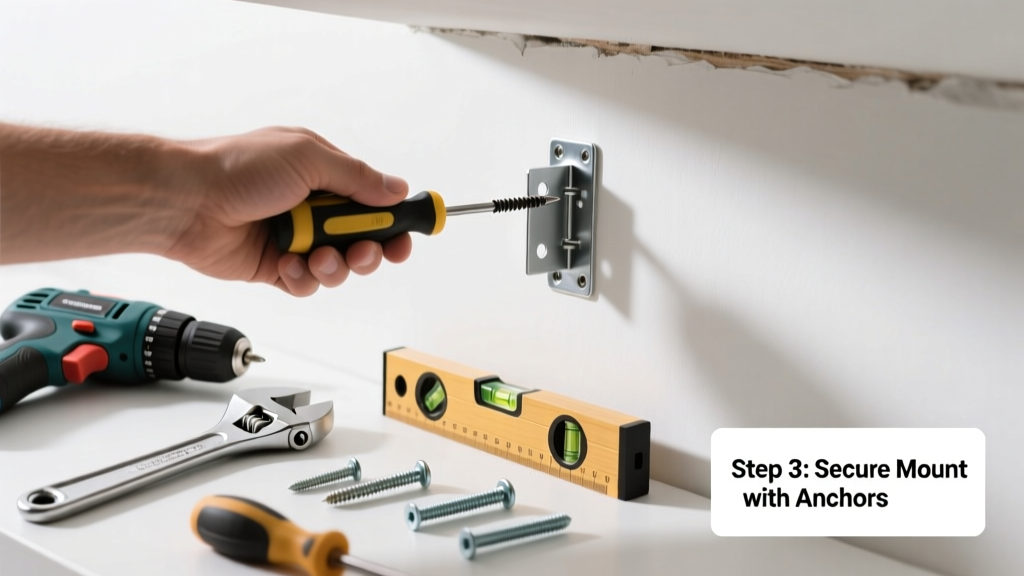
A loose mount—whether it’s a towel bar, shelf bracket, ceiling fan hanger, or TV wall mount—feels like a ticking time bomb. It wobbles under light pressure, makes creaking noises, or pulls away from the surface entirely. Ignoring it risks property damage, injury, or costly repairs down the line.
Quick Diagnosis
Before grabbing tools, identify the root cause. Most loose mounts stem from one or more of these issues:
- Stripped drywall anchors or toggle bolts
- Screws driven into hollow drywall instead of studs
- Moisture-damaged wallboard behind the mount
- Over-torqued screws that cracked the anchor or substrate
- Corroded or bent metal hardware (especially in bathrooms or garages)
Tools & Materials Needed
| Item | Purpose | Estimated Cost |
|---|---|---|
| Stud finder with depth detection | Locates solid framing behind drywall to avoid hollow-mount mistakes | $25–$60 |
| 3/16" carbide-tipped masonry bit (if mounting into tile or concrete) | Drills clean pilot holes without cracking brittle surfaces | $8–$15 |
| Heavy-duty toggle bolts (1/4" x 2") | Provides 120+ lbs pull-out resistance in hollow drywall | $6–$12 per pack |
| Level and pencil | Ensures reinstalled mount is plumb and aligned | $4–$10 |
| Wall repair compound & mesh tape | Fills oversized holes before remounting; prevents future anchor failure | $12–$20 |
Step-by-Step Fix
Choose the method that matches your wall type and mount weight:
- For lightweight mounts (towel bars, coat hooks) on drywall: Remove old anchors, fill holes with spackle, let dry 24 hours, then install snap-toggle anchors rated for 75+ lbs each.
- For medium-weight mounts (shelves, floating desks) where studs are accessible: Use a stud finder to locate two adjacent studs, mark centers, pre-drill pilot holes, and secure with 3" #10 wood screws—no anchors needed.
- For heavy or vibrating mounts (ceiling fans, TVs) on hollow drywall: Install a plywood backing plate (1/2" thick, 12" x 12") anchored across at least two studs, then mount your device to the plate using lag screws.
- If anchors pulled out and left oversized holes: Insert plastic wall plugs coated in construction adhesive, let cure 4 hours, then reinstall screws.
When to Call a Pro
Don’t risk structural integrity or personal safety—call a licensed contractor if:
- The mount supports over 100 lbs and you can’t verify stud placement with confidence
- You discover water stains, mold, or crumbling drywall behind the mount
- The loose mount is part of an electrical or plumbing assembly (e.g., recessed lighting housing or shower valve)
- You’re mounting into plaster lath or masonry without prior experience drilling into those substrates
"Over 62% of wall-mounted fixture failures occur because installers skipped stud verification—even when using 'heavy-duty' anchors." — National Association of Home Builders Repair Standards, 2022
Prevention Tips
Extend the life of every mount with these habits:
- Always use a stud finder before drilling—not just a magnet or knock test
- Tighten screws gradually and evenly; stop when resistance increases sharply
- In humid areas like bathrooms, choose stainless steel or zinc-plated hardware
- Recheck mount tightness every 6 months—especially after seasonal temperature shifts
Can I reuse the same holes after removing a loose mount?
No—reusing stripped holes almost guarantees repeat failure. Always patch and reinforce. For drywall, fill with joint compound mixed with fiberglass mesh tape, sand smooth, and wait 24 hours before redrilling. If the hole is larger than 1/4", insert a drywall repair plug or toggle anchor sleeve first.
What’s the strongest anchor for drywall without studs?
The TOGGLER SNAPTOGGLE BB is independently tested to hold up to 265 lbs in 1/2" drywall (per anchor). It requires a 3/8" drill bit and expands fully behind the wallboard. Avoid plastic expansion anchors—they rarely exceed 30 lbs pull-out resistance.
Why does my mount loosen again within weeks?
Recurring looseness usually points to vibration, thermal expansion, or undersized hardware. Check if the mount is near HVAC vents, laundry rooms, or exterior doors. Switch to lock washers and thread-locking compound (Loctite Blue 242), and confirm screw length matches substrate depth—screws should engage at least 1" into solid material.
Can I mount into tile without cracking it?
Yes—but only with a diamond-tipped or carbide-tipped masonry bit, slow speed (under 400 RPM), and constant water cooling. Drill a pilot hole, then switch to a slightly larger bit for the anchor. Never hammer or force the bit. For ceramic or porcelain tile, consider our full tile mounting guide for substrate prep tips.
Is it safe to mount a TV above a fireplace?
It’s possible—but heat exposure degrades adhesives, warps mounts, and voids most manufacturer warranties. The U.S. Consumer Product Safety Commission reports a 23% higher failure rate for fireplace-mounted TVs installed without heat-shield kits (2021 data). Use a UL-listed heat-resistant mount and verify internal wall cavity isn’t insulated with flammable material.
How do I know if my wall is plaster or drywall?
Tap firmly: drywall sounds hollow and drum-like; plaster gives a dense, muted thud. Look at edges around outlets—if you see brown paper backing, it’s drywall. If you see crumbly, gritty gray material with wood lath strips, it’s plaster. Plaster requires special anchors like molly bolts or screw-in anchors with wide flanges—and always pre-drill with a masonry bit.
Fixing a loose mount isn’t about brute force—it’s about matching hardware to substrate, respecting load limits, and verifying what’s behind the wall. A few minutes of diagnosis saves hours of patching later. If you’ve tackled similar jobs, check out our guides on drywall anchor types and stud finder tips for older homes.