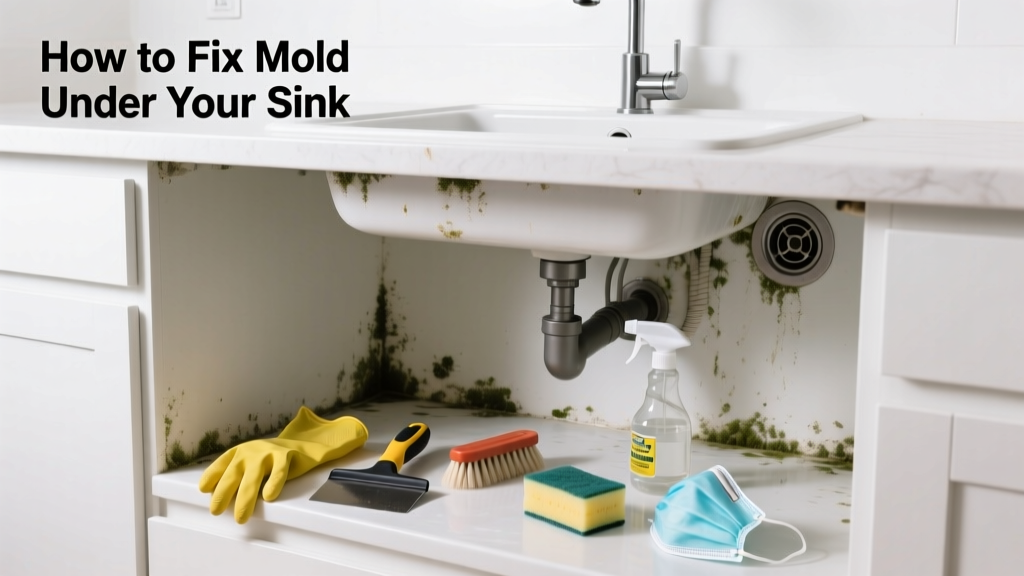
Mold under the sink isn’t just unsightly—it’s a red flag for hidden moisture, potential wood rot, and indoor air quality risks. You’ll often spot fuzzy black, green, or white growth on cabinet bases, pipes, or drywall behind the sink—and sometimes catch a musty odor before you see anything. Catching it early saves hundreds in repairs and prevents health symptoms like coughing or allergy flare-ups.
Quick Diagnosis
Most mold under sinks stems from one or more of these issues:
- Slow leaks from supply lines, shut-off valves, or P-trap connections (often dripping only when the faucet is used)
- Condensation on cold water pipes in humid climates—especially in older homes without pipe insulation
- Spills or splashes that soak into particleboard cabinet bases and never fully dry
- Poor ventilation under the sink, trapping steam from dishwashing or hand-washing
- Drain overflow or clogs causing stagnant water to pool beneath the sink cabinet floor
Tools & Materials Needed
| Item | Purpose | Estimated Cost |
|---|---|---|
| N95 respirator mask | Blocks mold spores from entering lungs during cleanup | $12–$25 |
| White vinegar (undiluted) or EC3 Mold Solution | Kills surface mold without toxic fumes; EPA doesn’t recommend bleach for porous surfaces | $4–$28 |
| Stiff-bristle nylon brush | Scrubbing mold off grout, pipe joints, and cabinet corners without scratching | $6–$14 |
| Microfiber cloths & disposable rags | Wipe down surfaces without spreading spores; rags get sealed and discarded | $8–$15 |
| Plastic sheeting + painter’s tape | Contain spores by sealing off cabinet opening during remediation | $10–$22 |
Step-by-Step Fix
- Shut off water & empty cabinet: Turn off both hot and cold supply valves. Open faucet to relieve pressure. Remove all items, trash bags, cleaning supplies, and leaky bottles.
- Isolate and protect: Tape plastic sheeting over the cabinet opening. Wear N95 mask, goggles, and nitrile gloves. Lay down drop cloth inside cabinet floor.
- Clean non-porous surfaces first: Spray undiluted white vinegar on pipes, fittings, and metal brackets. Let sit 10 minutes, then scrub with stiff brush. Wipe dry with microfiber cloth.
- Treat porous materials carefully: For mold on particleboard cabinet base or drywall backing: spray EC3 solution (or 70% isopropyl alcohol), wait 15 minutes, gently scrape with putty knife, then wipe with damp (not wet) cloth. Discard all saturated rags in sealed trash bag.
- Dry thoroughly: Run a fan pointed into cabinet for 48+ hours. Use a hygrometer to confirm humidity stays below 50%. Never reassemble until moisture readings are stable.
When to Call a Pro
DIY mold removal is safe only for patches under 10 square feet on non-porous surfaces. Call a certified mold inspector or IICRC-certified water damage restoration contractor if you find any of these:
- Mold covering more than one cabinet panel—or visible on drywall behind the sink
- Soft, spongy, or discolored subfloor or wall framing (signs of structural decay)
- Mold returning within 2 weeks after cleaning (indicates unresolved moisture source)
- Musty smell persists after cleanup—even with fans running
- You have asthma, immune suppression, or infants in the home (per CDC guidelines)
Prevention Tips
Stopping recurrence means tackling moisture at the source—not just wiping mold away. Start here:
- Wrap cold water supply lines with closed-cell foam pipe insulation ($3/6-ft roll at hardware stores)
- Install a small battery-powered exhaust fan under the sink (like the Broan Ultra Silent 50 CFM model) that runs on motion sensor or timer
- Replace particleboard cabinets with marine-grade plywood or PVC-based cabinets in high-moisture zones
- Check supply line connections every 6 months—tighten compression nuts and replace rubber washers if cracked or flattened
- Keep cabinet doors open overnight after heavy dishwashing or hand-washing sessions
Can I use bleach on this?
No—bleach is ineffective on porous materials like wood or drywall and can actually feed mold deeper into substrate. The U.S. EPA explicitly advises against using chlorine bleach for mold remediation on absorbent surfaces because it leaves moisture behind and fails to kill root structures (EPA Mold Remediation in Schools and Commercial Buildings, 2022).
How long does mold take to grow under sink?
Mold spores can colonize in as little as 24–48 hours when relative humidity exceeds 60% and organic material (dust, soap scum, wood) is present. According to the Insurance Institute for Business & Home Safety's 2023 report, 73% of under-sink mold cases were linked to undetected slow leaks lasting longer than 72 hours.
Does mold under sink affect home value?
Yes—if discovered during inspection, untreated or recurring mold can delay closings or trigger buyer requests for third-party remediation reports. A 2023 National Association of Realtors survey found 41% of buyers backed out of deals after mold was flagged in pre-listing inspections—especially when located in kitchens or bathrooms.
Can I paint over mold to hide it?
Never. Painting over mold traps moisture and accelerates decay underneath. It also violates disclosure laws in 42 states. If you cover active mold, spores will bleed through paint within weeks—and you’ll face costlier repairs later. Always remove mold *before* refinishing.
What’s the best mold test kit for under-sink areas?
Air sampling kits like the Mold Armor DIY Test Kit ($25) offer lab-reviewed results but lack precision for localized growth. For under-sink assessment, skip the kit: visual confirmation + moisture meter reading above 18% on wood = action required. As certified industrial hygienist Dr. Linda Stetzenbach told Home Energy Magazine in 2021: “If you can see it or smell it, testing won’t change what you need to do.”
Will a dehumidifier fix this?
A portable dehumidifier helps *after* fixing the leak—but won’t stop active mold growth if water is still dripping or pooling. Place it in the room (not inside cabinet) and run it at 45–50% RH for 72 hours post-cleanup. Don’t rely on it to mask an ongoing plumbing issue.
“Mold under sinks is rarely about the mold—it’s always about the moisture. Find the drip, fix the drip, then clean the mold. Otherwise, you’re just mopping the floor while the faucet runs.” — Mike Rinaldi, Master Plumber & IICRC Water Damage Instructor, 2022
Fixing mold under your sink isn’t just about scrubbing black spots—it’s about restoring a dry, healthy zone where water belongs only in the pipes and the drain. Once you’ve addressed the source, cleaned thoroughly, and added smart prevention layers, that cabinet becomes reliable again—not a ticking moisture bomb. For persistent leaks, check our guide on how to fix a leaky faucet or replacing a corroded P-trap. And if your cabinet floor feels soft or your pipes sweat year-round, consider upgrading to foam-insulated supply lines—it pays for itself in fewer mold scares and lower AC bills.